
Antibiotics in Aquaculture: Use Them Safely

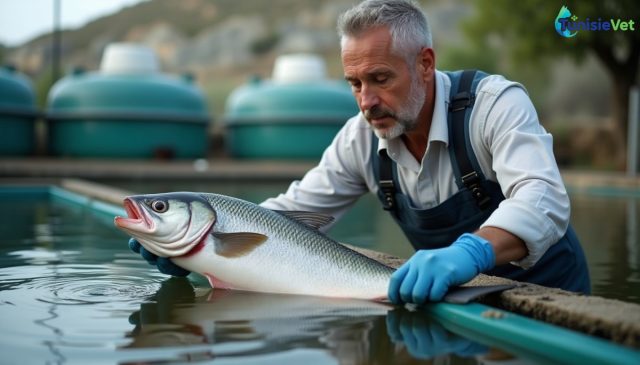
Antibiotics in aquaculture should only be administered following veterinary diagnosis, at precise dosages and for limited durations, while strictly respecting the withdrawal period before fish are marketed for sale. This practical guide helps fish farmers treat bacterial infections effectively while minimizing the emergence of resistant bacteria in ponds or cage systems.
1. When is antibiotic treatment actually justified?
Antibiotics are never given "as a precaution" or routinely upon fry arrival. They target only a confirmed or strongly suspected bacterial infection, never a viral or parasitic disease.
- Unusual mortality rates associated with skin lesions, ulcers, or exophthalmos.
- Lethargic behavior, collective loss of appetite, and erratic swimming patterns.
- Confirmation, ideally through veterinary examination or laboratory analysis before treatment.
- No improvement after correcting water parameters (oxygen, temperature, ammonia).
Many of the disorders observed in ponds actually stem from stress caused by poor water quality or overstocking. Addressing these root causes often eliminates the unnecessary use of antibiotics.
2. Diagnose before treating fish in aquaculture systems
Fish treatment becomes more effective when it relies on identifying, even partially, the causative agent. A randomly chosen antibiotic may be ineffective and nonetheless promotes antibiotic resistance.
Clinical signs to observe before acting
- Speed and extent of mortality in the pond.
- Appearance of gills, skin, fins, and eyes.
- Recent history: transport, feed changes, temperature spikes, handling procedures.
Ideally, sampling from diseased fish helps guide antibiotic selection. This step avoids blind treatments, a major driver of resistance.
3. Respect the correct fish antibiotic dosage
Fish antibiotic dosage depends on total biomass, species, and the prescribed drug. Under-dosing or over-dosing are two errors that compromise treatment effectiveness.
- Weigh or carefully estimate the total biomass of the pond before calculating the dose.
- Adjust the quantity of medicated feed if fish consume less due to illness.
- Never improvise an "approximate" higher dosage than prescribed to speed up recovery.
- Strictly maintain the interval between each administration.
A dose that is too low fails to eliminate all bacteria: the survivors, being the most resistant, subsequently multiply more easily. This is one of the primary mechanisms driving antibiotic resistance in fish farming.
4. Treatment duration and daily monitoring
The prescribed duration must be respected until completion, even if mortality ceases after just a few days.
- Begin treatment as soon as diagnosis is confirmed, without waiting for worsening.
- Observe daily appetite, swimming behavior, and residual mortality.
- Continue administration until the end of the period specified by the professional.
- Never stop prematurely at the first signs of improvement.
- Record in writing the start date, dosage, and end date of treatment.
Stopping treatment too early allows partially weakened bacteria to survive, becoming active again and harder to combat later.
5. Withdrawal period in aquaculture before consumption
The aquaculture withdrawal period is the mandatory period between the final antibiotic administration and the marketing or consumption of fish. It allows complete elimination of drug residues from the flesh.
| Stage | Best Practice | Common Mistakes to Avoid |
|---|---|---|
| Before treatment | Confirm a bacterial diagnosis | Treat as a precaution without clear signs |
| During treatment | Respect full dose and duration | Stop at first visible improvement |
| After treatment | Fully respect the withdrawal period | Sell or consume too early |
| Record keeping | Document each treatment in a register | Keep no written record |
This withdrawal period varies depending on the drug used and water temperature, which influences the speed of drug elimination. It must always be confirmed by the professional who prescribed the treatment.
6. Essential practices to limit antibiotic resistance in fish farming
Reducing antibiotic resistance in fish farming relies equally on prevention and judicious use of medicines.
- Maintain good water quality: sufficient aeration, appropriate stocking density, regular filtration.
- Minimize stress during handling, transfers, and transport of fish.
- Isolate diseased fish immediately upon detection to limit infection spread.
- Alternate antibiotic drugs from one treatment to the next rather than using the same antibiotic repeatedly.
- Never reuse leftover treatment from a previous batch without professional advice.
- Clean and disinfect equipment between production cycles.
- Vaccinate fish when this option exists for the species and disease in question.
Well-managed farming practices dramatically reduce the need to resort to antibiotics, thereby protecting the effectiveness of these treatments for the future.
7. When to consult an aquatic health professional
Faced with unusual mortality or persistent clinical signs, professional advice remains essential before any antibiotic treatment. A misdiagnosis often costs more than a consultation.
To find a practitioner competent in fish pathology, you can consult the directory of veterinarians specializing in fish, who can guide your choice of drug, exact dosage, and withdrawal period appropriate to the species you are raising.
In summary
- Treat with antibiotics only after a confirmed or strongly suspected bacterial diagnosis.
- Calculate fish antibiotic dosage based on actual biomass in the pond.
- Respect the full treatment duration without premature interruption.
- Always observe the aquaculture withdrawal period before any sale.
- Prevent infections through good water quality rather than multiplying treatments.
Frequently asked questions
Can you give antibiotics to fish without veterinary advice?
It is strongly inadvisable to treat without prior diagnosis, as choosing the wrong antibiotic increases resistance risk. Professional guidance also ensures you set the correct dosage and withdrawal period.
How often can the same pond be treated with antibiotics?
Repeated treatments should remain exceptional and spaced apart, as they promote the emergence of resistant bacteria. Improving water quality and pond management reduces the need for frequent treatments.
How long should you wait after antibiotic treatment before consuming the fish?
The withdrawal period depends on the antibiotic used and must be confirmed by the professional who prescribed the treatment. Never market or consume fish before this period ends.
Using antibiotics in aquaculture with rigor protects fish health, consumer health, and the future effectiveness of treatments. When in doubt, always consult a professional before acting.
Need a professional opinion? If in doubt or in an emergency, find a veterinarian near you on TunisieVet.
Leave a comment
Be the first to comment on this article.

TunisieVet in your pocket 📱🐾 Access your veterinary services wherever you are. [ Download the app ]
Learn more