
Annual Parasite Control Calendar: Protecting Your Animals in Tunisia

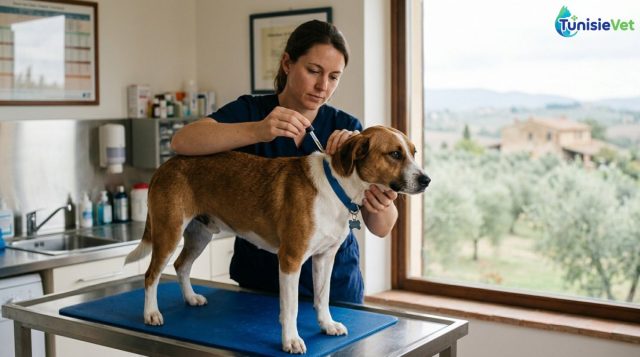
An effective annual parasite control calendar rests on a simple principle: tailor the frequency of treatments to Tunisia's seasonal climate rather than treating haphazardly. Between hot summers that favour flies and ticks, and mild winters that never fully eliminate fleas, dogs, cats, cattle, sheep and poultry remain at risk year-round. This guide offers a month-by-month schedule and practical advice for pet owners and livestock farmers alike.
1. Why Adapt Your Parasite Control Calendar to Tunisia's Climate
Tunisia's climate—Mediterranean in the north and arid in the south—creates highly favourable conditions for parasites to proliferate as soon as temperatures begin to rise. Flies, ticks and fleas follow biological cycles linked to temperature and humidity: they multiply rapidly once the thermometer crosses a certain threshold and slow down during cooler periods without ever disappearing completely. Effective parasite control therefore goes far beyond a single summer application: it must follow a logic of continuous prevention, intensified during high-risk periods.
Neglecting the coldest months is a common mistake. Flea eggs and larvae can survive in heated homes or livestock bedding even in winter, ready to restart a complete cycle as soon as the first warm spell arrives.
2. Annual Parasite Control Calendar: Season by Season
Spring: The Reactivation Phase
As temperatures rise, ticks and fleas emerge from dormancy. This is the time to resume or intensify preventive treatments for dogs and cats, and to check the condition of fences and bedding in livestock facilities to limit humid areas conducive to larval development.
Summer: Peak Parasite Pressure
This is the most critical period: flies swarm around barns, sheepfolds and poultry houses, ticks are highly active in vegetation and fleas reproduce at great speed. Treatments must be applied at regular, close intervals without interruption.
Autumn: Vigilance Must Not Waver
Gradually falling temperatures slow parasites without eliminating them. Many owners stop treatments too early: yet this is a period when ticks remain active as long as days remain mild.
Winter: Reduced but Maintained Prevention
Treatments can be spaced out, but never completely suspended, particularly for animals living in heated indoor environments where fleas may continue their cycle, or for livestock sheltered in buildings that retain warmth.
| Season | Dominant Parasites | Recommended Treatment Frequency | Priority |
|---|---|---|---|
| Spring | Ticks, awakening fleas | Regular resumption | Reinforced prevention |
| Summer | Flies, ticks, fleas | Close and continuous treatments | Peak vigilance |
| Autumn | Still-active ticks, fleas | Maintain without interruption | Do not relax |
| Winter | Residual fleas indoors/shelters | Spacing possible, never complete cessation | Baseline prevention |
3. Managing Flies in Cattle, Sheep and Poultry Operations
Flies represent a major nuisance in livestock farming, particularly in summer. They cause stress in animals, loss of productivity and can transmit pathogenic agents. Effective management combines several strategies:
- Building hygiene: regularly remove manure and soiled bedding, the primary breeding sites.
- Drainage of wet areas: eliminate stagnant pools around barns, sheepfolds and poultry houses.
- Fly traps: install sticky or bait traps at passage points to reduce adult populations.
- Targeted insecticide treatments: applied to animals or the environment according to a professional's recommendations, alternating product families to limit resistance.
- Building ventilation: circulating air makes the environment less favourable for adult flies.
For poultry (chickens, turkeys, ducks), cleanliness of the coop and frequent bedding replacement remain the most effective measures against flies and associated external parasites such as red mites.
4. Ticks and Fleas in Dogs and Cats: Adapt Treatment by Season
In domestic carnivores, prevention against ticks and fleas must be continuous, but its intensity varies according to season and the animal's lifestyle.
- Dogs living outdoors or walked in wooded areas: regular antiparasitic treatment year-round, with heightened vigilance in spring and summer.
- Cats with outdoor access: same logic as dogs, but favour products specifically adapted to felines, as some canine antiparasitics are toxic to cats.
- Indoor-only animals: reduced but not zero risk, especially if other household pets go outside or if the home is infested with fleas.
- Manual inspection: after each outdoor outing, check the coat, ears and spaces between paw pads to detect a tick before it becomes permanently attached.
Tick removal should be done with an appropriate tool, pulling steadily without violent twisting, to avoid leaving the parasite's head embedded in the skin.
5. Choosing the Right Type of Antiparasitic Treatment
There are several families of external antiparasitic products, each with its uses and limitations.
| Product Type | Primary Use | Note |
|---|---|---|
| Spot-on pipettes | Dogs and cats, monthly application | Follow weight and species instructions |
| Antiparasitic collars | Long-term protection against ticks and fleas | Complement, not always sufficient alone |
| Oral tablets | Dogs primarily | Rapid action, veterinary prescription advised |
| Sprays and powders | Targeted or environmental treatment | Useful to complement hygiene measures |
| Livestock insecticides | Farm buildings and livestock | Alternate to prevent resistance |
Product choice must always account for species, age, health status and season. A professional can guide you toward the most suitable solution for each situation and avoid dosing errors, particularly risky in cats.
6. Common Mistakes to Avoid in External Parasite Prevention
- Stopping treatment at the first cold snap: fleas can continue their cycle indoors or in heated livestock buildings.
- Using a canine product on a cat: certain substances are dangerous for felines.
- Neglecting the environment: treating the animal without sanitizing its bedding or habitat only solves part of the problem.
- Always using the same product: alternation limits the emergence of parasite resistance.
- Forgetting farmyard animals: chickens, turkeys and ducks are equally affected by flies and lice.
To establish a precise protocol tailored to each animal, professional advice remains essential, especially in cases of heavy infestation or doubt about which product to use. Consult a veterinarian near you to build a truly personalized annual parasite control calendar.
In Summary
- Adapt treatment frequency to Tunisia's four seasons, never stopping them completely.
- Increase vigilance in spring and summer, peak periods for flies, ticks and fleas.
- Combine individual animal treatment with environmental sanitation.
- Choose a product suited to your animal's species, age and lifestyle.
- Alternate product families to limit parasite resistance.
Frequently Asked Questions
How often should I apply antiparasitic treatment year-round?
Frequency depends on the product chosen and the season: monthly for most pipettes, closer intervals in summer during peak parasite activity. A professional can establish a precise schedule based on your animal and its lifestyle.
Can I stop antiparasitic treatment in winter?
It is better to space treatments rather than stop them completely, as fleas can survive indoors or in heated livestock buildings. Complete cessation risks rapid reinfestation when warm weather returns.
How can I reduce flies around my livestock?
Building hygiene, regular manure removal, drainage of wet areas and the use of traps form the basics. These actions combine with targeted insecticide treatments for lasting control.
Putting an effective annual parasite control calendar in place requires some organization, but remains the best defence against flies, ticks and fleas that proliferate according to Tunisia's seasonal climate. If you are unsure about which product or schedule to adopt, personalized veterinary advice makes all the difference.
Leave a comment
Be the first to comment on this article.
