
Exporting an Animal from Tunisia: Step-by-Step Guide


Exporting an animal from Tunisia involves four main steps: having it identified, getting it examined by a veterinarian, gathering its health documents, and obtaining the export certificate before departure. Requirements vary depending on the destination country. This guide walks you through the procedures for live animals, the timelines to plan for, and the common mistakes to avoid.
The TunisieVet app to care for your pet
Vets, adoption and products


1. Start with the Destination Country's Requirements
The basic rule is simple: the country of arrival sets the entry conditions. Each country decides which vaccines, tests and documents it requires, depending on the species.
What should you check first?
- The import conditions for your species (dog, cat, horse, bird, sheep, etc.).
- The authorised point of entry: some animals may only pass through designated border posts.
- The accepted mode of transport: air, sea or road.
- Any restrictions on protected species or specific breeds.
Request this information in writing from the veterinary authority of the destination country or from its embassy. Keep the reply, as it will serve as your reference.
2. Have the Animal Identified
An exported animal must be identifiable beyond any doubt. The most common method is an electronic microchip, implanted by a veterinarian. It carries a unique number, which is recorded on all documents.
Have the microchip implanted before the vaccines that matter for export. A vaccination carried out without valid identification may be refused. For livestock, identification is usually done with ear tags or other marks suited to the species.
3. Complete Vaccinations, Treatments and Tests
Your veterinarian will set up the health programme required by the destination country. It may include:
- rabies vaccination for domestic carnivores;
- other vaccines required for the species;
- internal and external antiparasitic treatments;
- laboratory tests, sometimes with a mandatory waiting period after vaccination.
This sequence is the main cause of delays. Plan well ahead rather than waiting until the last few days.
4. Undergo the Health Inspection and Obtain the Certificate
Shortly before departure, the animal is examined to confirm that it is healthy and fit to travel. The export certificate is then issued and usually validated by the competent official veterinary authority.
Certificates have a short validity period. An examination carried out too early may make the document expired by the time the animal arrives. Ask your veterinarian for the exact window required by the destination.
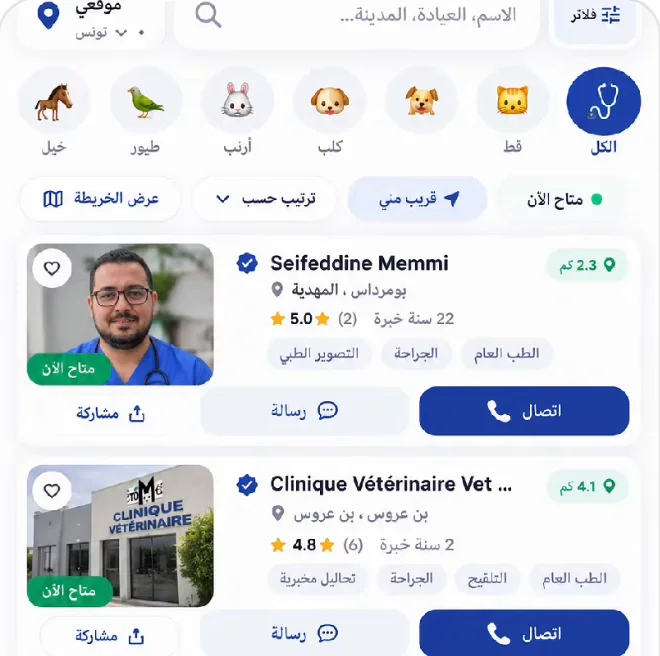
To find a professional experienced in these procedures, you can consult the directory of veterinarians in Tunisia.
5. Summary of Steps and Their Order
| Step | Action | Recommended timing |
|---|---|---|
| 1 | Research the rules of the country of arrival | At the very start of the project |
| 2 | Identification (microchip or tag) | Before vaccines |
| 3 | Vaccines, treatments, tests | Well before departure |
| 4 | Health inspection and certificate | Shortly before departure |
| 5 | Transport booking and border control | Depends on the carrier |
6. Common Mistakes to Avoid
- Starting too late: waiting periods after a vaccine or test cannot be shortened.
- Relying on outdated rules: requirements change, so check them before every export.
- Forgetting transport: a non-compliant crate or an airline that refuses the species can block departure.
- Inconsistent documents: a microchip number that differs from one document to another can lead to refusal.
- Neglecting welfare: a fragile, pregnant or very young animal may be judged unfit to travel.
In Short
- First, ask for the entry conditions of the destination country.
- Have identification done before vaccines.
- Plan vaccines and tests early, according to the required timelines.
- Have the certificate issued within its validity window.
- Check that all documents match before departure.
Frequently Asked Questions
Can I export an animal without a microchip?
In most cases, no: identification is required to link the animal to its documents. Check the rule of the destination country with your veterinarian.
How long does it take to prepare an export?
It depends on the species and the destination. Allow several weeks, or longer if tests and waiting periods are required.
Who issues the export certificate?
The veterinarian examines the animal and prepares the document. It is generally validated by the competent official veterinary authority, following the procedure in force.
Conclusion
Exporting an animal from Tunisia requires organisation and forward planning, but the process is manageable. Contact a veterinarian early to structure the steps of live animal export and avoid unpleasant surprises at the border.
Leave a comment
Be the first to comment on this article.
