
Mange in Animals: Early Signs and Treatment in Hot Climate

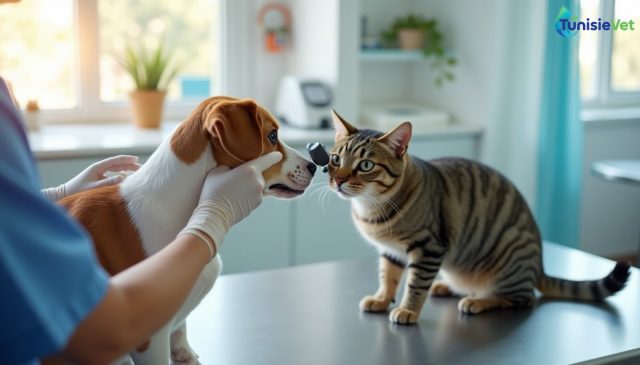
Mange in animals is first recognised by intense itching, localised hair loss and crusty skin that worsen quickly in hot, humid weather. This guide explains how to distinguish sarcoptic mange, demodectic mange and ear mites in dogs, cats, ruminants and poultry, and how to treat effectively without relying on a single antiparasitic drug class.
The TunisieVet app to care for your pet
Vets, adoption and products






1. Understanding the different types of mange and their responsible mites
The term "mange" covers several distinct parasitic skin diseases caused by microscopic mites that live in or on the skin. They do not all have the same severity or require the same treatment, which is why accurate diagnosis is essential.
- Sarcoptic mange: caused by a burrowing mite that tunnels into the epidermis, highly contagious, causes intense itching especially in dogs.
- Demodectic mange: linked to a mite naturally present in small numbers within hair follicles; it becomes a disease when the animal's immune system weakens.
- Ear mites (otoacariasis): affects mainly cats and sometimes dogs, the mite colonises the ear canal and causes dark secretions and marked discomfort.
- Mange in ruminants and poultry: in sheep, goats and birds, different mites cause thick crusts, wool or feather loss and general decline in condition.
2. Recognising signs by species
Symptoms vary depending on the affected species and type of mite involved, which helps guide diagnosis even before a veterinary consultation.
In dogs
Violent itching, especially around the ears, elbows and belly, with yellowish crusts and broken hair. Sarcoptic mange is often accompanied by such intense scratching that it causes secondary wounds.
In cats
Head shaking, dirty ears with brownish deposits, scratching localised behind the ears or on the head. Ear mites are the most common form in this species.
In ruminants (sheep, goats, cattle)
Areas of wool or hair torn away, thickened and wrinkled skin, animals rubbing against fences or walls. General condition may deteriorate if the infestation spreads.
In poultry (chickens, turkeys, ducks)
Legs covered with raised white crusts (scaly leg mite), ruffled feathers, reduced activity. Affected birds may limp or remain depressed.
| Species | Common type of mange | Most characteristic sign |
|---|---|---|
| Dog | Sarcoptic mange | Intense scratching, crusts on elbows and ears |
| Cat | Ear mites | Brown deposit in ears, head shaking |
| Sheep, goats | Sarcoptic or psoroptid mange | Patchy wool loss, repeated rubbing |
| Chickens, poultry | Scaly leg mite | Raised white crusts on legs |
3. Why hot and humid climate promotes spread
Heat accelerates the reproductive cycle of mites, and ambient humidity maintains conditions favourable for their survival away from the host for several days. Animals living in groups, in shared enclosures or collective poultry units are particularly exposed because close contact facilitates direct transmission. Perspiration and skin moisture also create conditions favourable to secondary bacterial infections that aggravate the initial lesions.
A weakened animal, poorly nourished or stressed by heat also has a less effective immune system, which promotes generalised demodectic mange in dogs or severe mange in ruminants.
4. The zoonotic risk: what owners and farmers should know
Some forms of mange, particularly sarcoptic mange, are zoonotic diseases: the mite can temporarily infest human skin and cause itching and minor skin lesions. This contamination generally remains transitory, since the animal mite cannot complete its life cycle on humans, but it justifies simple precautions:
- Wear gloves when handling an animal suspected of having mange.
- Wash hands after any contact with an animal that is scratching abnormally.
- Isolate the affected animal from other household or herd animals during treatment.
- Wash or disinfect bedding, blankets and stable equipment regularly.
If suspected skin lesions develop in a household member after contact with an animal with mange, medical consultation is recommended alongside veterinary treatment of the animal.
5. Early diagnosis: how to confirm mange
Clinical diagnosis based on symptoms alone is often insufficient, as several skin diseases look similar. The following steps allow reliable diagnosis:
- Complete clinical examination: observation of affected areas, distribution of lesions and intensity of itching.
- Skin scraping: skin sample examined under microscope to identify the responsible mite, the reference method to confirm sarcoptic or demodectic mange.
- Otoscopic examination: to directly visualise the mite in the ear canal if ear mite infestation is suspected.
- Differential diagnosis: the veterinarian rules out other causes of itching such as allergies, fleas or fungal infections.
Early diagnosis limits spread to other animals and avoids unnecessary or inappropriate treatments that delay recovery.
6. Effective treatments without dependence on a single antiparasitic class
An effective protocol combines multiple approaches rather than relying on a single product, to limit resistance risks and treat all parasite stages.
- Antiparasitic treatments prescribed by the veterinarian: different drug families are available (lotions, tablets, injectables, spot-on solutions); choice depends on species, age and type of mange diagnosed.
- Environmental treatment: high-temperature washing of bedding, cleaning of kennels, stables and coops, as some mites survive several days away from the host.
- Skin care: soothing or keratolytic shampoos to soften crusts and promote penetration of topical treatments.
- Managing secondary infection: additional antibiotic or antiseptic treatment may be necessary if wounds are infected.
- Temporary isolation of the affected animal to protect the rest of the herd or household animals during treatment.
For ruminants and poultry in farming operations, coordinated collective treatment is often necessary, as a single untreated animal can reinfest the entire group. Strict adherence to the prescribed treatment duration, even after symptom disappearance, is essential to eliminate all mite stages.
When facing suggestive signs, consulting a professional quickly remains the best way to obtain reliable diagnosis and an adapted protocol. The directory of veterinarians allows you to find a practitioner nearby for skin examination or confirmatory scraping.
7. Preventing relapse in hot climate
Prevention relies on regular monitoring, especially during the hottest and most humid periods of the year:
- Regularly inspect skin, ears and paws of animals, particularly after any contact with a stray or newly introduced animal.
- Maintain good hygiene of living spaces: clean bedding, dry enclosures, well-ventilated coops.
- Quarantine any new animal before introducing it to the household or herd.
- Ensure balanced nutrition to support immunity, a key factor against demodectic mange in particular.
- For dogs and cats, use dedicated pages such as those for dog veterinarians or cat veterinarians to schedule preventive checks.
Summary
- Mange groups together several distinct diseases (sarcoptic, demodectic, ear mites) with different signs and treatments.
- Heat and humidity accelerate mite spread and promote secondary skin infections.
- Some forms, such as sarcoptic mange, present a transitory zoonotic risk to humans.
- Early diagnosis by skin scraping avoids inappropriate treatment and limits contagion.
- A protocol combining multiple approaches, including environmental control, is more effective than a single antiparasitic.
Frequently asked questions
Is animal mange contagious to humans?
Some forms such as sarcoptic mange can temporarily cause itching in humans through direct contact. The animal mite does not, however, survive long-term on human skin, but medical consultation is advised if lesions appear.
How often should you check your animal's skin in hot weather?
A weekly visual check of the ears, coat and paws allows quick detection of early infestation. This frequency can be increased after contact with a stray animal or when a new animal is recently introduced to the household or herd.
How long does mange treatment last in animals?
Duration depends on the type of mange, species and severity of lesions, and must always be determined by a veterinarian. It is essential to continue the prescribed treatment to completion, even if itching disappears before the end.
When faced with an animal scratching unusually or showing suspicious crusts, rapid diagnosis of mange in animals remains the best guarantee of effective treatment and complication-free recovery.
Leave a comment
Be the first to comment on this article.
