
Animal Bleeding: Life-Saving First Aid, Step by Step

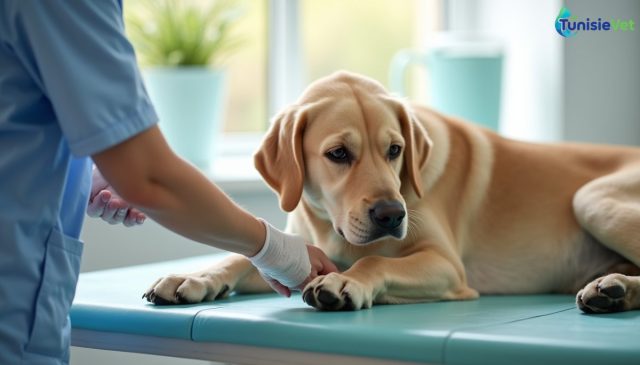
Faced with animal bleeding, the first reflex is simple: press a clean cloth firmly against the wound, keep the animal calm and warm, then contact a veterinarian without delay. This guide helps you recognise external or internal bleeding, apply the right first-aid steps and avoid common mistakes, from a tourniquet applied wrongly to self-medication.
The TunisieVet app to care for your pet
Vets, adoption and products



1. Recognising Bleeding: External or Internal
External bleeding
It is visible: blood flowing, stains on the coat, the bedding or the straw. Bright red blood spurting in pulses suggests an artery, which is an emergency. Darker blood flowing steadily usually comes from a vein. A slow oozing from a small wound is often less serious.
Internal bleeding
It is deceptive, because nothing flows out. Blood builds up in the abdomen or chest after a shock, a fall, a road accident or the ingestion of a toxic substance. Watch closely for these signs:
- very pale, whitish or greyish gums;
- sudden weakness, an animal that collapses or refuses to move;
- rapid breathing and a fast heartbeat;
- a swollen or painful abdomen;
- cold extremities, a dull gaze.
2. Nosebleeds, Urinary or Digestive Bleeding: What Does the Colour Mean?
The location of the bleeding guides the level of urgency. The table below summarises the most common situations.
| Sign observed | What to consider | Level of urgency |
|---|---|---|
| Blood from the nose after a shock | Trauma, foreign body | Prompt consultation |
| Repeated nosebleeds with no visible cause | Clotting disorder, poisoning, nasal disease | Emergency |
| Red or pinkish urine | Infection, stones, trauma | Consultation the same day |
| Vomiting blood | Stomach lesion, toxin, foreign body | Immediate emergency |
| Black, sticky stools | Digested blood from the stomach or upper intestine | Emergency |
| Fresh red blood in the stools | Affection of the colon or rectum | Prompt consultation |
3. First-Aid Steps to Apply Right Away
- Stay calm and keep yourself safe: an injured animal may bite or kick, even one that knows you. A soft muzzle or a cloth over the head of some animals can help.
- Press on the wound with a compress, a clean cloth or gauze, pushing firmly and without letting up.
- Do not lift the dressing to check. If blood soaks through, add another layer on top without removing the first.
- Maintain the pressure during transport or until help arrives.
- Protect the wound with a moderately tight bandage, which must never hinder circulation.
- Keep the animal lying down, calm and warm: a light blanket, and as little handling as possible.
Special cases
For a paw or a tail, apply pressure with a bandage wrapped around the limb. For a nosebleed, keep the animal's head at its normal height, without tilting it back. For a bird, handle it gently and apply little pressure to the chest, as it breathes by moving its ribcage. In sheep, cattle or horses, apply pressure if it can be done safely, then isolate the animal in a clean place.
4. Mistakes to Avoid at All Costs
- A badly placed tourniquet: too tight or left on too long, it can destroy tissue and lead to amputation. It should be reserved for rare extreme cases, on a limb, and only on a veterinarian's advice.
- Self-medication: no human medicine (aspirin, anti-inflammatories) without veterinary advice. Some worsen bleeding or are toxic.
- Old-fashioned remedies: powders, coffee, cobwebs, soil or oil on the wound risk causing infection.
- Removing an embedded object: leave it in place, immobilise it and consult, as it may be plugging a vessel.
- Giving food or water to a weakened animal or one vomiting blood.
- Waiting "to see" when the gums are pale or the animal is getting weaker.
5. When to Call an Emergency Veterinarian
Call without delay in the following cases:
- bleeding that does not stop after several minutes of firm pressure;
- blood that spurts;
- suspected internal bleeding after a shock or toxin ingestion;
- a deep or wide wound, on the chest, abdomen or near an eye;
- an animal that is pale, weak, panting or losing consciousness;
- a young, elderly, pregnant or already ill animal.
Let the clinic know you are on your way and describe the situation. To quickly find a professional near you, check the TunisieVet veterinarian directory. Note what happened, the time, and any product that may have been ingested: these details help with diagnosis.
6. Preventing Bleeding
Keep a first-aid kit ready: sterile compresses, bandages, blunt-tipped scissors, an antiseptic solution recommended by your veterinarian, gloves and an emergency number. Secure fencing, remove sharp objects, keep toxic products out of reach and supervise animals when they are outdoors. On farms, check pens and shelters regularly.
In Summary
- Press firmly on the wound with a clean cloth, without letting up.
- Keep the animal calm, lying down and warm.
- Pale gums and marked weakness may signal internal bleeding: an emergency.
- No improvised tourniquet, no medicine without veterinary advice.
- Alert the clinic and leave without delay.
Frequently Asked Questions
How long should I press on a bleeding wound?
Maintain continuous pressure for several minutes without looking underneath. If blood keeps coming through, add layers and head to the veterinarian while keeping the pressure in place.
Can a tourniquet be applied to a dog or a cat?
This is not recommended for non-professionals. A badly placed tourniquet damages tissue and can make the situation worse. Direct pressure remains the reference method.
How can I tell if my animal is bleeding internally?
Pale gums, sudden weakness, a swollen abdomen and rapid breathing are warning signs, especially after a shock. Only a veterinarian can confirm it: consult without delay.
Conclusion
Knowing how to respond to animal bleeding often makes the difference: press, keep warm, don't improvise, and get to the veterinarian. Keep emergency numbers within reach and prepare your first-aid kit today.
Leave a comment
Be the first to comment on this article.
