
Animal Identification: A Complete Guide to Getting Started

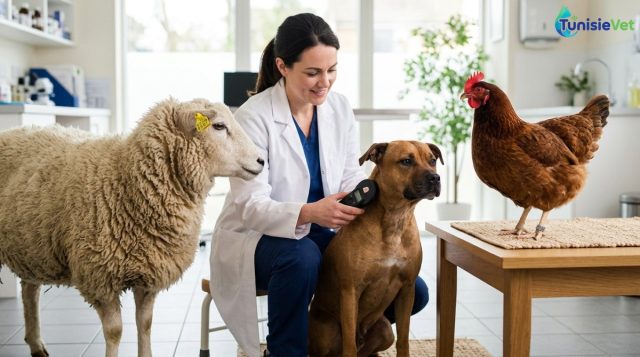
Animal identification involves assigning a recognizable and permanent method to your pet, such as a microchip, tattoo, ring, or ear tag, enabling you to locate them and prove ownership. This practical guide explains the existing methods, common beginner mistakes, and essential best practices, whether you own a cat, dog, poultry, or livestock.
1. Why Identifying Your Animal Is Essential
An identified animal can be quickly reunited with its owner in case of escape, theft, or natural disaster. Identification also helps prove ownership in case of dispute, facilitates veterinary procedures, and for herds, enables you to track the health and traceability of each individual.
For farm animals, it is also a management tool: it helps track reproduction, growth, and treatments administered to each animal, making daily decision-making easier.
2. Different Identification Methods
Microchip (Electronic Chip)
A small transponder inserted under the skin, usually around the neck, using a specific syringe. Each microchip has a unique code that can be read with an adapted reader. This method is widely used for dogs, cats, and ferrets because it is minimally painful and virtually indestructible over time.
Tattoo
A tattoo consists of inscribing a code on a sparsely haired area of the animal, often inside the ear or on the inner thigh. It remains legible throughout the animal's life, but can fade with age, making it sometimes harder to read than a microchip.
Ear Tag
Widely used in sheep, goats, and cattle, the ear tag is fastened to the ear and bears an individual number. It must be applied with a proper tool, avoiding blood vessels, to minimize pain and infection risk.
Leg Band
Used in birds (parrots, canaries, chickens), the leg band is slipped around the foot, ideally during the first few days of life when the foot is still slender enough for it to fit. It often bears a number and sometimes the year of birth.
| Species | Common Method | Location | Note |
|---|---|---|---|
| Dog, cat, ferret | Microchip | Neck area | Readable for life with an adapted reader |
| Sheep, goat, cow | Ear tag | Ear | Individual number visible at a distance |
| Horse, donkey | Microchip or transponder | Neck area | Often accompanied by an identification document |
| Parrot, canary, chicken | Leg band | Foot | Applied early, when the foot is still slender |
| Rabbit, guinea pig | Microchip (optional) | Neck area | Less systematic, useful for breeding or exhibitions |
3. Common Mistakes to Avoid
- Waiting too long: the longer an animal grows without identification, the greater its risk of being lost without any way to return home.
- Failing to update your contact details: a microchip or ear tag is useless if the associated information (address, phone number) is no longer accurate.
- Confusing a collar with official identification: a collar with a tag is useful daily, but it can be lost or broken, unlike a microchip or tattoo.
- Applying a tag or band yourself without training: an incorrectly applied tag can injure the animal or cause infection.
- Neglecting regular checks: it is advisable to have your tattoo's readability or microchip functionality verified during routine veterinary visits.
4. Best Practices by Animal Type
Companion Animals
For a dog or cat, it is recommended to have a microchip inserted by a professional as soon as the animal is old enough, then regularly verify that your registered contact details are current, especially after moving house.
Farm and Livestock Animals
For sheep, goats, and cattle, ear tags must be applied early under proper hygiene conditions, disinfecting equipment between animals to limit infection transmission risks. A double system (a tag on each ear) is sometimes recommended as a safeguard against losing a single tag.
Birds and Poultry
Leg band application must be timed correctly, neither too early nor too late, so it slides on easily without injuring the foot or risk of slipping off later.
5. When to Consult a Professional
Microchip insertion, tattooing, or ear tag application should be performed by a competent person who understands the procedure and hygiene protocols. If you're unsure which method is best suited to your animal, or have any health-related questions about identification (redness, swelling, poorly healed ear tag), it is essential to seek professional advice promptly. You can find a professional near you using the veterinarian directory, which lists practitioners for all species.
If you're considering adopting an already-identified animal or getting a newly rescued animal identified, the adoption page may also help you organize this process smoothly.
In Summary
- Animal identification allows you to locate them and prove ownership.
- Microchip, tattoo, ear tag, and leg band are the main methods, each suited to specific species.
- Contact details associated with identification must always remain current.
- Application must be performed with appropriate equipment and under proper hygiene conditions.
- Regular checks during veterinary visits help prevent problems.
Frequently Asked Questions
At what age can you identify an animal?
This depends on the species and method chosen: some animals can be identified as early as the first few weeks of life, such as birds with a leg band. Others, like dogs and cats, are often identified with a microchip a little later, during a routine veterinary visit.
Is getting a microchip painful for the animal?
The sensation is usually brief and comparable to a standard injection. Most animals show minimal reaction at the moment of insertion, with no lasting discomfort afterward.
Can you change identification methods during an animal's lifetime?
It is possible to add a complementary method, such as a microchip alongside an existing tattoo, but it is generally unnecessary to replace identification that already works. What matters is ensuring the identification remains readable and associated information stays current.
Implementing proper animal identification is a simple step that protects your companion or livestock long-term. If you have any doubts about which method to choose or your animal's health, consulting a veterinarian remains the best guarantee for peace of mind.
Leave a comment
Be the first to comment on this article.
