Cat Breeds: The Complete Guide to Getting Started

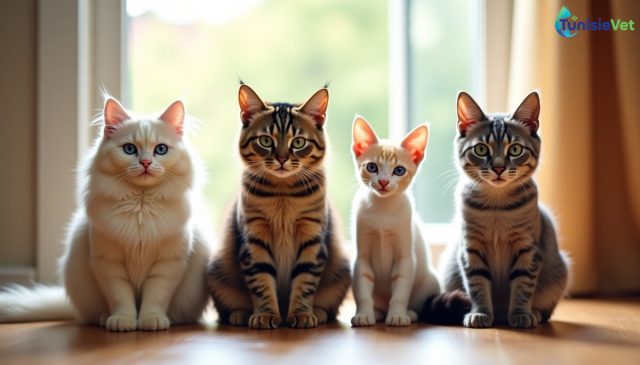
Choosing from the many cat breeds requires understanding their temperament, specific needs, and health considerations before adopting. This practical guide brings together essential veterinary advice for comparing cat breeds, avoiding common beginner mistakes, and making a choice that fits your lifestyle.
1. Understanding the main families of cat breeds
Before falling for a particular face, it's helpful to distinguish between the main families of cat breeds, as each requires different care and has a different character.
- Short-haired cats: European, British Shorthair, Siamese, Bengal. Simple grooming, often active and playful.
- Long or semi-long-haired cats: Persian, Maine Coon, Norwegian, Ragdoll. Dense coat requiring regular brushing.
- Hairless or rare-haired cats: Sphynx. Exposed skin, sensitive to both cold and sunburn.
- Natural or local cat types: Common European cats and alley cats, very present in Tunisia, robust and well-adapted to the Mediterranean climate.
The alley cat, although lacking an official breed standard, deserves to be considered equally: it is often more resistant and less subject to genetic diseases linked to intensive selection.
2. Choosing a breed based on your lifestyle
The best choice among cat breeds is not the prettiest coat, but one that truly matches your daily life.
Apartment or house with a garden
An indoor cat stimulated by play adapts very well to an apartment, especially calm breeds like the British Shorthair or Persian. More active breeds like the Bengal or Abyssinian need space and stimulation to avoid boredom.
Presence of children or other pets
Certain breeds are renowned for their patience and sociability, such as the Maine Coon or Ragdoll, which facilitates cohabitation with children or a dog already in the household.
Time available for grooming
Long hair requires frequent brushing to prevent tangles and hairballs; short hair demands minimal but not zero maintenance.
3. Comparison table: grooming, temperament, and climate
| Breed or type | Coat type | Temperament | Adaptation to hot climate |
|---|---|---|---|
| Alley cat | Short, variable | Resourceful, independent | Excellent |
| European | Short | Lively, affectionate | Good |
| Siamese | Short | Vocal, very attached to humans | Good |
| Persian | Long | Calm, homebody | Average (sensitive to heat) |
| Maine Coon | Semi-long | Gentle, sociable | Average |
| Sphynx | Absent | Affectionate, cuddly | Poor (sensitive to cold and sun) |
4. Common beginner mistakes
- Choosing a breed solely on appearance without researching its temperament or real needs.
- Underestimating long-coat maintenance and becoming overwhelmed by tangles and heavy shedding.
- Neglecting spaying or neutering, which is recommended for health and behavior regardless of breed.
- Forgetting gradual acclimatization of a dense-coated cat or Sphynx to local heat conditions.
- Ignoring health predispositions of certain breeds due to lack of information before adoption.
5. Best practices before and after adoption
Before adopting
- Research the temperament and needs of the breed or cat type you're considering.
- Check compatibility with your home, your schedule, and other animals in the household.
- Consider adopting an alley cat or a shelter cat if you're looking for a robust and less demanding companion.
After adoption
- Schedule a first veterinary visit for a general health check and vaccination schedule.
- Adjust the diet to the cat's age, breed, and activity level.
- Brush long or semi-long-haired breeds regularly to limit hairballs.
- Protect rare-coated cats, such as Sphynx, from direct sunlight and cold.
If you have doubts about a particular breed or notice unusual signs in your cat, it's always better to consult cat specialists rather than seek diagnosis online.
6. Health and breed predispositions
Certain breeds, due to intensive genetic selection, are more prone to specific disorders: respiratory problems in flat-faced breeds, heart or kidney issues in some long-haired lines. An alley cat, resulting from broader genetic diversity, typically has fewer marked hereditary predispositions. In any case, regular veterinary monitoring remains the best way to detect a problem early, regardless of breed.
Summary
- Choose a cat breed suited to your lifestyle, not just its appearance.
- Adapt brushing and grooming to coat type—short, long, or absent.
- Consider the local climate, especially for breeds sensitive to heat or cold.
- Research health predispositions specific to each breed before adoption.
- Consult a veterinarian when your cat arrives and at any unusual sign.
Frequently asked questions
Which cat breed is best for a beginner?
Alley cats or European breeds are good for beginners thanks to their robustness and simple grooming. Calm-tempered breeds, such as the British Shorthair, are also recommended for a first adoption.
How often should you brush a long-haired cat?
Regular brushing, ideally several times a week, is necessary for long or semi-long-haired breeds to prevent tangles. Short-haired breeds need only occasional brushing.
Can you adopt a pedigree cat without an up-to-date health certificate?
It is strongly discouraged to adopt any cat, pedigree or not, without veterinary follow-up or current vaccinations. A veterinary visit upon adoption allows you to verify the cat's overall health status.
Whatever your choice among cat breeds, the animal's welfare comes above all through good knowledge of its needs and attentive veterinary monitoring. Feel free to consult the veterinarian directory to find a professional near you, or explore available profiles at adoption if you're considering welcoming a new companion.
Leave a comment
Be the first to comment on this article.