
Dog and Cat Grooming: Brushing, Claws and Paw Care Tips

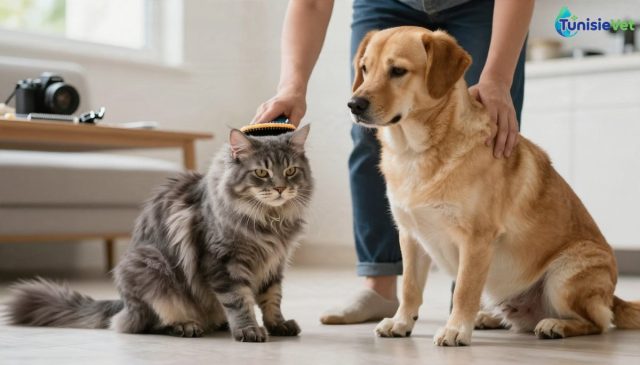
Dog and cat grooming relies on simple habits: brushing without pulling, checking the paws, and trimming claws only when necessary. Adapted to your pet's coat and temperament, these routines also help you spot a problem early. This guide explains how to choose a brush, look after paw pads, trim a claw safely, and recognise the signs that call for a veterinary visit. It also helps you avoid common mistakes when the weather is hot.
The TunisieVet app to care for your pet
Vets, adoption and products






Dog and cat grooming: brushing according to the coat
Set your companion up in a quiet place, on a stable surface. Let them get used to the brush and start with an area they already accept being touched. Brush gently in the direction of the fur, without pressing on the skin. A short, pleasant session is better than a long one carried out under restraint.
| Coat type | Equipment and technique | Frequency to adjust |
|---|---|---|
| Short and smooth | Soft brush or grooming mitt, using light strokes. | Regularly, and more often if dead hair builds up. |
| Medium or long | Wide-toothed comb and a suitable brush, without pulling on tangles. | More often, especially if the coat tangles easily. |
| Dense with undercoat | Brush suited to the coat's density, working in small sections. | Regularly, with extra attention during shedding. |
When brushing your pet's coat, pay particular attention to areas prone to friction: behind the ears, under the collar, in the armpits and around the thighs. If the comb catches, gently separate the hair with your fingers before continuing. Hold the section of fur close to the skin to avoid pulling.
A tight knot against the skin should not be cut with scissors at home. The skin can get caught in the matted hair. Ask a veterinarian or an experienced groomer for help, especially with cats, whose skin is delicate.
Adapting the session to a dog or a cat
Maintaining a cat's coat complements its natural self-grooming, particularly when its fur is long. Do not hold it down by force: stop the session if it tenses up, lashes its tail or tries to move away. Reward its calm and resume later.
With dogs too, gradually accustom the animal to being touched on the belly, paws and tail. If an area suddenly triggers a painful reaction, do not insist on brushing it against its will: have it examined.
How do you clip claws without hurting your pet?
Start by examining the claws, including dewclaws when present. A claw that is very long, curved or hinders movement deserves particular attention. In some animals, natural wear is not enough to keep the claws at a comfortable length.
Use a clipper designed for your animal's size. Ask a veterinarian or groomer for a demonstration if you are a beginner. The goal is to remove only the tip, without reaching the living part of the claw, which contains blood vessels and nerves.
- Choose a calm moment and prepare a treat and a clean compress.
- Hold the paw gently. In cats, apply slight pressure on the toe to make the claw emerge.
- On a light-coloured claw, locate the pinkish zone and stay well in front of it. On a dark claw, the living part is harder to see: remove a very small tip at a time.
- Cut progressively, without twisting the claw. If the animal pulls its paw away or struggles, stop and try again later.
- Reward your pet, even if you have only done one claw. It is not necessary to do them all in the same session.
If a small amount of bleeding occurs after a cut, apply gentle pressure with a clean compress. If the bleeding persists, if the claw is split or if the animal seems to be in pain, contact a veterinarian promptly. An ingrown claw or one caught in the paw pad must never be pulled out by force.
Caring for dog and cat paws: the useful check
After a walk or after crossing irritating ground, look at the top and underside of the paws. Gently spread the toes to check for debris, redness, a cut or swelling. Also think of the paws of cats that go outdoors, without forcing them if they refuse handling.
For routine care, remove surface dirt with lukewarm water, then dry carefully between the toes. Do not use household products, alcohol or creams intended for humans without veterinary advice. A foreign body deeply embedded must not be removed blindly.
Protecting paw pads in hot weather
In hot climates, sun-exposed surfaces can be too hot for paw pads. Favour outings during the coolest hours and on shaded surfaces. If the ground feels uncomfortable to the touch of your hand, choose a different route.
Persistent licking, limping, damaged skin or pain on contact may signal a problem. Limit movement and ask a veterinarian for advice. Do not apply an improvised remedy to a wound or a burn.
Coat, skin and heat: the signs to watch for
Grooming is a useful moment to observe your pet's overall skin condition. Look in particular for redness, scabs, bare patches, heavy dandruff or an unusual odour. Frequent scratching, excessive licking or visible parasites also warrant a veterinary opinion.
These signs can have many causes. Avoid making a diagnosis or using an antiparasitic treatment at random. Some products intended for dogs are dangerous for cats: ask for a product suited to the species and follow the professional's instructions.
Should you wash or shave your pet when it is hot?
A bath is not always necessary. If the animal is dirty, use a shampoo suited to its species, with lukewarm water, then rinse thoroughly and dry it in a comfortable place. Avoid the eyes and ears, and stop if the bath causes intense distress.
Do not automatically shave a dense coat to cool the animal down. The coat helps protect the skin; an unsuitable clip can expose it to the sun. Ask for advice based on the type of coat, the condition of the skin and any knots present.
During hot periods, provide access to fresh water and a shaded, well-ventilated place. For irritation, pain or a persistent change in the coat, consult your veterinarian. You can also look for a dog veterinarian in the directory.
In summary
- Choose a suitable brush and detangle without pulling on the skin.
- Trim only the tip of the claws when you are confident in your technique.
- Inspect the paw pads and dry between the toes after cleaning.
- Protect paws from burning ground and avoid systematic shaving.
- Have any pain, lesion or persistent change in the skin examined.
Frequently asked questions
How often should you brush a dog or a cat?
Frequency depends on coat length, density and the tendency to form knots. Check the coat regularly and increase brushing if dead hair or tangles build up.
Can you use the same shampoo for a dog and a cat?
Only use a product whose label states it is suitable for the species concerned. If in doubt, ask your veterinarian and do not default to human shampoo.
What should you do if your pet refuses claw trimming?
Stop before it starts struggling, then gradually accustom it to contact with its paws and to the equipment. If handling remains difficult, entrust the trimming to a veterinarian or an experienced groomer: dog and cat grooming should remain as safe as possible.
Need a professional opinion? If in doubt or in an emergency, find a veterinarian near you on TunisieVet.
Leave a comment
Be the first to comment on this article.
