
Presentation
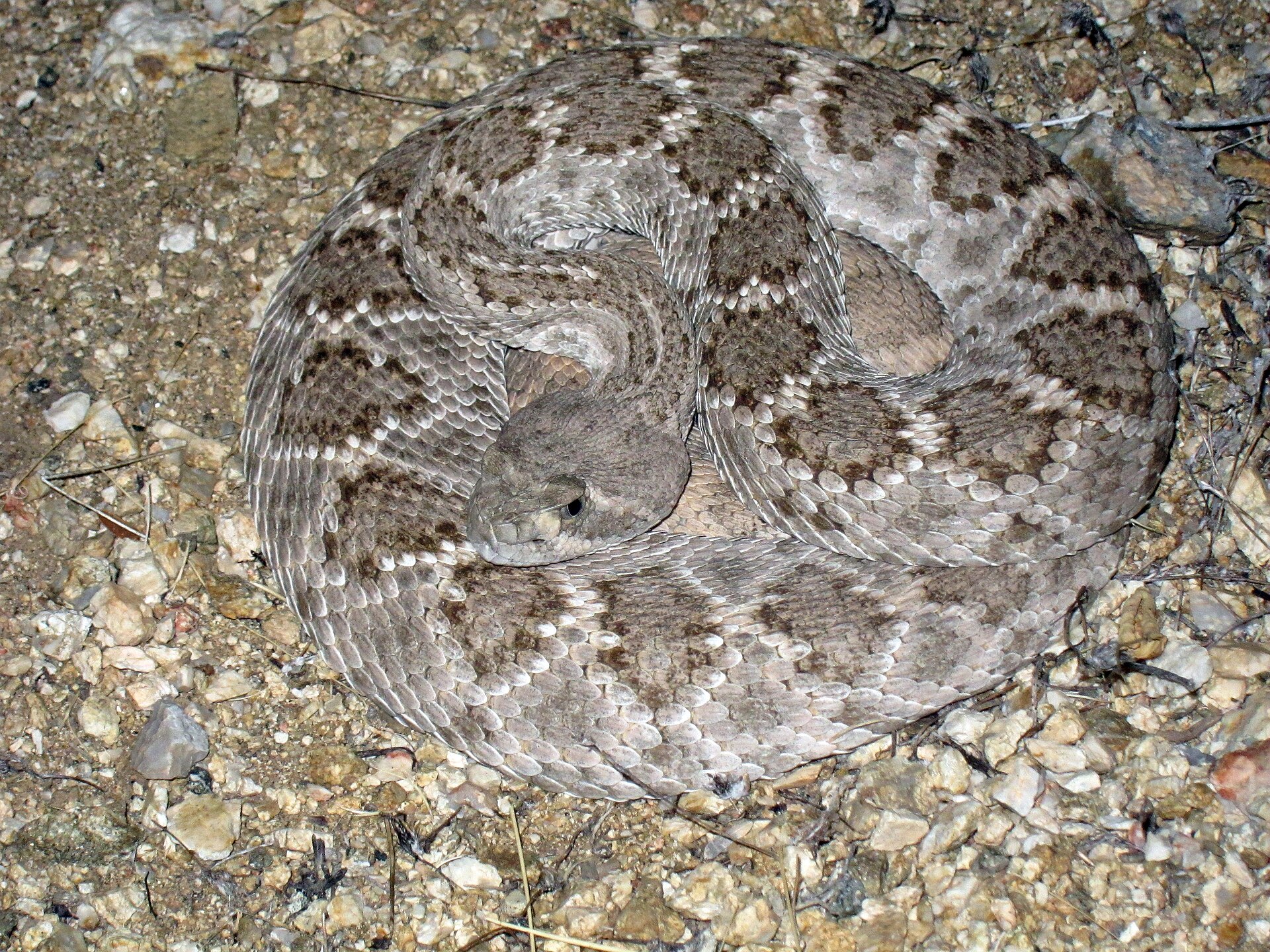
The Rattlesnake, or rattlesnake, refers to a group of venomous snakes from America belonging to the genus Crotalus or Sistrurus. It is distinguished by a set of horny rings located at the end of its tail, forming a sound rattle called a rattle. This appendage, agitated quickly when fleeing or threatening, produces a characteristic rustling sound serving as a warning to potential predators. The Rattlesnake mainly hunts small mammals which it locates using temperature-sensitive dimples located between the eye and the nostril. It occupies a wide variety of environments, from arid deserts to meadows and rocky areas. Its venom, which is hemotoxic in nature, makes it a feared animal although it generally avoids any confrontation with humans.
The body is massive and covered with keeled scales, providing effective camouflage depending on the species. The head is triangular, significantly wider than the neck, and houses retractable hooks connected to venom glands. The caudal rattle, composed of keratinized segments which are added with each molt, constitutes the distinctive feature of the group. Thermosensitive labial pits allow warm-blooded prey to be detected even in the dark.
Characteristics
Indicative values: they vary by subspecies, sex and region.
Habitat and distribution
The Rattlesnake frequents dry and open environments such as deserts, meadows and rocky areas, but certain species are also observed in forests or marshy areas. It seeks shelters such as abandoned burrows, rock piles or brush to protect itself from the high heat. The availability of prey and thermal caches strongly influences its local presence.
CURRENT RANGE
The genus occurs exclusively on the American continent, from southern Canada to Argentina, with maximum diversity in Mexico and the southwestern United States. It is completely absent from Africa, Europe and Asia, including Tunisia.
Behaviour
The Rattlesnake is a solitary animal, active especially at dusk and at night during hot periods. It adopts a marked defensive behavior, shaking its rattle and adopting an S-shaped attack posture before biting if the threat persists. In winter, in temperate regions, several individuals may hibernate together in rock shelters. It generally remains motionless for long periods in ambush near passages frequented by its prey.
Reproduction
Reproduction is viviparous in most species, with females giving birth to young that are already autonomous after a gestation of several months. Mating season generally occurs in spring or fall depending on the region. A litter averages 5 to 20 newborns, capable of biting and injecting venom from birth.
Peculiarities
The rattle, made up of hollow rings fitting into each other, lengthens with each molt without however precisely indicating the age of the animal, because segments can break. The venom varies greatly in composition and potency depending on species and even populations. Heat-sensitive dimples are among the most sophisticated senses observed in reptiles.
Threats and conservation
The destruction of natural habitat and local eradication campaigns threaten certain populations, particularly in North America. Illegal trade and collection for skins or as curiosity animals puts additional pressure on some species. Several species nevertheless benefit from legal protection in certain American states.
Numbers and trends vary across sources and regions. See the IUCN assessment for the latest reference data.
Gallery
1 documented photographs.
References
Profile updated 02 September 2026 · Reviewed by the TunisieVet editorial team.
Comments (0)
No comments yet.
CONSERVATION STATUS
Least concern (LC)
IUCN source, latest published assessment.
Species health
Documented diseases for this species.
See the 6 diseases of this species Find a veterinarianThis information is provided for educational purposes only and is not a substitute for a veterinary consultation. If you have any concerns about your animal's health, consult a veterinarian.
To discover around: Rattlesnake
Videos, facts, stories and records linked to this species.
Similar animals
Other species documented in Animalpedia.

TunisieVet in your pocket 📱🐾 Access your veterinary services wherever you are. [ Download the app ]
Learn more