
Presentation
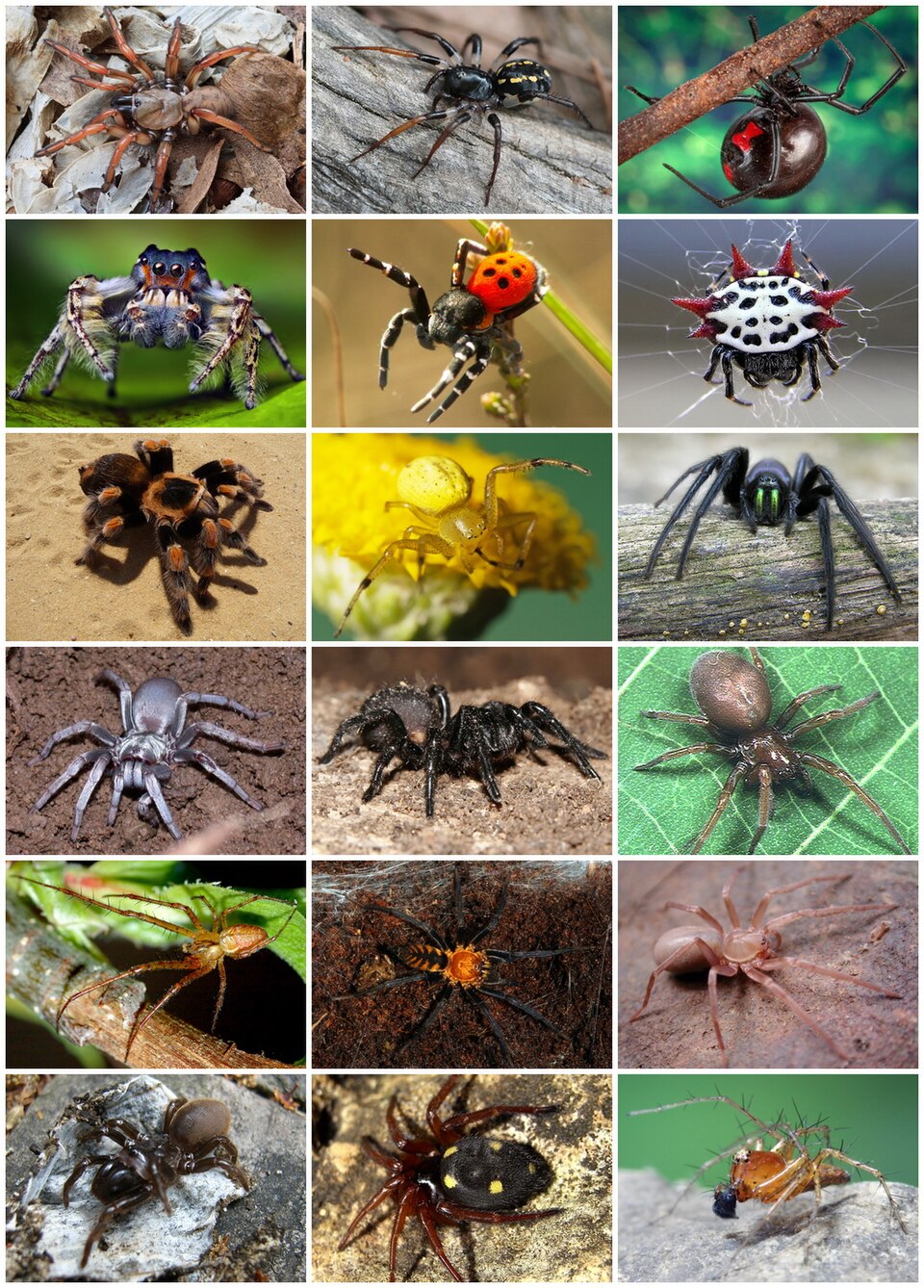
The spider is an arthropod belonging to the order Arachnida, characterized by a body divided into two parts (cephalothorax and abdomen) and four pairs of legs. More than 48,000 species have been described worldwide, occupying nearly all terrestrial environments. Most spiders produce silk and possess venom glands used to immobilize their prey. Although often feared, the vast majority of species is harmless to humans. The term "spider" refers to a very large group rather than a single species.
The body has eight jointed legs and two main regions connected by a pedicel. Most species have eight simple eyes and chelicerae equipped with venom fangs. The abdomen houses spinnerets that produce different types of silk.
Characteristics
Indicative values: they vary by subspecies, sex and region.
Habitat and distribution
Spiders colonize a wide range of environments, from humid tropical forests to arid deserts and urban areas. Some species live near water or even partially beneath its surface. Habitats vary greatly depending on the family and region of the world.
CURRENT RANGE
The group is found on all continents except Antarctica. Species are adapted to tropical zones, temperate regions, and arid areas alike. Tunisia is home to several common spider species, including domestic and garden varieties.
Behaviour
Behavior varies greatly depending on the family: some spin geometric webs to trap their prey, others actively hunt on the ground or from ambush. Most species are solitary and territorial, even toward other members of their kind. Activity is often nocturnal or crepuscular.
Reproduction
Reproduction occurs through mating, often preceded by a courtship display that prevents the male from being mistaken for prey. The female then lays her eggs in a silk cocoon, which she either guards or carries depending on the species. A single clutch can produce several hundred offspring.
Peculiarities
Some species can regenerate a lost leg during successive molts. Spider silk has remarkable mechanical resistance relative to its weight. A few species practice sexual cannibalism after mating.
Threats and conservation
Most species are not threatened globally, although some local populations suffer from habitat destruction. Pesticide use reduces populations of available prey. The irrational fear they inspire sometimes leads to their deliberate destruction.
Numbers and trends vary across sources and regions. See the IUCN assessment for the latest reference data.
Gallery
1 documented photographs.
References
Profile updated 09 September 2026 · Reviewed by the TunisieVet editorial team.
Comments (0)
No comments yet.
CONSERVATION STATUS
Least concern (LC)
IUCN source, latest published assessment.
To discover around: Spider
Videos, facts, stories and records linked to this species.
Similar animals
Other species documented in Animalpedia.

TunisieVet in your pocket 📱🐾 Access your veterinary services wherever you are. [ Download the app ]
Learn more