Presentation
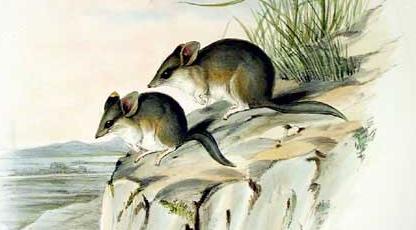
The dunnart is a small carnivorous marsupial from Australia, belonging to the family Dasyuridae. It resembles a mouse in size but has the biological characteristics of marsupials, including an incomplete pouch that shelters the young. There are about twenty species of dunnarts, adapted to a variety of environments ranging from arid desert to forests. This small nocturnal predator feeds mainly on insects and small invertebrates. Discreet and little known to the general public, it plays an important ecological role in regulating arthropod populations.
The dunnart measures between 5 and 10 cm in length, not including the tail, and weighs from a few grams to about 50 grams depending on the species. Its coat is grey-brown, its head is pointed, and its eyes are large and black, adapted to nocturnal life. It has long sensory whiskers and fine legs that allow it to jump and climb nimbly.
Characteristics
Indicative values: they vary by subspecies, sex and region.
Habitat and distribution
Depending on the species, the dunnart occupies highly varied habitats: sandy deserts, shrubby savannas, grasslands, or sclerophyll forests. It shelters in burrows, rocky crevices, or under leaf litter. Some species are specialized for arid habitats while others prefer wetter areas.
CURRENT RANGE
The dunnart is endemic to Australia, where it is present across much of the continent, as well as in New Guinea for certain species. Its distribution varies considerably depending on the species, with some being very localized.
Behaviour
The dunnart is a solitary and nocturnal animal that hunts actively at night and rests during the day in burrows, under rocks, or in dense vegetation. Males display strong territorial behaviour. Its speed and agility allow it to escape quickly from its predators.
Reproduction
Female dunnarts carry their young in an incomplete pouch during the early weeks of development. Gestation is very short, typical of marsupials, and a litter can contain several young, sometimes up to ten. Weaning occurs after a few more weeks spent clinging to the mother's teats or being carried by her.
Peculiarities
The dunnart belongs to the same order as Tasmanian devils and quolls, the Dasyuromorphs. Its marsupial pouch is poorly developed, unlike that of kangaroos, forming merely a simple fold of skin. Some species enter a state of torpor to conserve energy during cold periods or times of food scarcity.
Threats and conservation
The dunnart is threatened by predation from introduced species such as cats and foxes. Habitat degradation caused by agriculture and wildfires also presents a significant threat. Species with restricted distributions are particularly vulnerable to climate change.
Numbers and trends vary across sources and regions. See the IUCN assessment for the latest reference data.
Gallery
1 documented photographs.
References
Profile updated 02 September 2026 · Reviewed by the TunisieVet editorial team.
Comments (0)
No comments yet.
CONSERVATION STATUS
Least concern (LC)
IUCN source, latest published assessment.
Species health
Documented diseases for this species.
This information is provided for educational purposes only and is not a substitute for a veterinary consultation. If you have any concerns about your animal's health, consult a veterinarian.
Similar animals
Other species documented in Animalpedia.