
Presentation
The cockroach is an insect of the order Blattodea found on almost every continent. Several thousand species exist in nature, but only a minority has adapted to human dwellings, such as the German cockroach or the American cockroach. These synanthropic species are considered pests because of their rapid proliferation and the health risks they pose. A flattened body, brown exoskeleton, and long, thread-like antennae are defining characteristics of the group. Active mainly at night, the cockroach shuns light and hides in narrow crevices.
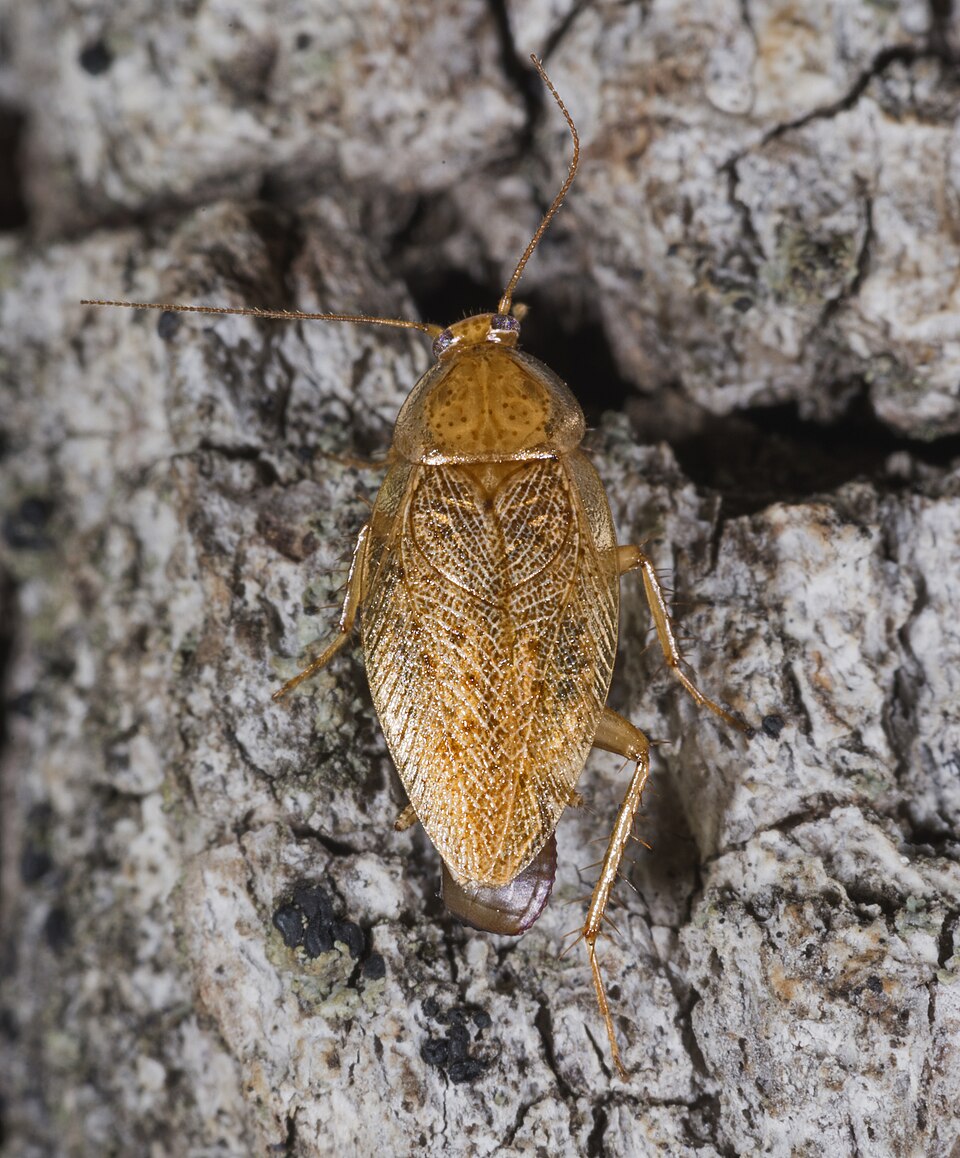
The body is oval and dorsoventrally flattened, allowing it to squeeze into very narrow cracks. The exoskeleton, or pronotum, partially covers the head and ranges from light brown to dark brown depending on the species. The antennae are long and thin, serving as tactile and olfactory sensory organs. Some species have functional wings, others do not.
Characteristics
Indicative values: they vary by subspecies, sex and region.
Habitat and distribution
Wild species occupy diverse habitats such as tropical forests, moist soil, and leaf litter. Synanthropic species live almost exclusively in urban environments, in buildings, kitchens, sewers, and cellars. They seek warmth, moisture, and darkness, particularly near water sources and food supplies.
CURRENT RANGE
Cockroaches are present on all continents except Antarctica, with greater species diversity in tropical regions. Domestic species such as the German cockroach have spread worldwide through human transport. In Tunisia, several synanthropic species are commonly found in urban areas.
Behaviour
The cockroach is a nocturnal and gregarious insect, often gathering in groups in warm, humid areas. It communicates through pheromones deposited along its path, forming trails followed by other roaches. When exposed to light or threatened, it quickly disperses and seeks a dark shelter. Its adaptability and hardiness make it an effective colonizer of urban environments.
Reproduction
The female produces an egg case called an ootheca, which may contain several dozen eggs depending on the species. Development progresses through several larval stages, or nymphs, without complete metamorphosis. Maturity is reached within a few months, and the full life cycle allows rapid reproduction that favors infestations.
Peculiarities
A cockroach can survive several days without its head due to a decentralized nervous system, before dying of dehydration. It ranks among the most radiation-resistant insects compared to many other organisms. Its running speed and ability to squeeze into very tight spaces make it a difficult animal to eliminate.
Threats and conservation
The cockroach is not a threatened species; rather, domestic species are actively fought by humans through insecticides and traps. Growing resistance to certain chemical products complicates pest control efforts. No conservation measures concern this group of insects.
Numbers and trends vary across sources and regions. See the IUCN assessment for the latest reference data.
Gallery
1 documented photographs.
References
Profile updated 25 August 2026 · Reviewed by the TunisieVet editorial team.
Comments (0)
No comments yet.
CONSERVATION STATUS
Least concern (LC)
IUCN source, latest published assessment.
To discover around: Cockroach
Videos, facts, stories and records linked to this species.
Similar animals
Other species documented in Animalpedia.
