
Presentation
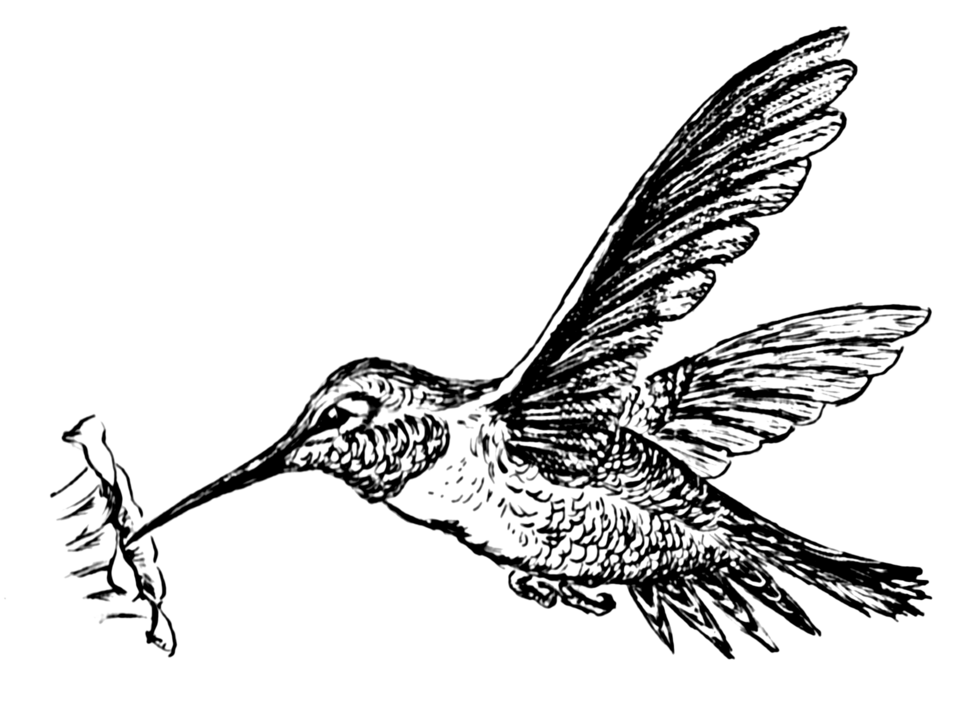
The hummingbird is a small bird belonging to the family Trochilidae, found exclusively in the Americas. It is distinguished by its unique ability to hover in place and even fly backwards, thanks to extremely rapid wing beats. Its tiny size, iridescent plumage, and acrobatic flight make it an iconic bird of tropical gardens and forests in America. It feeds mainly on flower nectar, playing an essential role as a pollinator. There are several hundred species of hummingbirds, varying greatly in size and color. This species is not found in Tunisia or Africa.
The hummingbird typically measures between 7 and 13 cm depending on the species and weighs only a few grams. Its slender, elongated bill, often slightly curved, is adapted for collecting nectar from deep within flowers. Its plumage displays iridescent colors that shimmer in the light from certain angles, particularly in males.
Characteristics
Indicative values: they vary by subspecies, sex and region.
Habitat and distribution
Hummingbirds inhabit a wide variety of environments, from dense tropical rainforests to flower-filled urban gardens, as well as the mountainous regions of the Andes. They seek out areas abundant in nectar-rich flowers above all else. Some species live at high altitudes, while others are found in lowlands or coastal regions.
CURRENT RANGE
The hummingbird is found exclusively on the American continent, from southern Canada to Tierra del Fuego in South America. The greatest diversity of species occurs in the tropical regions of Central and South America. No hummingbird species naturally occurs in Europe, Africa, or Asia.
Behaviour
The hummingbird is a solitary and territorial bird, actively defending the nectar sources in its territory. It is able to hover in place, fly backwards, and move sideways thanks to wing beats that can exceed 50 per second. At night or when resources are scarce, some species enter a state of torpor to conserve energy.
Reproduction
The female builds a tiny nest alone, often woven from plant fibers and spider webs. She typically lays two eggs and incubates them alone for about two weeks. The young are fed by regurgitation of nectar and insects until they fledge.
Peculiarities
The hummingbird is the only bird capable of sustained backwards flight. Its heart can beat more than 1,000 times per minute during intense exertion. It is also among the smallest birds in the world, with some species weighing barely 2 grams.
Threats and conservation
Deforestation and destruction of tropical habitats reduce the floral resources available to many species. Climate change alters flowering periods, disrupting the synchronization with migration cycles. Some species with highly localized ranges face compounding pressures from these threats.
Numbers and trends vary across sources and regions. See the IUCN assessment for the latest reference data.
Gallery
1 documented photographs.
References
Profile updated 06 September 2026 · Reviewed by the TunisieVet editorial team.
Comments (0)
No comments yet.
CONSERVATION STATUS
Least concern (LC)
IUCN source, latest published assessment.
Species health
Documented diseases for this species.
Find a veterinarianThis information is provided for educational purposes only and is not a substitute for a veterinary consultation. If you have any concerns about your animal's health, consult a veterinarian.
To discover around: Hummingbird
Videos, facts, stories and records linked to this species.
RECORD
about 5 cm / 2 g
The world's smallest bird
Measurement recorded in the bee hummingbird (Mellisuga helenae) at adult age.
Similar animals
Other species documented in Animalpedia.

TunisieVet in your pocket 📱🐾 Access your veterinary services wherever you are. [ Download the app ]
Learn more