
Presentation
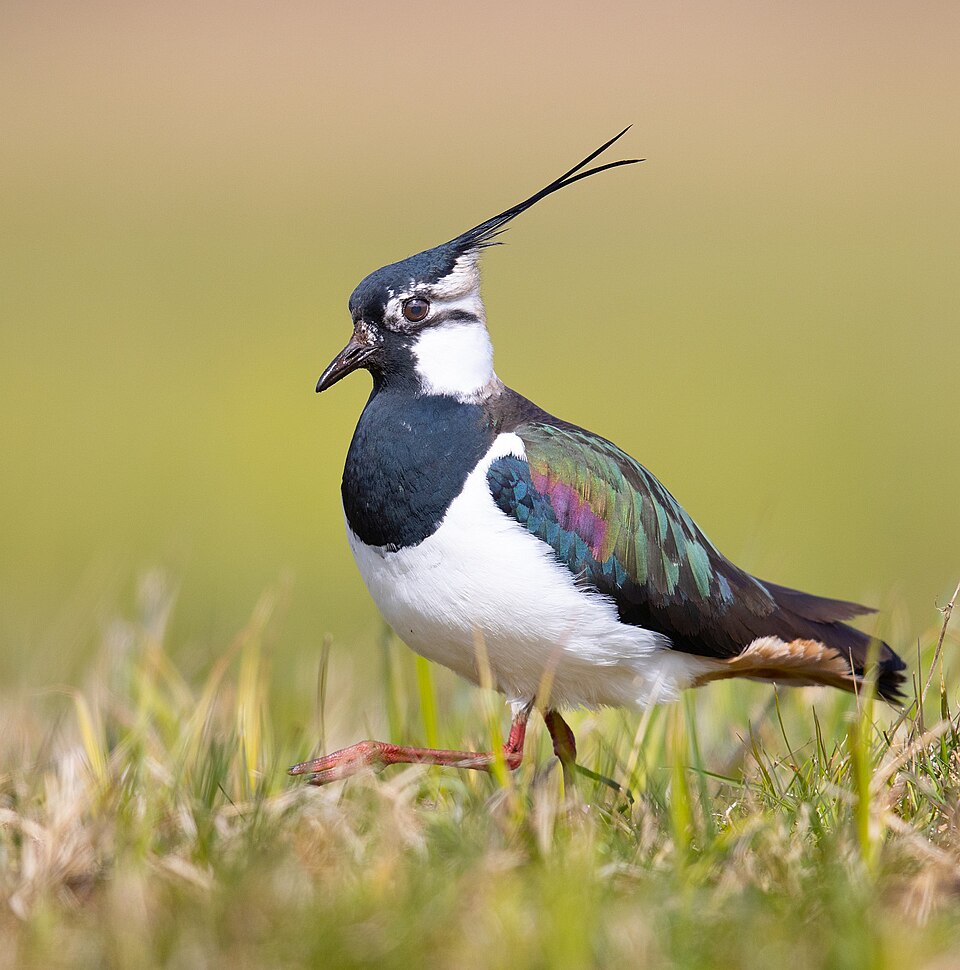
The Northern Lapwing is a medium-sized wading bird recognised by its distinctive slender black crest curving backwards and its plumage with iridescent green and purple sheens on the back. The white belly contrasts with the black breast and reddish under-tail coverts. Its flight is characteristic—slow and fluttering, with broad, rounded wing beats. This species frequents open, agricultural and wet habitats, often in large flocks outside the breeding season. It is widely distributed across Europe and Asia, and winters notably around the Mediterranean basin, including in Tunisia.
The Northern Lapwing measures approximately 28 to 31 cm in length with a wingspan of 70 to 76 cm. Its iridescent plumage shifts in tone with light, ranging from bronze-green to metallic violet. The legs are pinkish and the short beak is black. The slender, tapering crest, longer in males, is its most distinctive visible feature.
Characteristics
Indicative values: they vary by subspecies, sex and region.
Habitat and distribution
The lapwing favours damp meadows, pastures, cultivated fields and sparsely vegetated marshy areas. In winter, it also frequents mudflats and open agricultural plains. It avoids densely wooded or urbanised habitats.
CURRENT RANGE
The species breeds across much of temperate Europe and Asia. Northern populations migrate south in winter, reaching North Africa and the Mediterranean region. In Tunisia, the lapwing is observed mainly as a winter visitor, particularly in wetlands and agricultural plains.
Behaviour
This is a gregarious species, forming large assemblies outside the breeding season that may number several hundred individuals. The Northern Lapwing is known for its acrobatic aerial displays during nesting, including spectacular dives and rolls accompanied by characteristic calls. It defends its nest and young vigorously against predators and intruders, including larger ones. The species is migratory across much of its range.
Reproduction
The female typically lays four eggs directly on the ground in a simple, sparsely lined hollow. Incubation lasts around three to four weeks and is carried out mainly by the female. The chicks are precocial and leave the nest shortly after hatching to follow their parents. Sexual maturity is reached at about one year of age.
Peculiarities
The lapwing employs a distraction display known as injury feigning to lead predators away from its nest, simulating a broken wing. Its nasal cry, often transcribed as 'pee-wit', gave the bird its English name. Its broad, rounded wings, unusual for waders, allow it slow, highly manoeuvrable flight.
Threats and conservation
Agricultural intensification, drainage of wetlands and destruction of natural grasslands threaten the species' breeding sites. Predation of ground nests by mammals and birds is also a significant cause of mortality. European populations have experienced marked decline over several decades.
Numbers and trends vary across sources and regions. See the IUCN assessment for the latest reference data.
Gallery
1 documented photographs.
References
Profile updated 08 September 2026 · Reviewed by the TunisieVet editorial team.
Comments (0)
No comments yet.
CONSERVATION STATUS
Near threatened (NT)
IUCN source, latest published assessment.
Species health
Documented diseases for this species.
Find a veterinarianThis information is provided for educational purposes only and is not a substitute for a veterinary consultation. If you have any concerns about your animal's health, consult a veterinarian.
Similar animals
Other species documented in Animalpedia.

TunisieVet in your pocket 📱🐾 Access your veterinary services wherever you are. [ Download the app ]
Learn more