
Presentation
The Bornean orangutan is a large arboreal primate endemic to the island of Borneo. Characterized by its massive body and extremely long arms, it is one of man's closest genetic cousins. It is a solitary and contemplative animal, which spends the majority of its time in trees in search of food.
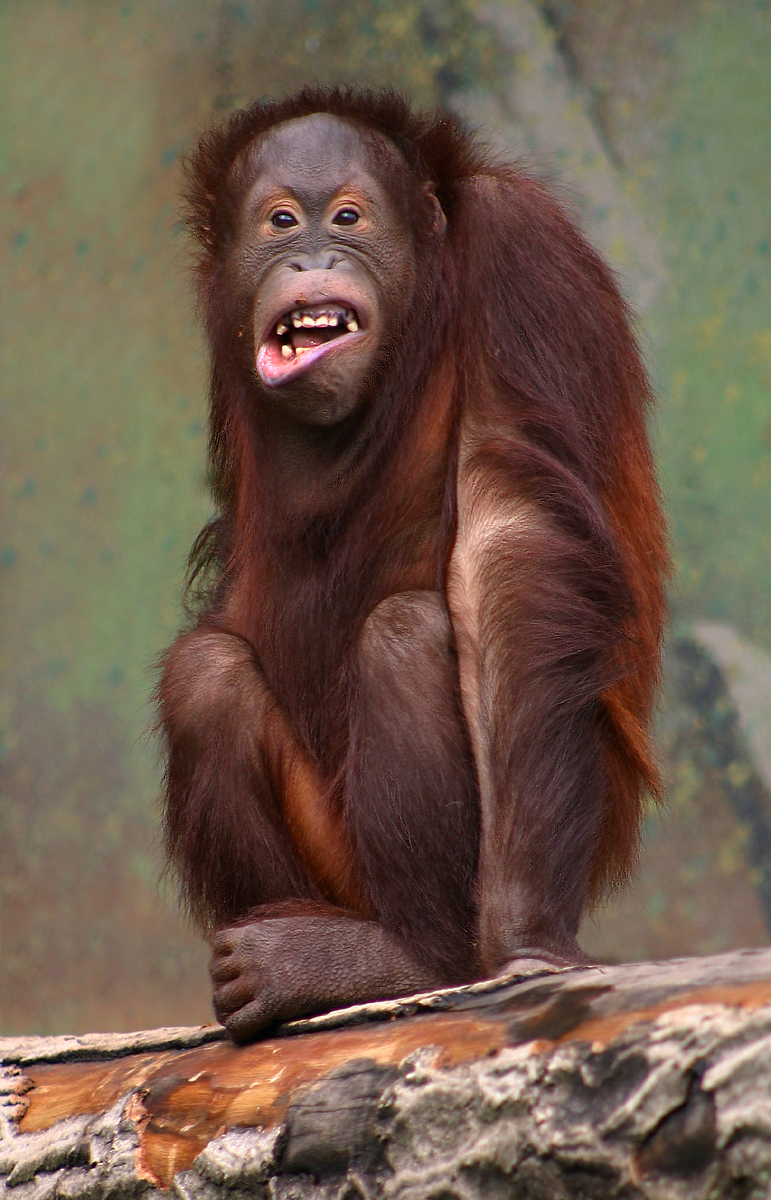
Bornean orangutan has a reddish to dark brown coat that darkens with age. Adult males develop prominent cheeks called facial calluses. Its arms, much longer than its legs, can reach a remarkable wingspan, perfectly adapted to arboreal life. Its hands and feet have five prehensile fingers allowing it excellent grip.
Characteristics
Indicative values: they vary by subspecies, sex and region.
Habitat and distribution
The Bornean orangutan inhabits the tropical rainforests of Borneo, from coastal plains to mountainous regions. It prefers dense primary forests where the trees are large and offer an abundance of fruit. It can also adapt to secondary forests and transition zones, but its ideal habitat remains intact virgin forest.
CURRENT RANGE
Bornean orangutan is endemic to the island of Borneo, shared between Malaysia, Indonesia and Brunei. Its population is fragmented and confined to isolated forest reserves and national parks, mainly in the Malaysian states of Sabah and Sarawak, as well as the Indonesian provinces of Kalimantan. Its distribution area has been drastically reduced over the last century.
Behaviour
Bornean orangutan is mainly solitary, with adults rarely meeting each other except during the breeding season. It is diurnal and spends its days climbing trees in search of food. Every evening, he builds a cozy nest in the branches to sleep. It is an intelligent animal that uses tools and solves complex problems.
Reproduction
Bornean orangutan reaches sexual maturity around 12 to 15 years of age. Females have a reproductive cycle of 28 to 30 days and gestation lasts approximately 8.5 months. A female generally gives birth to a single young which remains dependent on its mother for 6 to 7 years. The interval between two births is approximately 8 years.
Peculiarities
The Bornean orangutan is renowned for its exceptional intelligence, capable of solving puzzles and using objects as tools. It has the remarkable ability to build a different nest every night by intertwining branches. Dominant adult males develop fleshy growths on their cheeks, a symbol of prestige and social status. His name literally means “forest person” in Malay.
Threats and conservation
The Bornean orangutan faces critical threats: massive deforestation for agriculture, including palm oil plantations, destroying its habitat at an alarming rate. Poaching and illegal animal trafficking also threaten remaining populations. Climate change and wildfires are making the situation even worse, classifying this species as critically endangered.
Numbers and trends vary across sources and regions. See the IUCN assessment for the latest reference data.
Gallery
1 documented photographs.
References
UICN — Liste rouge des espèces menacées
Profile updated 29 August 2026 · Reviewed by the TunisieVet editorial team.
Comments (0)
No comments yet.
CONSERVATION STATUS
Critically endangered (CR)
IUCN source, latest published assessment.
Species health
Documented diseases for this species.
This information is provided for educational purposes only and is not a substitute for a veterinary consultation. If you have any concerns about your animal's health, consult a veterinarian.
Similar animals
Other species documented in Animalpedia.

TunisieVet in your pocket 📱🐾 Access your veterinary services wherever you are. [ Download the app ]
Learn more