
Presentation
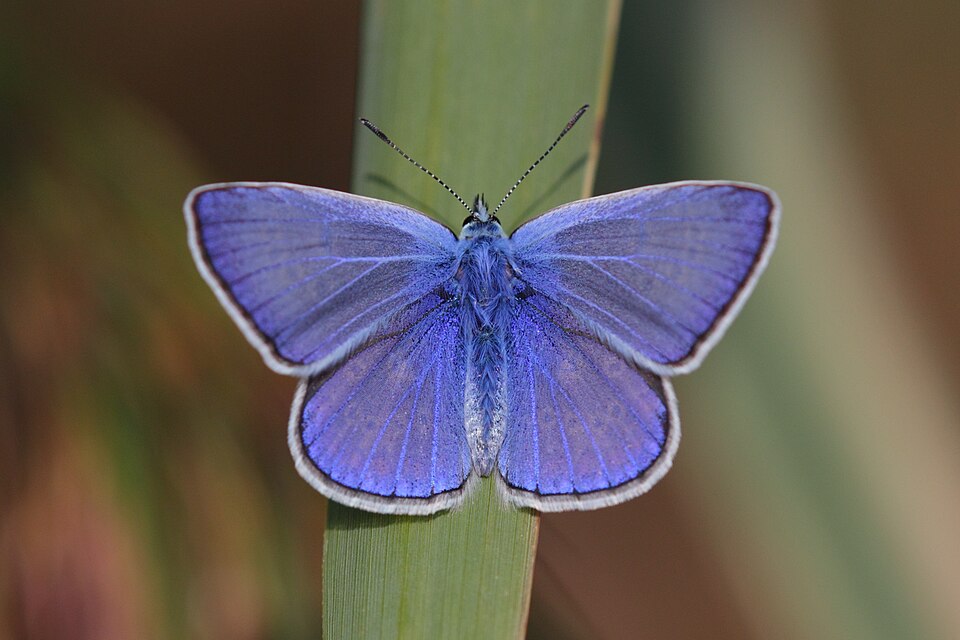
Common Blue is a vernacular name covering several small butterflies in the Lycaenidae family, typically characterized by blue coloring on the upper wing surfaces in males. These day-flying butterflies inhabit flower-rich meadows, wasteland, and forest edges where their host plants grow. The female is usually duller and more brown in color than the male, showing clear sexual dimorphism. Some blue butterfly species have a complex life cycle involving a relationship with ants. The group is widely distributed across Europe, North Africa, and temperate Asia. Several species are sensitive to the degradation of their natural habitat.
A small butterfly with a wingspan typically ranging from 2.5 to 4 cm depending on the species. The upper wing surface is blue in males, while females display duller, brownish or greyish tones. The underside of the wings, often pale grey or beige, is decorated with black spots encircled in white, which helps with species identification.
Characteristics
Indicative values: they vary by subspecies, sex and region.
Habitat and distribution
The Common Blue frequents dry or damp meadows, wasteland, woodland edges, and scrubland areas rich in wild flowers. The presence of the specific host plant greatly influences the local range of each species. Some species tolerate disturbed habitats such as roadsides or vacant ground.
CURRENT RANGE
The group of Common Blues is found in Europe, North Africa, and throughout much of temperate Asia. In North Africa, several species are seen in Tunisia, particularly in mountainous regions and grasslands. The precise distribution varies considerably depending on the species within this group.
Behaviour
The common blue is a day-flying butterfly, most active during sunny spring and summer days. Males often show territorial behavior and actively patrol in search of mates. Flight is generally rapid and fluttering, staying close to the ground and low vegetation.
Reproduction
Mating occurs shortly after the adults emerge, in spring or summer depending on the species and the number of generations each year. The female lays her eggs individually on host plants, often on flower buds. The caterpillar goes through several larval stages before pupating, sometimes near or inside ant nests in species that have a relationship with ants.
Peculiarities
The name 'Common Blue' actually refers to several distinct genera and species, united by their characteristic blue colouring. Some species have a close and complex relationship with ants, ranging from simple mutual benefit to parasitism of ant colonies. Marked sexual dimorphism between blue males and brown females is a recurring trait in the group.
Threats and conservation
The loss of natural meadows and flower-rich wasteland to intensive farming threatens several Common Blue species. The use of pesticides reduces flowering plants and directly affects caterpillars and adults. Fragmentation of habitats isolates local populations, making some species vulnerable at the regional level.
Numbers and trends vary across sources and regions. See the IUCN assessment for the latest reference data.
Gallery
1 documented photographs.
References
Profile updated 09 September 2026 · Reviewed by the TunisieVet editorial team.
Comments (0)
No comments yet.
CONSERVATION STATUS
Least concern (LC)
IUCN source, latest published assessment.
To discover around: Common Blue
Videos, facts, stories and records linked to this species.
Similar animals
Other species documented in Animalpedia.

TunisieVet in your pocket 📱🐾 Access your veterinary services wherever you are. [ Download the app ]
Learn more