Presentation
Coral refers to a group of marine invertebrate animals belonging to the class Anthozoa, forming colonies of calcareous polyps. These organisms build coral reefs over the course of centuries—ecosystems among the richest and most diverse on the planet. Although they resemble plants or minerals, corals are indeed animals, close relatives of sea anemones and jellyfish. They play a major ecological role by hosting approximately one quarter of all marine biodiversity worldwide. Mediterranean red coral, harvested for jewelry, is also found off the Tunisian coast. Its extremely slow growth makes it particularly vulnerable to human and climate disturbances.
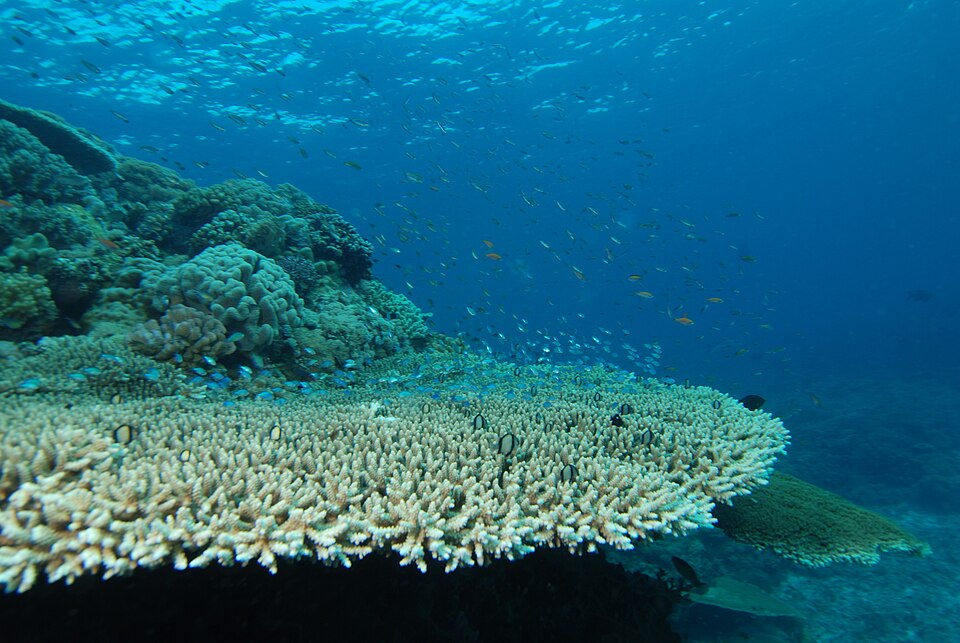
Coral is a colonial cnidarian made up of thousands of genetically identical polyps connected to one another. Each polyp secretes an external calcareous skeleton that, as it accumulates, forms reef structures. Colonies display varied shapes—branching, massive, encrusting, or tabletop—depending on the species and environmental conditions.
Characteristics
Indicative values: they vary by subspecies, sex and region.
Habitat and distribution
Coral reefs develop in clear, warm, shallow waters where light penetrates sufficiently to allow photosynthesis of zooxanthellae. Mediterranean red coral prefers darker, deeper rocky environments between 20 and 200 meters. Water quality and stable salinity are essential for colony survival.
CURRENT RANGE
Reef-building corals are found mainly in warm, shallow tropical waters, notably around Australia, Southeast Asia, the Caribbean, and the Indian Ocean. Red coral, less demanding in terms of temperature, is present in the Mediterranean Sea, including off Tunisian coasts around the island of Tabarka. Other species of cold-water coral exist at depth in the North Atlantic.
Behaviour
Coral is a sessile animal, fixed to the substrate, that captures zooplankton using its stinging tentacles at night. It lives in symbiosis with microscopic algae called zooxanthellae, which provide most of its energy through photosynthesis. This association explains its slow growth and dependence on clear, well-lit water. Heat stress can break this symbiosis, causing bleaching.
Reproduction
Coral reproduces both asexually, through budding of new polyps, and sexually, by releasing gametes into the water. Many tropical species engage in synchronized spawning, often linked to lunar cycles, simultaneously releasing millions of gametes. Larvae resulting from fertilization drift in the plankton before settling on a substrate to form a new colony.
Peculiarities
Coral is capable of reconstituting its limestone skeleton even after significant damage, as long as a living part remains. Synchronized reproduction of certain species, known as mass spawning, constitutes one of the most impressive natural spectacles of the oceans. Mediterranean red coral has historically been harvested by fishermen of Tabarka for jewelry.
Threats and conservation
Climate warming causes massive bleaching episodes by disrupting the symbiosis with zooxanthellae. Ocean acidification weakens the formation of limestone skeletons, while pollution, overfishing, and tourism directly degrade reefs. Mediterranean red coral also faces pressure from collection for jewelry.
Numbers and trends vary across sources and regions. See the IUCN assessment for the latest reference data.
Gallery
1 documented photographs.
References
Profile updated 01 September 2026 · Reviewed by the TunisieVet editorial team.
Comments (0)
No comments yet.
CONSERVATION STATUS
Near threatened (NT)
IUCN source, latest published assessment.
Species health
Documented diseases for this species.
Find a veterinarianThis information is provided for educational purposes only and is not a substitute for a veterinary consultation. If you have any concerns about your animal's health, consult a veterinarian.
To discover around: Coral
Videos, facts, stories and records linked to this species.
Similar animals
Other species documented in Animalpedia.

Be among the first to use our app. Sign up and get early Google Play access.
Discover