
Presentation
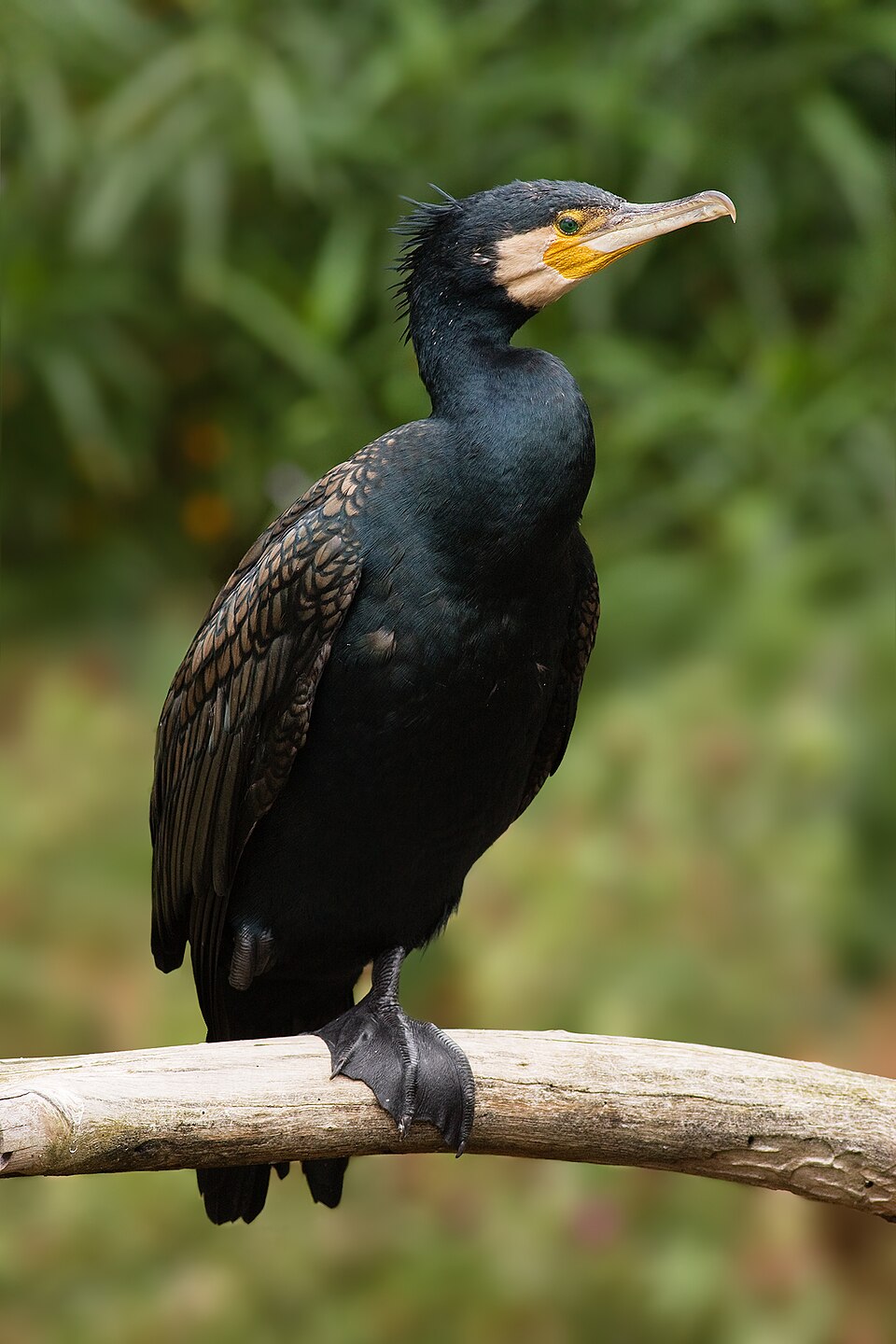
The cormorant is a large water bird easily recognized by its dark plumage, long neck, and hooked bill. It inhabits coastlines, lakes, and rivers where it hunts by diving. An excellent underwater swimmer, it catches prey using powerful webbed feet and a streamlined body. Cormorants are often seen perched with wings spread, a characteristic posture that allows them to dry their feathers, which are not fully waterproof. This species is widespread across Europe, Africa, and Asia, and nests in colonies that can be quite large.
The cormorant measures between 80 and 100 cm in length with a wingspan that can reach 1.60 m. Its plumage is mostly black with greenish or bronze reflections depending on the light, and certain subspecies have a white throat and cheeks. Its long hooked bill is adapted for catching slippery fish. Unlike many water birds, the cormorant's plumage is only partially waterproof, which means it must dry its wings regularly.
Characteristics
Indicative values: they vary by subspecies, sex and region.
Habitat and distribution
The cormorant frequents a wide variety of aquatic environments, from marine coasts to inland lakes and rivers. It particularly favours calm, fish-rich waters with perches nearby, such as rocks, dead trees, or artificial structures. It also adapts to wetland areas modified by humans, including near urban zones. Its presence is often linked to local fish abundance.
CURRENT RANGE
The species is widely distributed across Europe, Africa, Asia, and Oceania, with both coastal and inland populations. In Tunisia, the cormorant is observed notably in winter on lakes, dams, and the coastline. Some European populations migrate to North Africa during the cold season. Its worldwide range makes it one of the most common cormorant species.
Behaviour
The cormorant is a gregarious bird that often gathers in colonies for breeding and in roosts for resting. It alternates between active fishing periods and long stretches of immobility with wings open to dry its plumage in the sun or wind. Active during the day, it hunts mainly in the morning and late afternoon. Some populations are migratory while others remain sedentary depending on climate conditions.
Reproduction
Breeding takes place in spring, in colonies established on cliffs, trees, or small islands sheltered from predators. The female typically lays 3 to 4 eggs, incubated by both parents for about one month. Chicks remain in the nest for several weeks before becoming independent, fed by regurgitation from the adults. Sexual maturity is reached around 3 years of age.
Peculiarities
The cormorant's partially water-absorbent plumage, often perceived as a drawback, actually improves its buoyancy and facilitates diving. The wings-spread posture it regularly adopts is an emblematic drying behaviour. Historically, certain Asian cultures domesticated cormorants for traditional fishing.
Threats and conservation
The cormorant sometimes becomes a point of conflict with fishing and aquaculture activities, leading to management measures in some countries. Water pollution and degradation of wetland habitats pose localised threats to its environments. Overall, its populations remain stable or even expanding in many regions.
Numbers and trends vary across sources and regions. See the IUCN assessment for the latest reference data.
Gallery
1 documented photographs.
References
Profile updated 06 September 2026 · Reviewed by the TunisieVet editorial team.
Comments (0)
No comments yet.
CONSERVATION STATUS
Least concern (LC)
IUCN source, latest published assessment.
Species health
Documented diseases for this species.
Find a veterinarianThis information is provided for educational purposes only and is not a substitute for a veterinary consultation. If you have any concerns about your animal's health, consult a veterinarian.
Similar animals
Other species documented in Animalpedia.

TunisieVet in your pocket 📱🐾 Access your veterinary services wherever you are. [ Download the app ]
Learn more