
Presentation
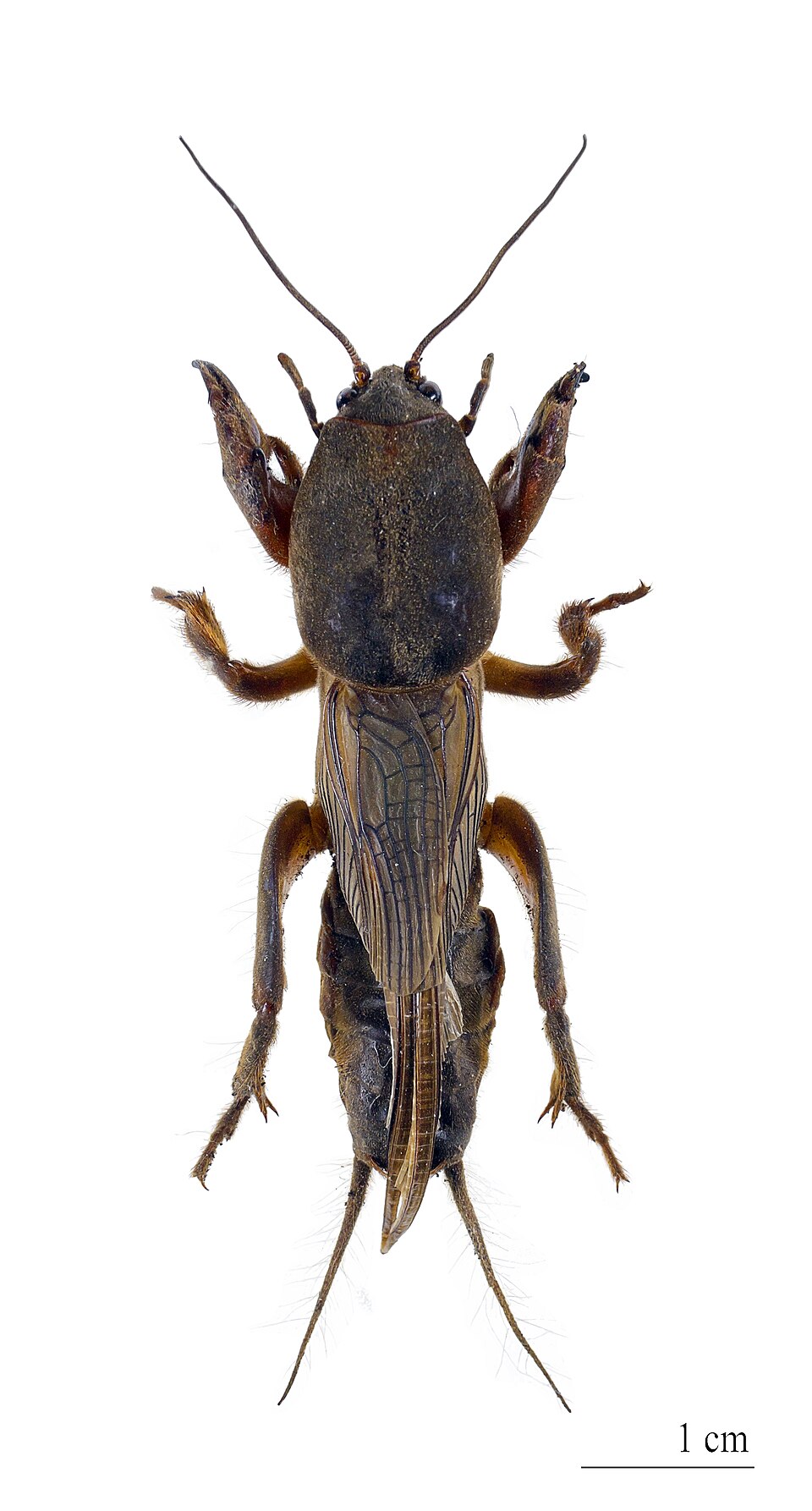
The mole cricket is a burrowing insect belonging to the family Gryllotalpidae, a relative of crickets. It lives primarily underground in tunnels it digs using its front legs, which are robust and flattened like small shovels. Its cylindrical body, brown-reddish in color and covered with fine hair, typically measures between 3.5 and 5 centimeters. It is best known to gardeners and farmers for the damage it causes to the roots of cultivated plants. Quiet during the day, it becomes more active at night, especially in spring during the breeding season.
The mole cricket's body is elongated, cylindrical, and covered with a velvety brown-reddish exoskeleton. Its front legs, broad and toothed, are specialized for digging in soil. It has functional wings that allow it to fly short distances, particularly during nighttime dispersal.
Characteristics
Indicative values: they vary by subspecies, sex and region.
Habitat and distribution
The mole cricket favors loose and moist soils rich in organic matter, such as gardens, vegetable patches, meadows, and riverbanks. It avoids overly dry or compact terrain, preferring irrigated areas or zones near water sources.
CURRENT RANGE
The species is widely distributed throughout Europe, North Africa, and certain regions of western Asia. It is present around the Mediterranean, including in Tunisia, where it inhabits irrigated agricultural areas.
Behaviour
A burrowing and primarily nocturnal animal, the mole cricket spends most of its life in underground tunnels that it actively digs. Males produce a characteristic chirp by rubbing their wings together to attract females at dusk. It can also swim and fly short distances if necessary.
Reproduction
Mating occurs in spring, after the male has attracted the female with his song emitted from the entrance to his burrow. The female then lays several dozen eggs in an underground chamber that she actively protects. The young larvae resemble miniature adults and undergo several molts before reaching the adult stage, over one to two years.
Peculiarities
Its front legs shaped like spades represent a remarkable adaptation for burrowing, converging with that of the mole despite the insects' very different evolutionary lineages. The male's song, amplified by the shape of his burrow which acts as a resonance chamber, can be heard several meters away.
Threats and conservation
The mole cricket is not threatened; it is often considered a pest by gardeners and farmers due to the damage it causes to crop roots. Pesticide use and intensive mechanical soil cultivation can locally reduce its populations.
Numbers and trends vary across sources and regions. See the IUCN assessment for the latest reference data.
Gallery
1 documented photographs.
References
Profile updated 10 September 2026 · Reviewed by the TunisieVet editorial team.
Comments (0)
No comments yet.
CONSERVATION STATUS
Least concern (LC)
IUCN source, latest published assessment.
Similar animals
Other species documented in Animalpedia.

TunisieVet in your pocket 📱🐾 Access your veterinary services wherever you are. [ Download the app ]
Learn more