
Presentation
The firefly is a beetle famous for its ability to produce light, a phenomenon called bioluminescence. Only the female, which remains larval in form and wingless throughout her life, emits a continuous greenish glow from the tip of her abdomen to attract winged males on summer nights. This small, discreet creature hides during the day in low vegetation, damp grass, or under stones, emerging only at dusk. Its presence is often considered an indicator of a healthy ecosystem, as it is sensitive to light pollution and pesticides. The firefly belongs to the family Lampyridae, which includes several hundred luminescent species found worldwide. In Europe, it remains the most emblematic species of this group.
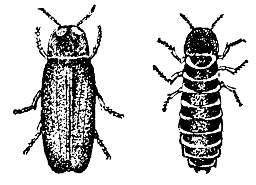
The male has an elongated body, functional wings, and large eyes adapted for night vision, while the female resembles a larva, lacking wings or developed wing covers. Bioluminescence results from a chemical reaction between luciferin, oxygen, and an enzyme called luciferase, producing cold light with no heat release. Larvae are predatory, with curved mandibles used to inject digestive juices into their prey. The general coloration of the species ranges from drab brown to blackish, inconspicuous except when light is emitted.
Characteristics
Indicative values: they vary by subspecies, sex and region.
Habitat and distribution
The firefly inhabits damp meadows, forest edges, hedgerows, and untreated gardens, where soil moisture supports the presence of its prey. It avoids areas with strong artificial lighting, as stray light disrupts light-based communication between the sexes. It occurs in both rural and urban fringe settings, provided there is sufficient low vegetation and moisture.
CURRENT RANGE
The species is widespread across Europe, from southern Scandinavia to the Mediterranean basin. It is also found in North Africa and parts of western Asia. Its distribution remains fragmented, however, due to the progressive loss of suitable habitats and increasing light pollution.
Behaviour
The firefly is strictly nocturnal and remains inactive during the day, hidden in the leaf litter or under debris. The female climbs onto a plant support in the evening and emits her light continuously to signal her presence to flying males, which locate the signal using their eyes. Once mating is complete, the female typically stops glowing and lays her eggs shortly afterward. Larvae, also active at night, actively hunt their prey on the ground.
Reproduction
Reproduction occurs in summer, when females signal their position through bioluminescence to attract flying males. After mating, the female deposits several dozen eggs in low vegetation or moist soil, then dies shortly after egg-laying. The larvae that emerge develop over one to two years, undergoing several molts before reaching adulthood. Complete metamorphosis takes place the following spring, with a brief pupal phase before adults emerge.
Peculiarities
The most striking feature of this species is extreme sexual dimorphism: the female resembles a larva more than a typical adult insect. The light produced is cold, with no loss of thermal energy, unlike artificial light sources. The bioluminescence phenomenon of fireflies has long fascinated naturalists and continues to inspire biochemical research.
Threats and conservation
The main threats to the firefly are light pollution, which disrupts nocturnal communication between males and females, and intensive pesticide use, which reduces its prey and poisons it directly. The disappearance of natural meadows and hedgerows in favour of urbanization also contributes to local population decline. Though not threatened globally, the species shows signs of decline in several European regions.
Numbers and trends vary across sources and regions. See the IUCN assessment for the latest reference data.
Gallery
1 documented photographs.
References
Profile updated 27 August 2026 · Reviewed by the TunisieVet editorial team.
Comments (0)
No comments yet.
CONSERVATION STATUS
Least concern (LC)
IUCN source, latest published assessment.
Similar animals
Other species documented in Animalpedia.

📱 عندك صفحة على فايسبوك؟ باهي… أما وين موقعك؟ الصفحة وحدها ما تكفيش. موقعك يخلي الناس تلقاك، يعرفوك أكثر ويثقو في خدمتك. 🌐 موقع باسم مشروعك 📲 يخدم أربعة وعشرين ساعة 🤝 يعطي ثقة واحترافية .📈 يعاونك تكبّر خدمتك خلّيه موجود وين الناس تلوّج عليه 🚀نعملولك موقع يشرّف مشروعك
WhatsApp