
Presentation
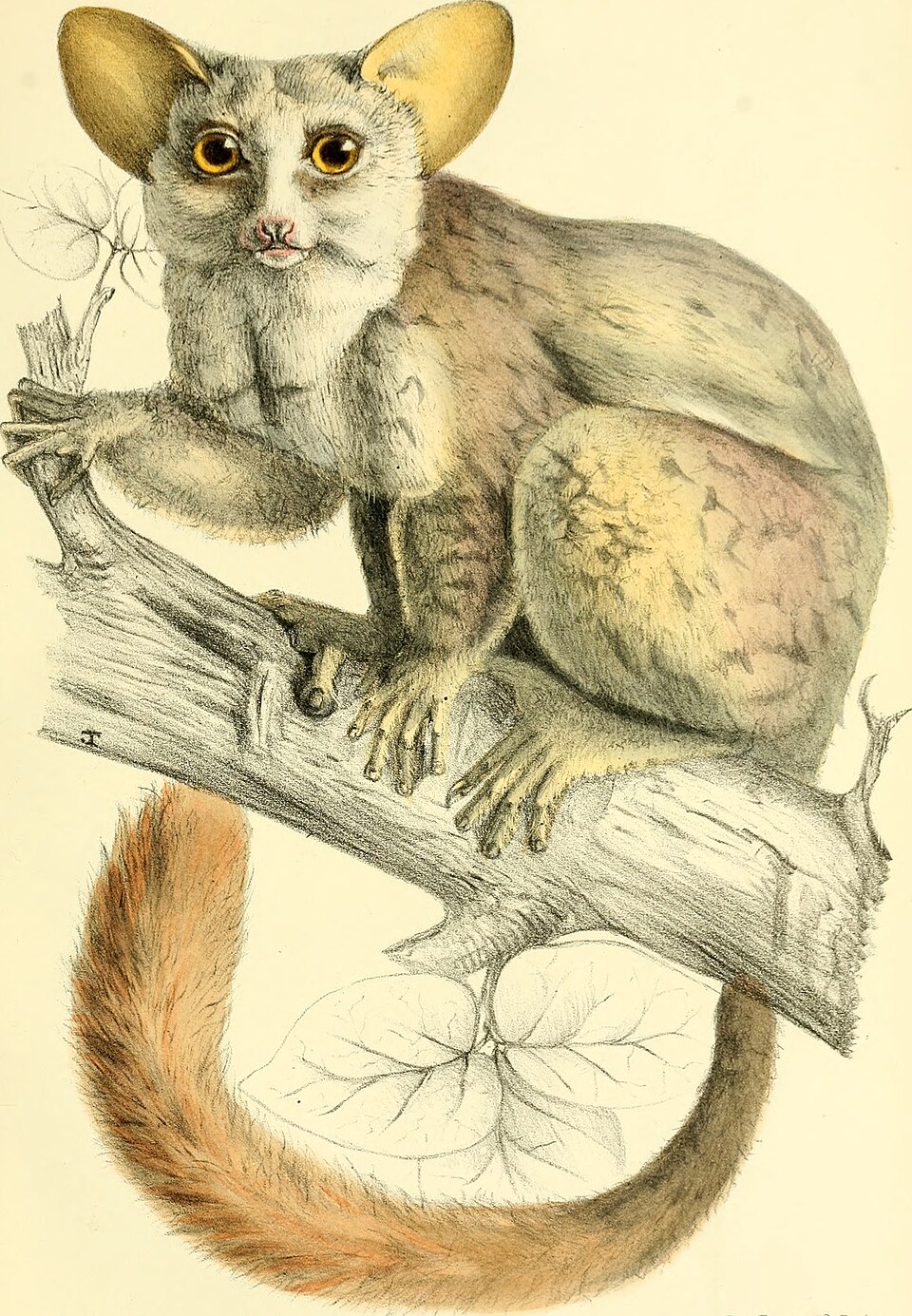
The Galago is a small nocturnal primate native to sub-Saharan Africa, belonging to the Galagidae family. Its large bulging eyes and mobile shell-shaped ears give it a characteristic appearance. Agile and lively, it moves in powerful leaps between branches thanks to its highly developed hind legs. Its nocturnal cry, reminiscent of the cries of an infant, earned it the nickname “bush baby”. Several species exist, varying in size and geographic distribution. It remains largely unknown to the general public despite growing popularity in captivity.
The Galago is generally between 15 and 40 cm long depending on the species, not including the tail, with a long bushy tail serving as a balancer. Its coat is soft, dense, gray to reddish-brown in color depending on the species. Its eyes, very large compared to the size of its head, give it excellent night vision. Its thin, membranous ears can fold independently to protect against thorns or detect insects.
Characteristics
Indicative values: they vary by subspecies, sex and region.
Habitat and distribution
The Galago lives mainly in the tropical forests, gallery forests and savannah woodlands of sub-Saharan Africa. It prefers areas with dense plant cover offering shelter and food resources. Some species also adapt to bushy areas and forest edges. It is rarely observed outside of wooded areas.
CURRENT RANGE
Galago is present across much of sub-Saharan Africa, from Senegal to East and Southern Africa depending on the species. Its distribution varies greatly from one species to another, some being very localized. It is not naturally present in North Africa or Tunisia.
Behaviour
The Galago is a strictly nocturnal and arboreal animal, active from dusk to dawn. It moves in spectacular jumps that can reach several meters thanks to the power of its hind limbs. Solitary or living in small family groups depending on the species, it marks its territory by deposits of urine on its hands and feet. Its vocal communication is rich, including piercing cries used to signal its presence or express alarm.
Reproduction
The Galago female gives birth to one or two young after a gestation of approximately four months. Newborns are born poorly developed and are first left hidden in a nest while the mother feeds. Weaning generally occurs around two to three months. Sexual maturity is reached between eight months and one year depending on the species.
Peculiarities
The Galago's cry, resembling the cries of a human baby, is the origin of its English vernacular name "bushbaby". Its ability to jump great distances relative to its size makes it a discreet athlete of the African canopy. Its folding ears and hands capable of firmly grasping branches are remarkable adaptations to arboreal nocturnal life.
Threats and conservation
Deforestation and fragmentation of its forest habitat constitute the main threats to some species of Galagos. The illegal trade in exotic pets also affects certain populations. However, most species remain classified as low concern due to their wide distribution and adaptability.
Numbers and trends vary across sources and regions. See the IUCN assessment for the latest reference data.
Gallery
1 documented photographs.
References
Profile updated 26 August 2026 · Reviewed by the TunisieVet editorial team.
Comments (0)
No comments yet.
CONSERVATION STATUS
Least concern (LC)
IUCN source, latest published assessment.
Species health
Documented diseases for this species.
This information is provided for educational purposes only and is not a substitute for a veterinary consultation. If you have any concerns about your animal's health, consult a veterinarian.
Similar animals
Other species documented in Animalpedia.

TunisieVet in your pocket 📱🐾 Access your veterinary services wherever you are. [ Download the app ]
Learn more