
Presentation
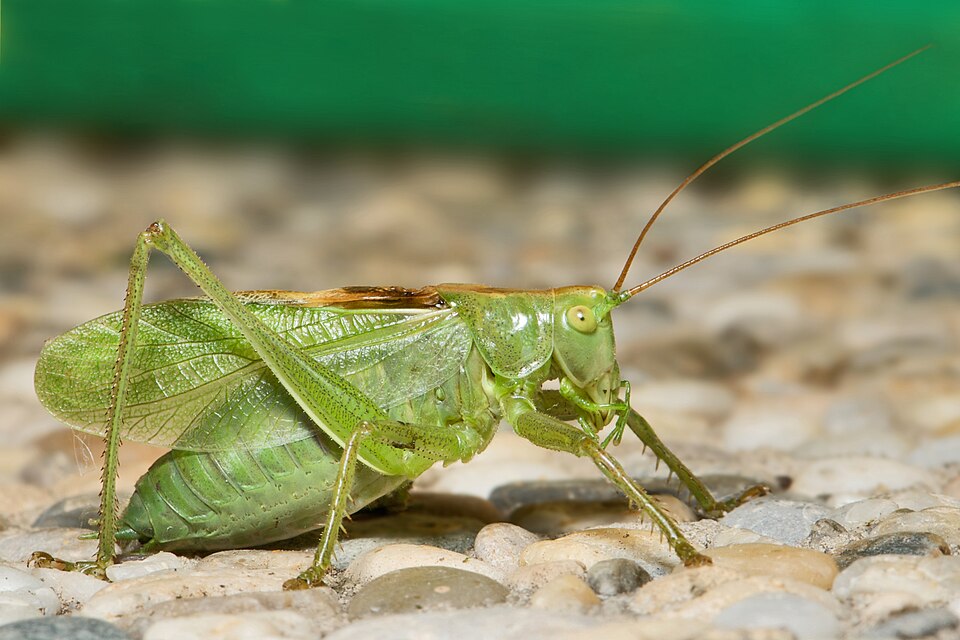
The grasshopper is a jumping insect belonging to the suborder Ensifera, identifiable by its long, thread-like antennae that are often longer than its body. It differs from the cricket in its antennae and its method of stridulation, produced by rubbing its wing covers against each other. Present in many terrestrial habitats, it plays an important role in food chains as prey for numerous birds and small predators. In Tunisia, several grasshopper species are common in rural and steppe regions. The term "grasshopper" commonly refers to many species in the family Tettigoniidae. These are mainly nocturnal insects, most active at dusk and during the night.
The body is elongated, often green or brown depending on the species, which promotes camouflage in vegetation. The hind legs are powerful and adapted for jumping, while the long antennae serve as tactile and olfactory sensory organs. The front wings, called wing covers, are used to produce the characteristic song through stridulation.
Characteristics
Indicative values: they vary by subspecies, sex and region.
Habitat and distribution
Grasshoppers occupy a wide variety of grassy and vegetated environments, from meadows to steppe zones and forest edges. They particularly favour areas where low vegetation provides both food and camouflage. Some species also adapt to gardens and urban green spaces.
CURRENT RANGE
Grasshoppers are found on nearly all continents, except polar regions. They are especially diverse in temperate and Mediterranean zones, including North Africa. In Tunisia, several species are common in steppe and agricultural regions.
Behaviour
This insect is generally solitary and territorial, with males singing to attract females or mark their territory. Activity is mainly nocturnal or crepuscular, with the grasshopper hiding in vegetation during the day. Jumping is the primary escape method when faced with predators, supplemented by occasional flight in some winged species.
Reproduction
The female lays her eggs in the soil or in plant tissues using a long, sabre-shaped ovipositor. Development occurs through incomplete metamorphosis, with young grasshoppers resembling miniature adults lacking wings. Several successive moults are necessary before reaching the adult stage.
Peculiarities
The grasshopper's hearing organs are located on the front legs rather than on the head. Each species has its own song, which allows identification and communication between individuals. Some species display remarkable mimicry of surrounding leaves or twigs.
Threats and conservation
Intensive use of pesticides in agriculture reduces grasshopper populations in certain regions. Loss of natural habitats through urbanisation also threatens several species. Overall, however, the group is not subject to major conservation concerns.
Numbers and trends vary across sources and regions. See the IUCN assessment for the latest reference data.
Gallery
1 documented photographs.
References
Profile updated 25 August 2026 · Reviewed by the TunisieVet editorial team.
Comments (0)
No comments yet.
CONSERVATION STATUS
Least concern (LC)
IUCN source, latest published assessment.
Similar animals
Other species documented in Animalpedia.
