
Presentation
The doodlebug is a beetle of the scarab family, well known across Europe and North Africa for its spring outbreaks. Its life cycle includes a long underground larval phase followed by a brief, winged adult stage. For many years it was regarded as an agricultural pest because of the damage caused by its larvae to crop roots, yet it has also captivated naturalists through the regularity of its cycles. Its populations declined sharply in the twentieth century owing to the widespread use of pesticides. It remains a familiar insect in gardens and countryside, often remembered for spring evenings when it strikes against lit windows.
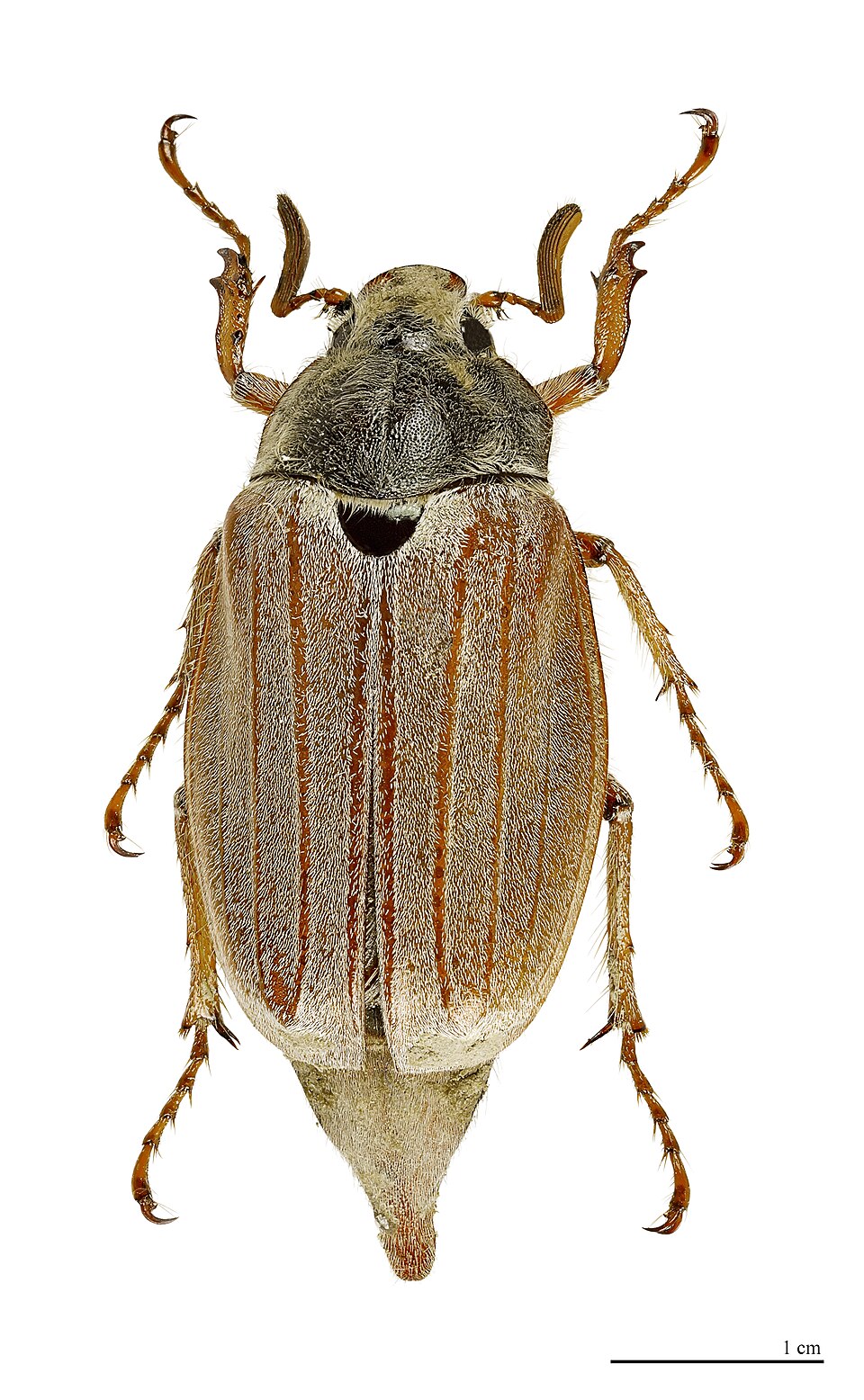
The doodlebug is recognized by its brown-reddish and black body, its glossy wing case, and its fan-shaped antennae, which are more developed in males. It measures between 20 and 30 mm long and has striated elytra covering membranous wings. Its abdomen terminates in a characteristic point called the pygidium.
Characteristics
Indicative values: they vary by subspecies, sex and region.
Habitat and distribution
The doodlebug beetle inhabits meadows, cultivated fields, orchards and forest edges where loose soil allows larval development. Adults seek leafy trees for feeding and breeding. Sandy or light soils are particularly suitable for larval establishment.
CURRENT RANGE
The common doodlebug beetle is widely distributed across temperate Europe, from the Mediterranean basin to Scandinavia. Related species exist in North Africa, particularly in Tunisia, where they occupy similar agricultural habitats. Its presence is generally linked to cultivated and forested areas of temperate and semi-arid regions.
Behaviour
The adult doodlebug is most active at dusk and flies heavily towards light sources. It feeds on leaves at night and remains relatively inactive during the day, hidden in soil or foliage. The larvae, called white grubs, live buried in the earth where they feed on roots for several years. Certain years see significant outbreaks followed by long periods of scarcity.
Reproduction
Mating occurs shortly after adults emerge in spring. The female lays her eggs in the soil in multiple batches that may total several dozen eggs. The larvae that hatch develop slowly in the earth over two to three years before pupating and emerging as adults.
Peculiarities
The doodlebug beetle's flight is loud and clumsy, often appearing disorderly due to its poor manoeuvrability. Its emergence in large numbers in certain years, followed by long periods of absence, puzzled observers for many years until its multi-year life cycle became understood. The term 'doodlebug beetle' has also entered everyday language to describe an absent-minded person.
Threats and conservation
Doodlebug beetle populations declined significantly during the twentieth century due to intensive use of agricultural pesticides aimed at limiting damage from larvae. Some local species are rarer today than they once were, although the common species is not globally threatened. Loss of natural habitats and reduction of untreated soils also affect their reproductive cycle.
Numbers and trends vary across sources and regions. See the IUCN assessment for the latest reference data.
Gallery
1 documented photographs.
References
Profile updated 26 August 2026 · Reviewed by the TunisieVet editorial team.
Comments (0)
No comments yet.
CONSERVATION STATUS
Least concern (LC)
IUCN source, latest published assessment.
Similar animals
Other species documented in Animalpedia.
