
Presentation
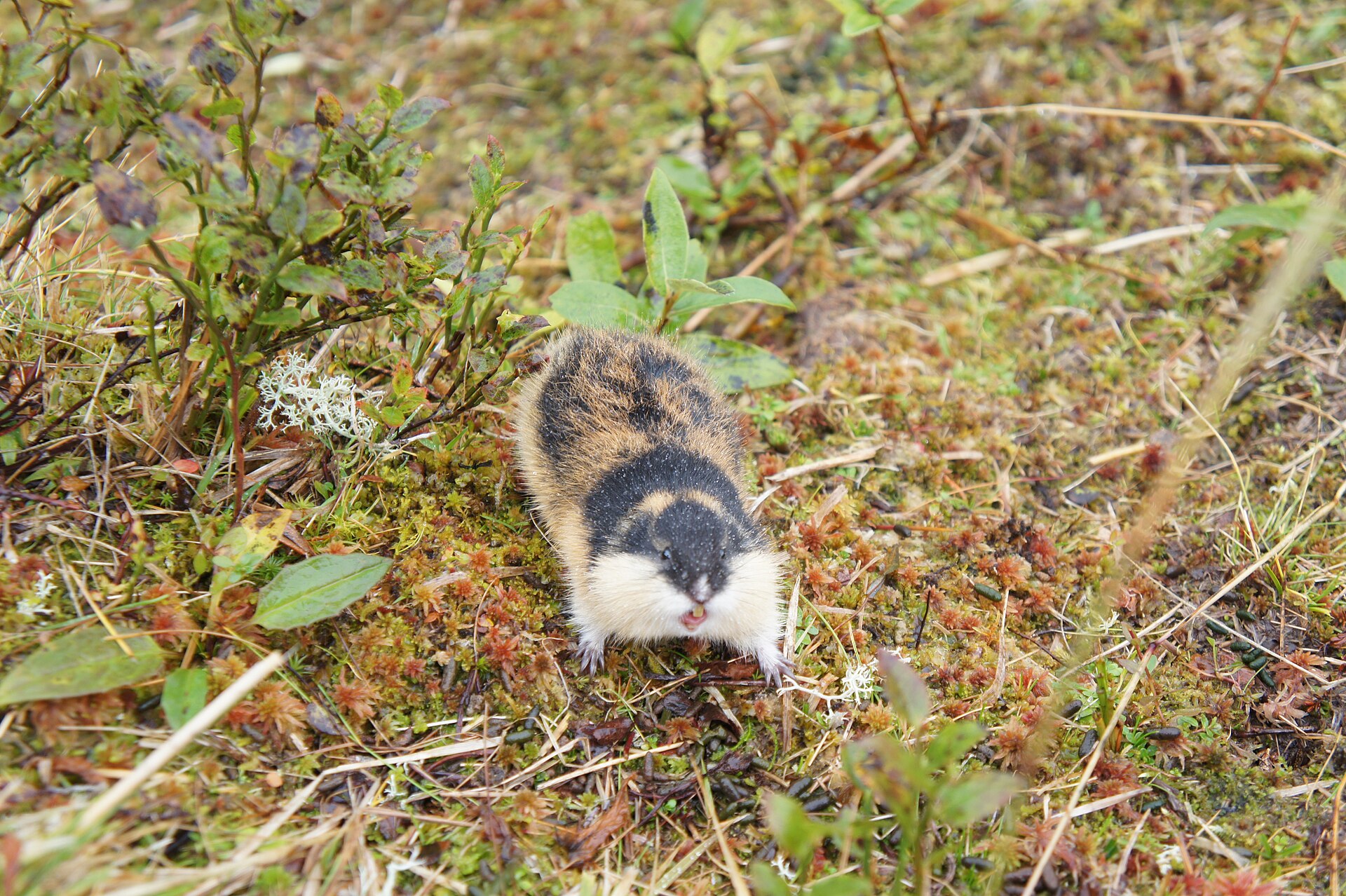
Lemming is a small Arctic rodent of the Cricetidae family, known for its spectacular population cycles and the legends of mass migrations associated with it. It lives in cold regions of the northern hemisphere, including the Scandinavian, Siberian and North American tundra. Its stocky body and dense fur allow it to withstand extreme winters. Active all year round, it digs galleries under the snow to feed and escape predators. Several species exist, including the variable Lemming which changes color depending on the season.
The Lemming measures between 10 and 18 cm long and weighs 30 to 100 g depending on the species. Its body is round, its legs short and its tail very small, which limits heat loss. Its thick fur can be brown, gray or white in winter in certain species such as the variable Lemming. Its front claws are adapted to digging through snow and frozen ground.
Characteristics
Indicative values: they vary by subspecies, sex and region.
Habitat and distribution
The Lemming lives in the arctic and subarctic tundra, an open, cold environment often covered in snow for much of the year. It also occupies alpine meadows and grassy areas of northern mountainous regions. It digs burrows in the ground or under the snow to protect itself from the cold and predators.
CURRENT RANGE
Lemming is found in circumpolar regions of the Northern Hemisphere, including Scandinavia, Russia, Siberia, Greenland, and northern North America. It is completely absent from North Africa and therefore from Tunisia. Its distribution follows tundra and cold taiga zones.
Behaviour
The Lemming is a solitary and territorial animal, active day and night. It is known for its cyclical population cycles, with population explosions followed by sharp drops every 3 to 4 years. These variations strongly influence populations of predators such as the snowy owl and the arctic fox. Contrary to popular legend, there is no evidence of mass suicide at sea.
Reproduction
The female can have several litters per year, including under the snow in winter, which is rare among mammals. Gestation lasts approximately 20 days and gives birth to 4 to 8 young per litter. Sexual maturity is reached quickly, in a few weeks, which explains the speed of population explosions.
Peculiarities
Lemming is famous for the myth of collective suicide, popularized by a 1950s documentary that artificially featured animal falls. In reality, its mass movements during population peaks can lead to accidental drownings when crossing rivers. It is also a key species in the Arctic ecosystem, indirectly regulating the populations of many predators.
Threats and conservation
Climate change is disrupting snow and frost cycles, affecting winter reproduction of Lemming. The reduction in snow cover further exposes the species to predators and direct cold. Overall, most Lemmings species are not threatened at this time.
Numbers and trends vary across sources and regions. See the IUCN assessment for the latest reference data.
Gallery
1 documented photographs.
References
Profile updated 22 August 2026 · Reviewed by the TunisieVet editorial team.
Comments (0)
No comments yet.
CONSERVATION STATUS
Least concern (LC)
IUCN source, latest published assessment.
Species health
Documented diseases for this species.
See the 7 diseases of this species Find a veterinarianThis information is provided for educational purposes only and is not a substitute for a veterinary consultation. If you have any concerns about your animal's health, consult a veterinarian.
Similar animals
Other species documented in Animalpedia.

TunisieVet in your pocket 📱🐾 Access your veterinary services wherever you are. [ Download the app ]
Learn more