
Presentation
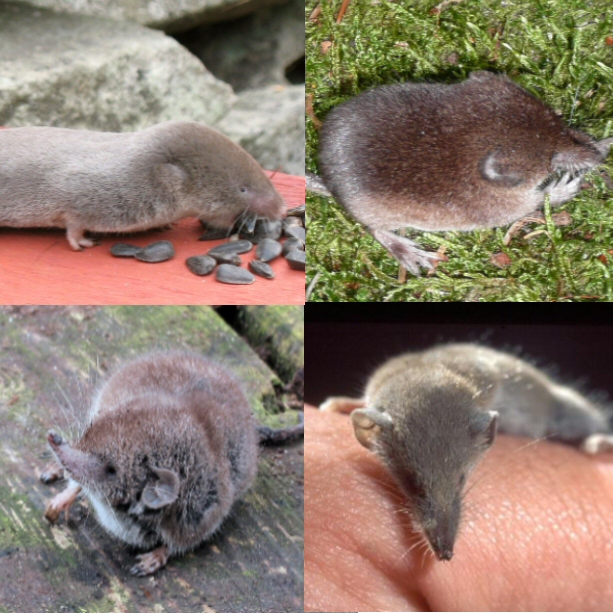
The Shrew is a small insectivorous mammal with an elongated, pointed snout, often confused with a mouse although it belongs to a distinct order. It has an extremely fast metabolism which requires it to feed almost constantly. Many species of Shrews exist throughout the world, adapted to very varied environments. In Tunisia, several species are present in rural areas, gardens and natural environments.
The body is small and streamlined, covered in dense, gray to brown fur. The snout is long, mobile and equipped with sensitive vibrissae used to detect prey. The teeth are sharp and numerous, adapted to a meat diet, and some species have slightly toxic saliva.
Characteristics
Indicative values: they vary by subspecies, sex and region.
Habitat and distribution
The Shrew frequents meadows, gardens, wooded areas and the edges of crops. It appreciates environments offering dense plant cover, such as hedges or piles of leaves, which protect it from predators. Some species also adapt to peri-urban environments and around homes.
CURRENT RANGE
The genus is present on almost all continents, except Australia and Antarctica. In North Africa, several species have been recorded, particularly in Tunisia where they occupy various rural and natural regions. Its distribution is very wide but varies greatly depending on the species considered.
Behaviour
The Shrew is a solitary and territorial animal, often aggressive towards its conspecifics. It is very active, with short phases of activity interspersed with rest, due to its rapid metabolism. It moves mainly on the ground, in leaf litter or under dense vegetation, avoiding prolonged exposure to open air.
Reproduction
The female can give birth to several litters per year, generally numbering three to seven young. Gestation lasts approximately three weeks. The young are weaned quickly and reach sexual maturity in a few months, which allows rapid renewal of populations.
Peculiarities
Shrew has one of the fastest metabolisms among mammals, with a very fast beating heart. Some species are capable of rudimentary echolocation to find their way in the dark. Its lifespan is very short compared to its size.
Threats and conservation
Major threats include habitat loss due to intensive agriculture and urbanization. The use of pesticides reduces the availability of its invertebrate prey. It is also the prey of many predators such as birds of prey, cats and snakes.
Numbers and trends vary across sources and regions. See the IUCN assessment for the latest reference data.
Gallery
1 documented photographs.
References
Profile updated 22 August 2026 · Reviewed by the TunisieVet editorial team.
Comments (0)
No comments yet.
CONSERVATION STATUS
Least concern (LC)
IUCN source, latest published assessment.
Species health
Documented diseases for this species.
See the 5 diseases of this species Find a veterinarianThis information is provided for educational purposes only and is not a substitute for a veterinary consultation. If you have any concerns about your animal's health, consult a veterinarian.
Similar animals
Other species documented in Animalpedia.

TunisieVet in your pocket 📱🐾 Access your veterinary services wherever you are. [ Download the app ]
Learn more