
Presentation
The scale insect is a small piercing-sucking insect belonging to the superfamily Coccoidea, which includes thousands of species found around the world. Adult females, often immobile, settle on the stems, leaves, or fruits of plants and cover themselves with a protective waxy or powdery coating. Males, rarer and winged, do not feed as adults and serve only to reproduce. Certain species, such as Dactylopius coccus, have been exploited since ancient times to produce a red dye called carmine, used in food, cosmetics, and textiles. Other species are considered major pests of agricultural and ornamental crops, notably citrus, cacti, and grapevines. In Tunisia, several scale insect species particularly affect prickly pear cactus and citrus crops.
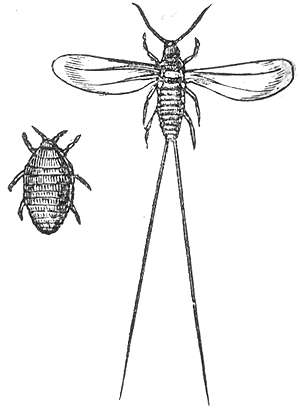
Scale insects typically measure between 1 and 7 mm depending on the species. Females lack wings and usually have a soft body covered with a whitish waxy secretion or a hard protective shell. Males, when present, have a pair of wings and resemble tiny gnats. Their body is segmented but barely visible because of the protective secretions covering it.
Characteristics
Indicative values: they vary by subspecies, sex and region.
Habitat and distribution
Scale insects colonise a wide variety of vegetated habitats, from agricultural crops to urban gardens and greenhouses. They settle preferentially on host plants specific to each species, whether cacti, citrus trees, vines, or ornamental plants.
CURRENT RANGE
Coccoidea are found on all continents, with greater diversity in tropical and subtropical regions. Some species have been widely dispersed through international plant trade, becoming invasive far from their native range. The cochineal scale, for example, originated in the Americas and spread to North Africa and the Mediterranean.
Behaviour
The larvae, called "crawlers," are mobile during their first developmental stage and move to find a suitable feeding site. Once settled, females typically lose all mobility for the rest of their lives. Scale insects live in dense colonies, sometimes visible to the naked eye as whitish or cottony clusters on plants.
Reproduction
Reproduction may be sexual or parthenogenetic depending on the species. Females lay hundreds of eggs, often protected under their own shell or within a cottony egg sac. The development cycle includes several larval stages before reaching adulthood, with a duration that varies according to temperature and species.
Peculiarities
Carmine, a red pigment extracted from certain dried scale insects, has been used for centuries as a food colouring (E120) and cosmetic. Some species secrete a waxy substance called shellac, once used in the manufacture of varnishes and dyes. The cochineal scale has caused considerable damage to cactus plantations in Tunisia in recent years.
Threats and conservation
As a group, scale insects are not threatened; rather, several species are classified among invasive pests of concern to global agriculture. No scale insect species is subject to particular conservation measures.
Numbers and trends vary across sources and regions. See the IUCN assessment for the latest reference data.
Gallery
1 documented photographs.
References
Profile updated 26 August 2026 · Reviewed by the TunisieVet editorial team.
Comments (0)
No comments yet.
CONSERVATION STATUS
Least concern (LC)
IUCN source, latest published assessment.
Species health
Documented diseases for this species.
This information is provided for educational purposes only and is not a substitute for a veterinary consultation. If you have any concerns about your animal's health, consult a veterinarian.
Similar animals
Other species documented in Animalpedia.

🚀 SWConsulting — Turning Your Ideas into Digital Solutions Do you have an idea, a project, or a business process that needs to be digitalized? SWConsulting supports businesses from concept to deployment, delivering custom, reliable, and scalable digital solutions tailored to their real needs. 💻 Web & Mobile Development ⚙️ Business Applications & SaaS 🤖 Artificial Intelligence & Automation 📊 Custom CRM & Management Tools 🛒 E-commerce & Marketplaces 🔗 APIs & System Integrations Our goal is simple: turn your business needs into practical digital solutions that help you improve efficiency, automate processes, and grow your business. Have a project in mind? Let’s talk. 🚀 SWConsulting — Digital Solutions, Real Impact.
WhatsApp