
Presentation
The Tamarind is a small New World monkey comprising several species of the genus Saguinus, native to the tropical forests of South and Central America. Modest in size, it is distinguished by its often colorful fur, its claws rather than flat nails and a long, non-prehensile tail. A social animal, it lives in small family groups organized around a cooperative reproduction system. The Tamarind is primarily arboreal and moves nimbly through the canopy. It is today threatened by deforestation and, for certain species, by the illegal pet trade.
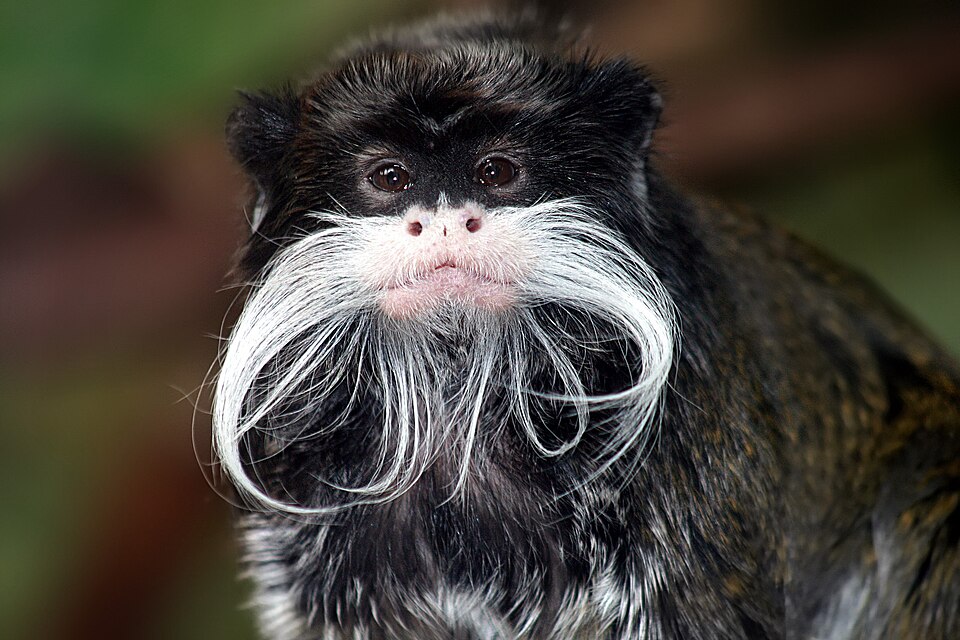
The Tamarind is usually between 20 and 30 cm long, not including the tail, which can be as long as the body. Its coat varies depending on the species, ranging from black and white to orange or golden hues, sometimes accompanied by a distinctive mustache or crest. Unlike many primates, it has claws rather than flat nails on most fingers, an adaptation to arboreal life. Its hind limbs, longer than the front, make it easier to jump between branches.
Characteristics
Indicative values: they vary by subspecies, sex and region.
Habitat and distribution
The Tamarind inhabits the dense or secondary tropical rainforests of Central and South America. It mainly occupies the canopy and middle tree layers, rarely moving on the ground. Some species tolerate degraded forests or forest edges, near areas disturbed by humans. The availability of fruit trees and gum trees strongly influences its presence.
CURRENT RANGE
The genus Saguinus is distributed in the tropical forests of South America, particularly in the Amazon, as well as in certain regions of Central America depending on the species. Each Tamarind species generally occupies a restricted geographical area and is often disjunct from the others. This fragmented distribution makes them particularly sensitive to local habitat loss.
Behaviour
The Tamarind lives in family groups of a few to a dozen individuals, often consisting of a dominant breeding pair and their offspring. Intragroup cooperation is marked, particularly in the care given to the young by several members of the group, including the males. The species communicates through vocalizations, scent markings and body postures. Diurnal, it spends the majority of its time moving and feeding in the tree layer.
Reproduction
The female usually gives birth to twins after a gestation of about 140 to 145 days. The whole group often participates in carrying and caring for the young, which lightens the mother's energy load. Weaning occurs after a few months, and sexual maturity is reached around one to two years. This cooperative breeding system is a notable characteristic of Tamarinds and related species.
Peculiarities
Some species of Tamarinds display characteristic ornaments, such as a prominent white mustache or a crest of hair on their head. The cooperative social system, where several members of the group participate in raising the young, is a striking feature among primates. Tamarind has claws rather than nails on most of its fingers, a rare trait among apes.
Threats and conservation
Deforestation and fragmentation of forest habitats pose the main threat to Tamarinds populations. The illegal pet trade particularly affects certain species with desirable fur or ornaments. The conversion of forests to agricultural land and urbanization continually reduce the available territories.
Numbers and trends vary across sources and regions. See the IUCN assessment for the latest reference data.
Gallery
1 documented photographs.
References
Profile updated 14 August 2026 · Reviewed by the TunisieVet editorial team.
Comments (0)
No comments yet.
CONSERVATION STATUS
Vulnerable (VU)
IUCN source, latest published assessment.
Species health
Documented diseases for this species.
See the 7 diseases of this species Find a veterinarianThis information is provided for educational purposes only and is not a substitute for a veterinary consultation. If you have any concerns about your animal's health, consult a veterinarian.
To discover around: Tamarind
Videos, facts, stories and records linked to this species.
Similar animals
Other species documented in Animalpedia.
