
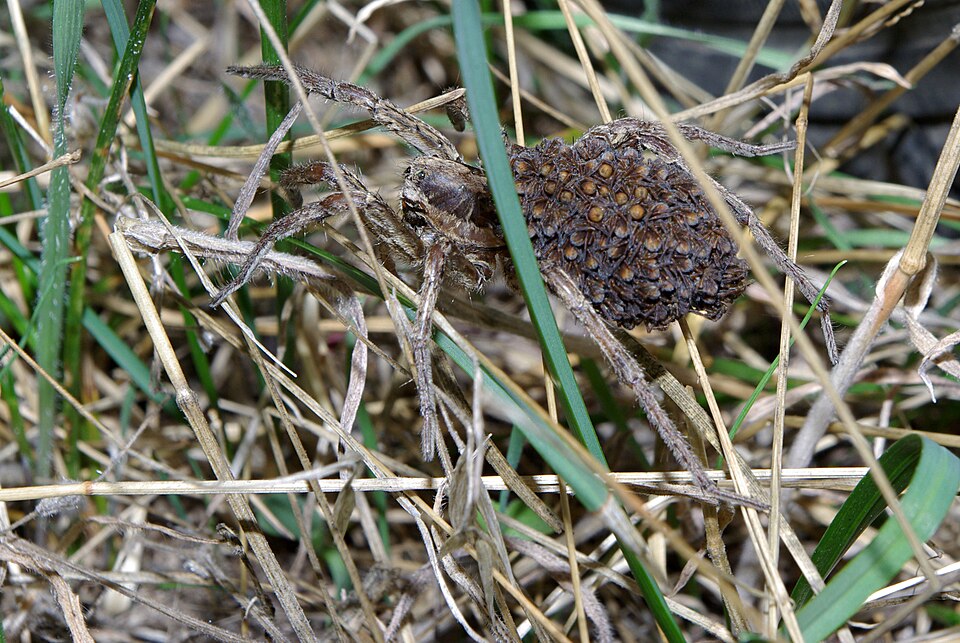
Presentation
Tarantula is a common name for several large hairy spiders of the Theraphosidae family. They are distinguished by their imposing size, a body covered in urticating hairs in some American species, and powerful fangs. Found on several continents, they inhabit mainly warm and arid or tropical regions. Despite their fearsome reputation, most species pose little danger to humans. Today they are appreciated as exotic pets by tarantula enthusiasts.
The body consists of a cephalothorax and a globular abdomen, both covered in dense hair. Eight sturdy legs enable rapid movement and climbing of vertical surfaces. Some species have urticating hairs that they flick when threatened. Coloration ranges from dull brown to bluish or orange tones depending on the species.
Characteristics
Indicative values: they vary by subspecies, sex and region.
Habitat and distribution
The tarantula occupies varied habitats depending on species, ranging from humid tropical forests to desert and steppe regions. It often digs a burrow in the ground or shelters under stones and logs. Some tree-dwelling species live in the dense vegetation of forests. The tarantula prefers warm environments that provide easy access to prey.
CURRENT RANGE
Tarantulas are found on most continents, with particularly high diversity in Central and South America. They are also present in Africa, Asia, and certain regions of southern Europe. No true tarantula species is native to Tunisia, although related spider species are found there. The tarantula is widely imported worldwide through the exotic pet trade.
Behaviour
The tarantula is essentially a solitary and nocturnal animal. It spends most of its time in a burrow or hiding place, venturing out mainly to hunt. When threatened, some species adopt a defensive posture or flick urticating hairs. Growth is accompanied by regular molts during which the spider is particularly vulnerable.
Reproduction
Reproduction takes place through direct mating, with the male transferring his sperm to the female using his pedipalps. The female then lays several hundred eggs in a silk cocoon, which she guards and protects. Young tarantulas emerge after several weeks of incubation and are independent from the moment they hatch. Females of certain species can live for several decades, considerably longer than males.
Peculiarities
Certain American species project irritating hairs from their abdomen to defend themselves against predators. The tarantula can regenerate a lost leg during successive moults. Its exceptional longevity in females, sometimes exceeding twenty years, is remarkable for an arthropod.
Threats and conservation
Habitat loss due to deforestation threatens certain tropical species. International trade for the terrarium hobby places pressure on some wild populations. Most species lack a precise conservation status, however, owing to insufficient data.
Numbers and trends vary across sources and regions. See the IUCN assessment for the latest reference data.
Gallery
1 documented photographs.
References
Profile updated 12 September 2026 · Reviewed by the TunisieVet editorial team.
Comments (0)
No comments yet.
CONSERVATION STATUS
Data deficient (DD)
IUCN source, latest published assessment.
Species health
Documented diseases for this species.
Find a veterinarianThis information is provided for educational purposes only and is not a substitute for a veterinary consultation. If you have any concerns about your animal's health, consult a veterinarian.
To discover around: Tarantula
Videos, facts, stories and records linked to this species.
Similar animals
Other species documented in Animalpedia.
