
Presentation
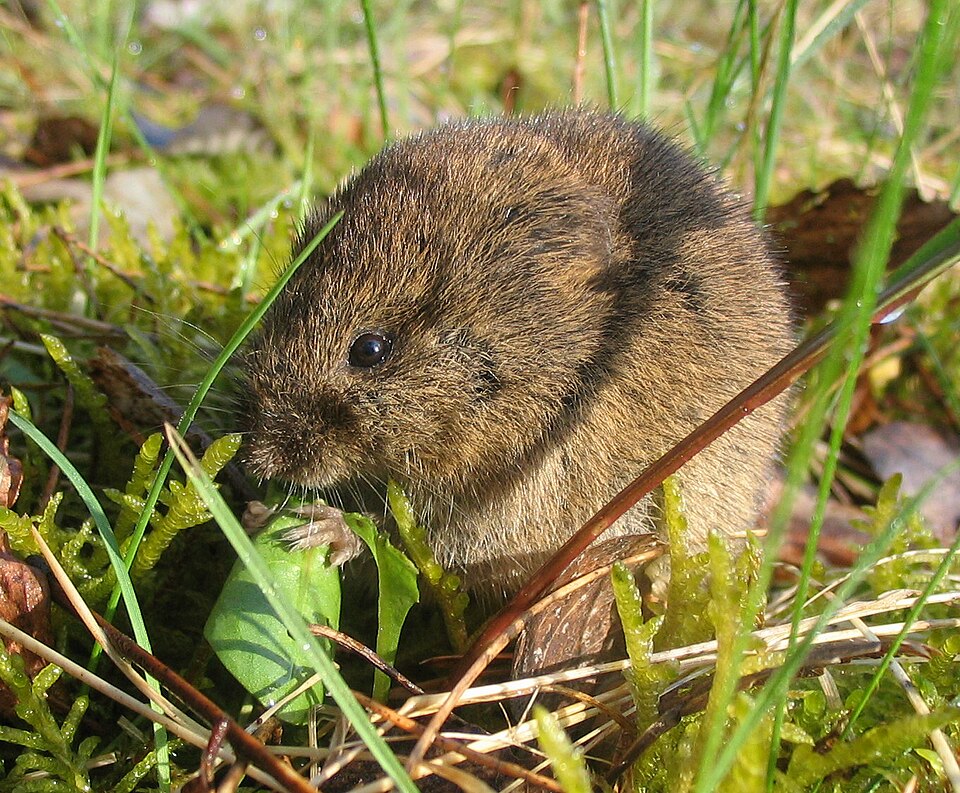
The Vole is a small, stocky rodent from the Cricetidae family, often confused with a mouse or field mouse due to its modest size. It is distinguished by a more massive body, a short tail and inconspicuous ears hidden in the fur. Found in many open habitats, it generally lives by digging shallow underground galleries. This prolific mammal plays an important ecological role, both as prey for numerous predators and as an agent of soil fertilization through its burrowing activity.
The body is stocky and rounded, measuring between 8 and 13 cm excluding the tail depending on the species. The fur is dense, gray-brown to reddish on the back and lighter under the belly. The eyes and ears are small, adapted to a life largely underground or in dense vegetation.
Characteristics
Indicative values: they vary by subspecies, sex and region.
Habitat and distribution
The Vole frequents meadows, cultivated fields, meadows and forest edges. It appreciates loose soils conducive to digging galleries and dense plant cover offering protection against predators. Some species also adapt to wetlands and the edges of watercourses.
CURRENT RANGE
The genus Microtus and related species are widely distributed across Europe, Asia and North America. Several species are present in North Africa, particularly in the Maghreb. The Vole is one of the most widespread rodents in temperate zones of the northern hemisphere.
Behaviour
The Vole is a burrowing animal, active day and night depending on the species. It digs networks of galleries and shallow tunnels under the surface of the ground or under the snow in winter. Gregarious in places, it can also be territorial during the breeding season, actively defending its burrow.
Reproduction
Sexual maturity is reached very quickly, sometimes as early as one month old. Females can have several litters per year, from 3 to 8 young on average, with a short gestation of around three weeks. This rapid reproduction allows the species to compensate for high mortality due to predation.
Peculiarities
Some populations experience spectacular cyclical population peaks, followed by sudden drops in numbers. The Vole communicates by scent marking and ultrasonic vocalizations that are barely perceptible to humans. Its continuously growing teeth allow it to gnaw hard plant matter without interruption.
Threats and conservation
The species as a whole is not threatened and some populations are even considered agricultural pests. The main causes of mortality are natural predation and chemical or mechanical control campaigns carried out by humans. Certain localized species, with restricted distribution, may be vulnerable to habitat degradation.
Numbers and trends vary across sources and regions. See the IUCN assessment for the latest reference data.
Gallery
1 documented photographs.
References
Profile updated 22 August 2026 · Reviewed by the TunisieVet editorial team.
Comments (0)
No comments yet.
CONSERVATION STATUS
Least concern (LC)
IUCN source, latest published assessment.
Species health
Documented diseases for this species.
See the 8 diseases of this species Find a veterinarianThis information is provided for educational purposes only and is not a substitute for a veterinary consultation. If you have any concerns about your animal's health, consult a veterinarian.
To discover around: Vole
Videos, facts, stories and records linked to this species.
Similar animals
Other species documented in Animalpedia.

TunisieVet in your pocket 📱🐾 Access your veterinary services wherever you are. [ Download the app ]
Learn more