
Presentation
The warbler is a small passerine bird belonging to the family Sylviidae, found across Europe, North Africa, and western Asia. The term actually refers to several closely related species, of which the blackcap is the best known and most common in Tunisia. Quiet and often easier to hear than to see, it moves stealthily through bushes and dense hedgerows. Its melodious and varied song makes it a favourite among amateur birdwatchers. It plays an important ecological role in controlling insects and dispersing wild berry seeds.
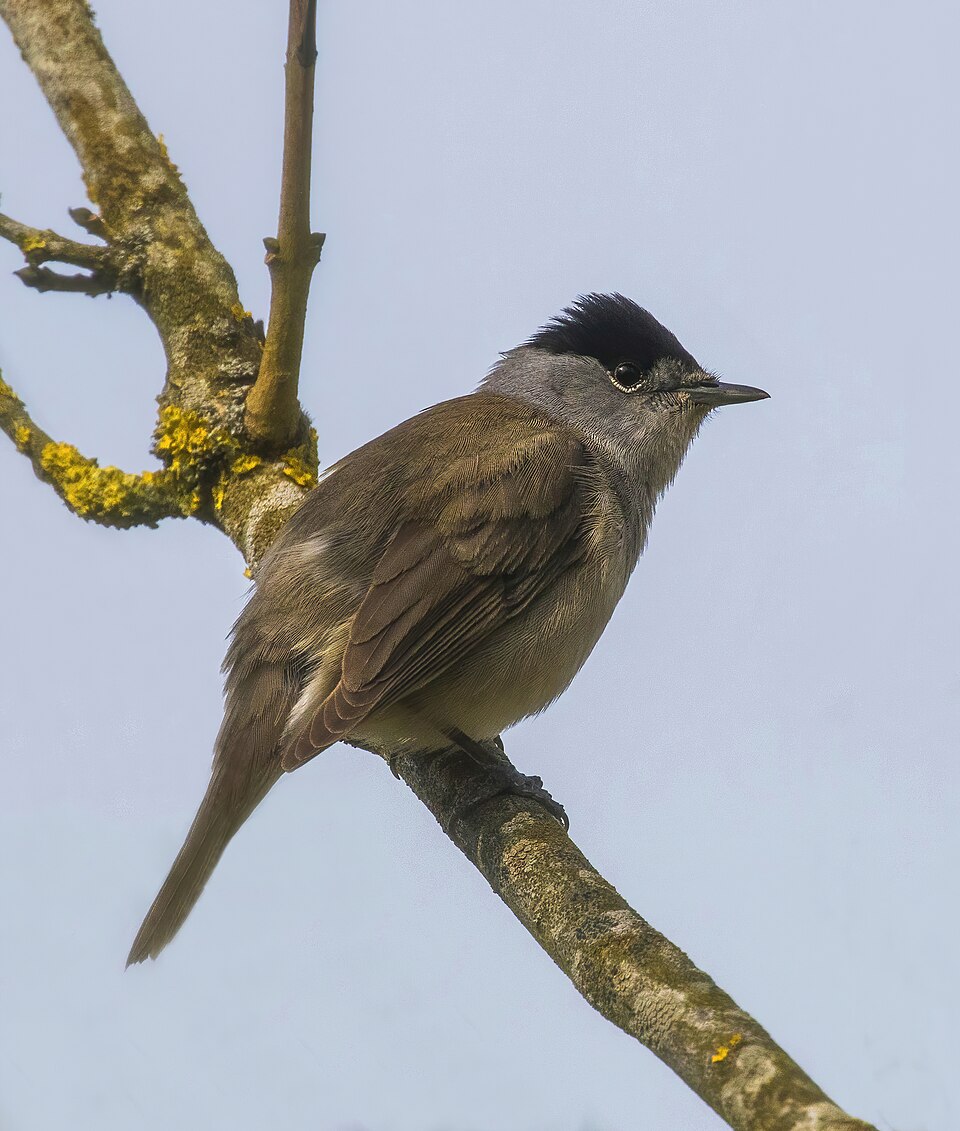
The warbler typically measures between 12 and 15 cm long and weighs 15 to 20 grams. Its plumage is dull, dominated by grey, brown, or olive tones depending on the species, providing good camouflage in vegetation. The male blackcap is distinguished by a characteristic black cap, while the female displays a russet-brown cap. The bill is fine and pointed, suited to a varied diet.
Characteristics
Indicative values: they vary by subspecies, sex and region.
Habitat and distribution
Warblers frequent hedgerows, scrubland, forest edges and wooded gardens. They favour habitats with dense vegetation for shelter and safe nesting. They are found in both rural and urban settings wherever sufficient green spaces exist.
CURRENT RANGE
The species is widespread across Europe, North Africa and the Middle East. European populations often migrate to the Mediterranean basin and sub-Saharan Africa for winter. In Tunisia, the blackcap is present year-round, with populations reinforced in winter by migrants from Europe.
Behaviour
It is a rather shy bird that stays hidden in thickets and dense vegetation. The male sings vigorously to defend its territory and attract a mate, producing a smooth, fluty melody. The warbler is generally solitary or lives in pairs during breeding, except during migration periods when it may form small loose groups.
Reproduction
The female builds a small, cup-shaped nest hidden in a shrub or low hedge. She typically lays 4 to 5 eggs, which both parents incubate for about 11 to 13 days. Young birds leave the nest roughly two weeks after hatching but remain dependent on their parents for a few days longer.
Peculiarities
The warbler's song is often compared to the nightingale's for its melodic richness, though less powerful. Some warbler species are difficult to distinguish by sight alone and are recognised chiefly by their song. The blackcap can partially mimic other birds in its song.
Threats and conservation
The degradation and loss of hedgerow habitats and urban expansion reduce nesting areas. Pesticide use decreases insect availability, an essential resource during breeding season. Overall, the species is not threatened and populations remain stable or show slight growth in some regions.
Numbers and trends vary across sources and regions. See the IUCN assessment for the latest reference data.
Gallery
1 documented photographs.
References
Profile updated 05 September 2026 · Reviewed by the TunisieVet editorial team.
Comments (0)
No comments yet.
CONSERVATION STATUS
Least concern (LC)
IUCN source, latest published assessment.
Species health
Documented diseases for this species.
This information is provided for educational purposes only and is not a substitute for a veterinary consultation. If you have any concerns about your animal's health, consult a veterinarian.
Similar animals
Other species documented in Animalpedia.

TunisieVet in your pocket 📱🐾 Access your veterinary services wherever you are. [ Download the app ]
Learn more