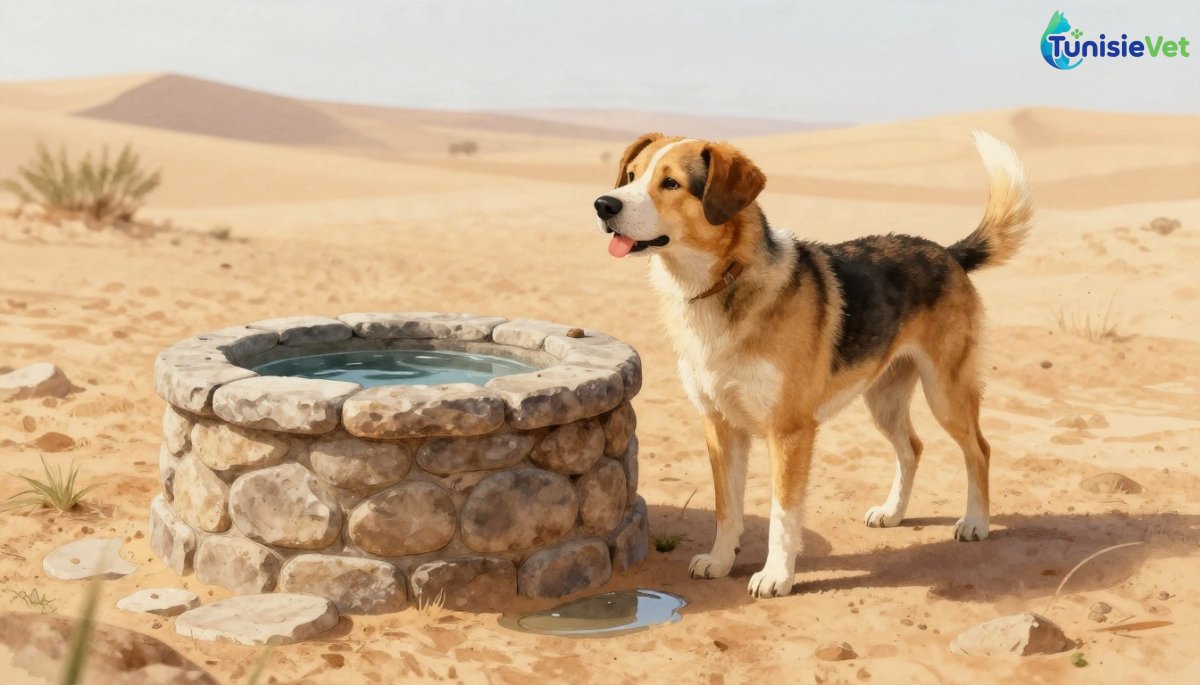
A thirsty dog and a cat locked up appear in two accounts transmitted by the Prophet Muhammad ﷺ. Through them, Islamic tradition emphasizes the importance of compassion toward animals.
A man was walking when a great thirst overcame him. He found a well, climbed down into it and drank. As he climbed back up, he noticed a dog panting and licking the damp earth because it was so thirsty. The man understood that the animal was experiencing a thirst similar to the one he had just felt himself. He went back down into the well, filled his shoe with water, held it in his mouth so he could climb back up, and then gave the dog something to drink.
An Act of Mercy
This account is related in Sahih al-Bukhari and Sahih Muslim. The Prophet Muhammad ﷺ teaches that God acknowledged this man's act and forgave him. The Companions then asked whether there was a reward for caring for animals. The Prophet Muhammad ﷺ replied that there is a reward for kindness shown to any living being. In this story, the man does not turn away from the suffering he sees: he recognizes in the dog a need that he himself had just experienced.
His help takes a simple form: finding water and letting the animal drink. The account does not say that the dog belonged to this man. It describes an encounter in which a person chooses to respond to an animal's need. The well, the shoe filled with water and the thirsty dog are at the heart of this scene. The act called for by the circumstances is modest, yet the tradition gives it great importance.
Responsibility Toward an Animal
Another account, also related in Sahih al-Bukhari and Sahih Muslim, tells of a woman who locked up a cat until it died. She did not feed it, nor did she let it go out to find its own food among the small creatures of the earth. The Prophet Muhammad ﷺ reported that she was punished for what she had done. In contrast with the story of the dog, this account highlights the seriousness of the suffering caused to an animal left without food or any means of finding it.
These two stories invite us to attend to animals' needs in everyday life. Giving water, ensuring suitable food and not leaving an animal without the care it depends on are all ways of making room for kindness. Whether it is an animal in our care or one we encounter along our way, compassion begins with the way we look at its condition.