
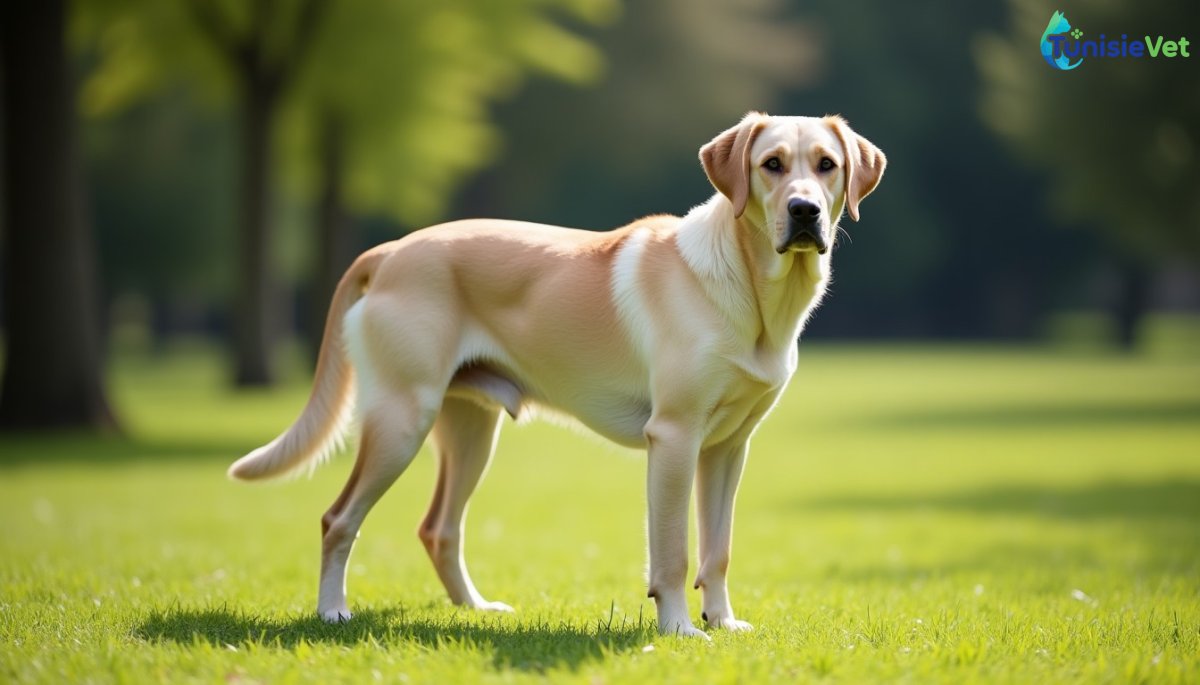
Presentation
The Dog is a carnivorous mammal domesticated for several millennia, resulting from the domestication of the gray wolf. It is one of the first animals to have been domesticated by man, alongside cattle. Today, there are hundreds of breeds with great morphological and behavioral diversity.
The Dog has a sturdy body, four legs, a well-developed head with a prominent snout, and generally movable ears. Its coat varies in color, length and texture depending on the breed. It has excellent olfaction and good vision adapted to detecting movement.
Did you know?
Why can wet food increase water intake?
Characteristics
BREEDS
Indicative values: they vary by subspecies, sex and region.
Habitat and distribution
The domestic Dog adapts to a very wide variety of environments: urban environments, farms, meadows, and even rural areas. He can live in a house, apartment or outside, depending on the breeds and the conditions available to him.
CURRENT RANGE
The domestic Dog is present on every continent and in almost every country in the world, both in urban and rural areas. Its distribution follows that of man, for it depends entirely on its support for its subsistence.
Behaviour
The Dog is a social and gregarious animal that naturally lives in packs. He is strongly attached to his masters and other members of his group, and develops lasting emotional bonds. The Dog is playful, curious and can be aggressive or fearful depending on its upbringing and socialization.
Reproduction
The Dog reaches sexual maturity between 6 and 12 months depending on the breed. Females have seasonal breeding cycles with oestrus usually twice a year. Gestation lasts approximately 63 days, and females give birth to litters of 3 to 8 puppies on average.
Peculiarities
The Dog has exceptional hearing, capable of detecting sounds at frequencies far higher than those perceptible to humans. Its sense of smell is up to 100,000 times more sensitive than that of humans, making it a valuable ally for detection tasks. It also uses complex vocal (barking, growling, howling) and body communication.
Threats and conservation
As a domesticated animal, the Dog is not threatened with extinction. However, stray or wild populations of Dogs can pose localized health and ecological problems.
Numbers and trends vary across sources and regions. See the IUCN assessment for the latest reference data.
Gallery
4 documented photographs.
References
Profile updated 09 August 2026 · Reviewed by the TunisieVet editorial team.
Comments (0)
No comments yet.
CONSERVATION STATUS
Not evaluated (NE)
IUCN source, latest published assessment.
Species health
Documented diseases for this species.
See the 88 diseases of this species Find a veterinarianThis information is provided for educational purposes only and is not a substitute for a veterinary consultation. If you have any concerns about your animal's health, consult a veterinarian.
Related species
On the TunisieVet marketplace
Food, hygiene and accessories for dog, sold by verified shops and delivered across Tunisia.
Buying advice, not medical advice: for a diagnosis or treatment, consult your veterinarian.
Did you know? — Dog
To discover around: Dog
Videos, facts, stories and records linked to this species.
Similar animals
Other species documented in Animalpedia.

TunisieVet in your pocket 📱🐾 Access your veterinary services wherever you are. [ Download the app ]
Learn more