StoryDesertSavannaForestTropical forestSteppeWetlandsFarmland & grasslandsUrban environmentBeliefs and teachings
Do animals have their own organization according to the Quran?
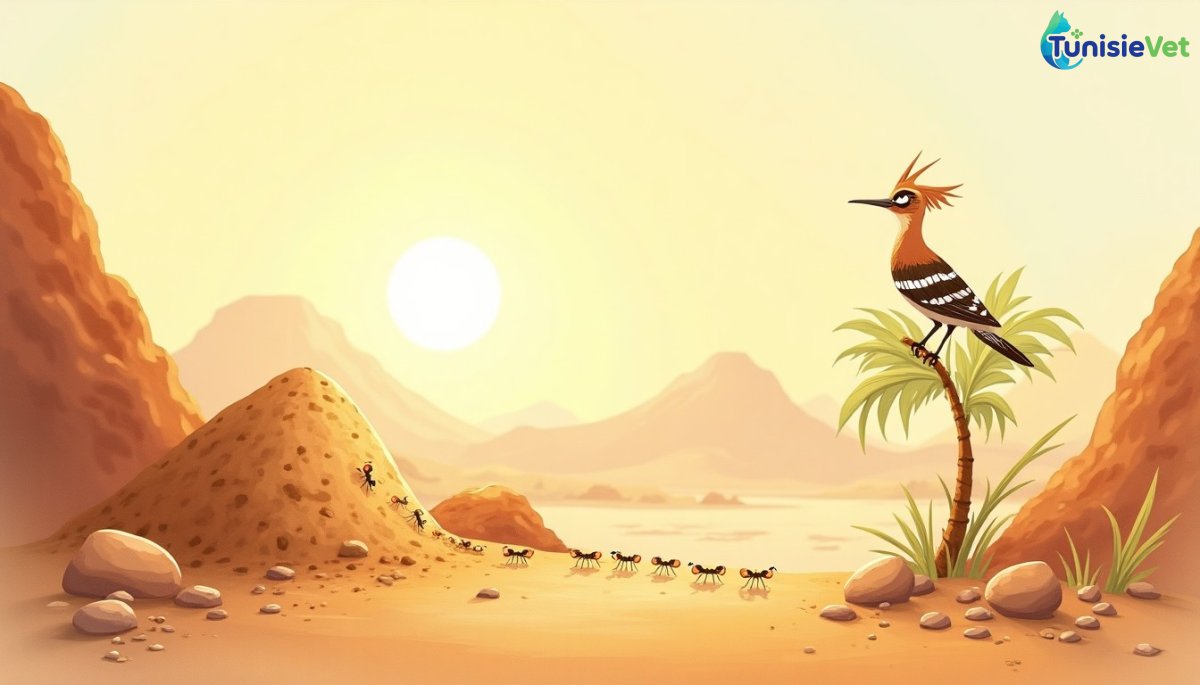
The Quran speaks of animal communities endowed with language, order, and organization. Through the ant and the hoopoe, a subtle teaching unfolds: the creatures around us also live in structured societies.
3 min read · Published 1 week ago · 20 views
In Islamic tradition, animals are not mere wandering creatures without purpose. The Quran suggests repeatedly that they form organized communities, with their own rules of life and sometimes even a language that allows them to communicate with one another.
The ant that sounds the alarm
The most well-known example is found in Surah An-Naml ("The Ants"), in the account of the Prophet Solomon (Sulayman ﷺ, mentioned as an honored prophet). As Solomon advanced with his army, an ant addressed its own kind to warn them of the danger and invite them to take shelter in their dwellings.
"When they came upon the valley of the ants, an ant said: 'O ants, enter your dwellings, lest Solomon and his soldiers crush you, unaware of what they do.'"
(Surah An-Naml, verse 18)
This verse shows an ant capable of understanding the situation, of conveying a clear warning, and of organizing the sheltering of its community. Quranic scholars have emphasized that this passage reveals collective intelligence in this insect, long before modern studies of insect societies confirmed the existence of true systems of communication and cooperation among ants.
The hoopoe, messenger and observer
Again in Surah An-Naml, another animal holds a remarkable place: the hoopoe (al-hudhud). This bird, placed at Solomon's service, absents itself one day and returns bearing valuable information: it has observed the kingdom of the Queen of Sheba (Bilqis) and her people, who worshipped the sun rather than God.
The hoopoe reports its observations with precision, as an envoy charged with a mission might do. According to some scholars, this account illustrates that certain animals can carry messages and play an active role in the unfolding of events, by divine permission.
Publicité
Publicité
Distinct communities
Beyond these two accounts, the Quran affirms more generally, in Surah Al-An'am, that every living creature—whether it walks or flies—belongs to "communities" (umam) similar to human communities. This Quranic teaching invites us to regard the animal world not as mere backdrop, but as a collection of societies in their own right, with their own ways of life, hierarchies, and means of communication.
The Prophet Muhammad ﷺ himself showed special care toward creatures organized in communities. In a hadith reported in Sahih Muslim, it is mentioned that a companion had burned an ant nest, which prompted the Prophet ﷺ to express disapproval, reminding us of the respect due to these animal societies.
These teachings remind us that every creature, however small, is part of an order that is willed and respected. Observing an anthill or the flight of a bird can thus become an occasion for reflection and kindness: to protect their habitats, to refrain from harming them without reason, and to recognize in them communities worthy of consideration, in keeping with what the Quran and prophetic tradition convey to us.