The Prophet Sulayman, peace be upon him, received a unique gift: the ability to understand the language of birds and command all creatures. From ants to hoopoes and the wind itself, discover this extraordinary power as told in the Quran.
Among the prophets mentioned in the Quran, Sulayman, peace be upon him, son of Daud, holds a unique place: Allah granted him a kingdom in which animals, the wind, and the jinn were subject to him. His story, recounted notably in Surah An-Naml (The Ants), reveals an extraordinary relationship between a prophet and the animal world.
The Language of Birds
The Quran reports that Sulayman said he had been given knowledge of the language of birds: "O mankind! We have been taught the language of birds, and we have been given of all things. That is indeed a manifest grace." This ability was not merely a miracle: it illustrated the extent of the power entrusted to him by his Lord, power which he himself recognized as pure divine favor and not a personal merit.
The Valley of Ants
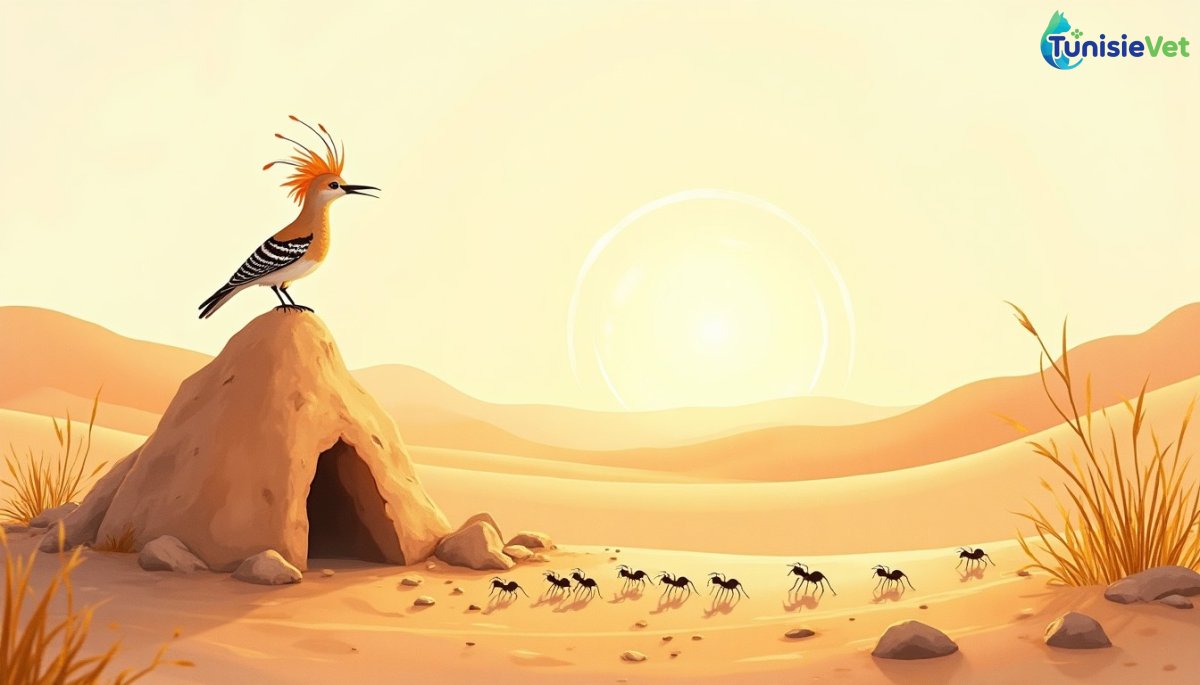
A famous episode takes place when Sulayman, leading his armies composed of men, jinn, and birds, passes through a valley. An ant, spotting the approaching convoy, warns its companions:
﴿ حَتَّىٰ إِذَا أَتَوْا عَلَىٰ وَادِ النَّمْلِ قَالَتْ نَمْلَةٌ يَا أَيُّهَا النَّمْلُ ادْخُلُوا مَسَاكِنَكُمْ لَا يَحْطِمَنَّكُمْ سُلَيْمَانُ وَجُنُودُهُ وَهُمْ لَا يَشْعُرُونَ ﴾
"When they came upon the valley of ants, an ant said: 'O ants, enter your dwellings, lest Sulayman and his armies crush you without knowing.'"
(Surah An-Naml, verse 18)
Hearing these words through the gift Allah had granted him, Sulayman smiled, amused and moved by the speech of the small ant, and then he invoked his Lord, thanking Him for His blessings, as the following verse of the same surah relates. This passage emphasizes that even the humblest of creatures possesses organization, speech, and dignity which the prophet took care to respect by avoiding any harm to the colony.
The Hoopoe and the Queen of Saba
Another passage from Surah An-Naml features a hoopoe (hudhud), tasked by Sulayman with inspecting the surrounding lands. The bird returns with valuable information: it has discovered the kingdom of Saba, ruled by a queen, and a people who worship the sun rather than Allah. Sulayman verifies the bird's account before acting, a detail which some scholars point to as a mark of the prophet's prudence when faced with testimony, even coming from a trustworthy animal. This episode will lead to an exchange of letters with the queen of Saba and, according to the Quranic account, to her coming and her submission to the Lord of the worlds.
Power in Service of Good
What these stories teach, beyond the marvels themselves, is that the power entrusted to Sulayman over the wind, the jinn, and the animals was never an instrument of gratuitous domination. He listens to the ant, trusts the hoopoe, and recognizes in each creature a sign of the power of his Creator. The Quran emphasizes his gratitude and uprightness more than the mere grandeur of his kingdom.
This story reminds each person that every creature, even the smallest like an ant, deserves consideration and gentleness. To draw inspiration from Sulayman's example is to learn to observe the animal world with attention, never to harm it without reason, and to recognize in it, as he did, a sign of divine wisdom.