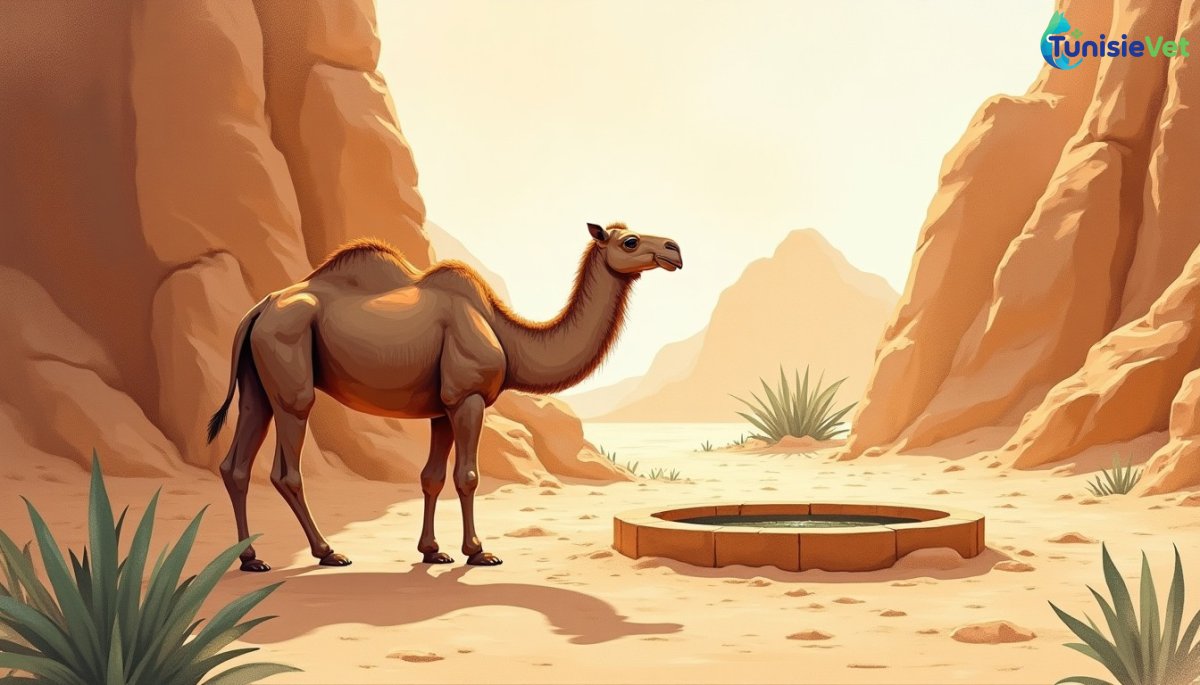
Among the ancient peoples mentioned in the Quran, the people of Thamûd received an extraordinary sign: a camel that emerged from the rock, whose fate would seal the destiny of an entire nation.
The people of Thamûd lived in the Al-Hijr region, carving their dwellings directly into the rocky mountains. God sent them the Prophet Salih (peace be upon him) to call them to the worship of the one God and the abandonment of idols. Faced with their disbelief, the notables of the people demanded an extraordinary sign proving his sincerity.
A Sign Emerging from the Rock
In response, God brought forth a camel from the mountain as a clear sign for this people. Salih then warned them that this camel was no ordinary animal: it was a trial and proof sent by God, and they must allow it to graze and drink freely without causing it any harm.
A particular arrangement of the water was established: on one day, the well's water belonged to the camel alone, and on the following day, it belonged to the inhabitants. This simple system allowed both the animal to drink without dispute and the people to continue living normally. The Quran reports this statement from Salih in Surah Ash-Shu'ara:
﴿ هَٰذِهِ نَاقَةٌ لَّهَا شِرْبٌ وَلَكُمْ شِرْبُ يَوْمٍ مَّعْلُومٍ ﴾
"This is a she-camel: hers is a drink appointed on an appointed day, and yours is a drink on another appointed day."
(Surah Ash-Shu'ara, verse 155)
Disobedience and Its Consequences
Despite this clear warning, part of the people, either exasperated by this constraint or simply refusing to believe Salih's message, plotted to kill the camel. The Quran reports in Surah Ash-Shams that the most wretched among them rose up and killed it, thus openly disobeying the divine order transmitted by the prophet.
﴿ فَعَقَرُوهَا فَقَالَ تَمَتَّعُوا فِي دَارِكُمْ ثَلَاثَةَ أَيَّامٍ ۖ ذَٰلِكَ وَعْدٌ غَيْرُ مَكْذُوبٍ ﴾
"Then they hamstrung her. So he said: 'Enjoy yourselves for three days more in your dwellings: this is a promise that will not be broken.'"
(Surah Hûd, verse 65)
This act of cruelty towards an innocent animal, but above all this open defiance of God's command, brought down a terrible punishment upon the people of Thamûd, annihilating them in retribution for their stubborn rejection of the message and their transgression.
A Lesson Still Alive Today
This account, mentioned several times in the Quran—notably in Surahs Al-A'raf, Hûd, Ash-Shu'ara, and Ash-Shams—is not merely the history of a vanished people. It reminds us that an animal, even as a simple creature among God's creatures, may bear a sign and deserves protection and respect. The harm done to the camel was not a secondary detail in this story: it was its turning point.
Even today, this story invites each person to reflect on the place of animals in our daily lives. Caring for them, respecting their need for water and food, never causing them harm through cruelty or neglect: this is a simple yet profound lesson that can be drawn from this ancient account, and which remains, across the centuries, a call to kindness toward all creatures.