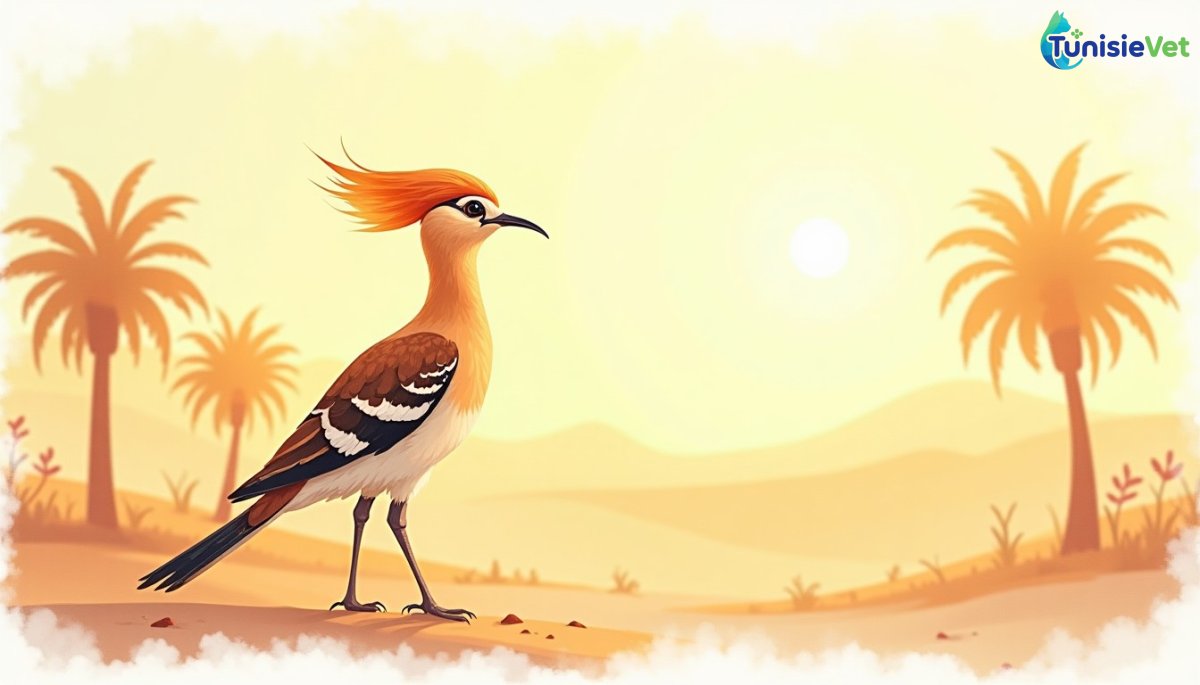
One day, Prophet Sulayman reviewed his army composed of men, jinn, and birds. His gaze settled on an empty place: the hoopoe, though faithful, was nowhere to be found.
3 min read · Published 1 month ago · 34 views
Prophet Sulayman (Solomon), son of Dawud, had been granted by God an extraordinary kingdom: he commanded men and jinn, controlled the wind, and understood the language of birds. One day, as he inspected his gathered troops, he turned his attention to the birds and immediately noticed that one of them was not present.
The Noticed Absence
This account is reported in the Quran, in Surah An-Naml ("The Ants"). Sulayman, in reviewing the birds, became aware of the absence of the hoopoe (al-hudhud). Far from remaining indifferent, he at once expressed his surprise and firmness regarding this unjustified absence.
"He reviewed the birds, then said: Why do I not see the hoopoe? Is it among the absent?"
(Surah An-Naml, verse 20)
Sulayman went on to announce a severe penalty if the absence was not justified by a clear excuse, thus demonstrating the exactingness and rigor with which he managed even the smallest of his subjects, be they birds.
The Hoopoe's Return and Its Message
Shortly after, the hoopoe returned and presented itself before Sulayman. It explained that it had discovered something that the prophet himself did not know: it came from the land of Saba (Sheba), where it had observed a powerful queen ruling a people who worshipped the sun instead of God. This testimony of the hoopoe is reported in the following verses of the same surah, where it describes with precision what it saw, without Sulayman having to send it on a mission beforehand.
This passage emphasizes several essential points: first, that every creature, however modest in appearance, has a role and usefulness in the order willed by God; second, that Sulayman, despite his immense power, paid sincere attention to each of his subjects, ensuring that none absented themselves without legitimate reason. The hoopoe, far from being merely a bird among others, thus became a messenger of crucial information that would lead to the exchange between Sulayman and the queen of Saba.
A Lesson in Vigilance and Consideration
Scholars of Quranic exegesis emphasize that this episode illustrates Sulayman's justice and rigor in managing his kingdom, but also his respect for the creatures that served him. He overlooked neither the presence nor the absence of a simple bird, which testifies to an attentiveness extended to all forms of life, great and small.
This story teaches us that even a being as unobtrusive as a hoopoe can play a decisive role when accorded value and attention. It invites us, on our own scale, to observe with care the animals around us, to notice their presence, their needs and their well-being, rather than regard them as insignificant. Caring for animals, concerning ourselves with their absence or suffering, is to perpetuate the wisdom taught through the account of Sulayman and the hoopoe.