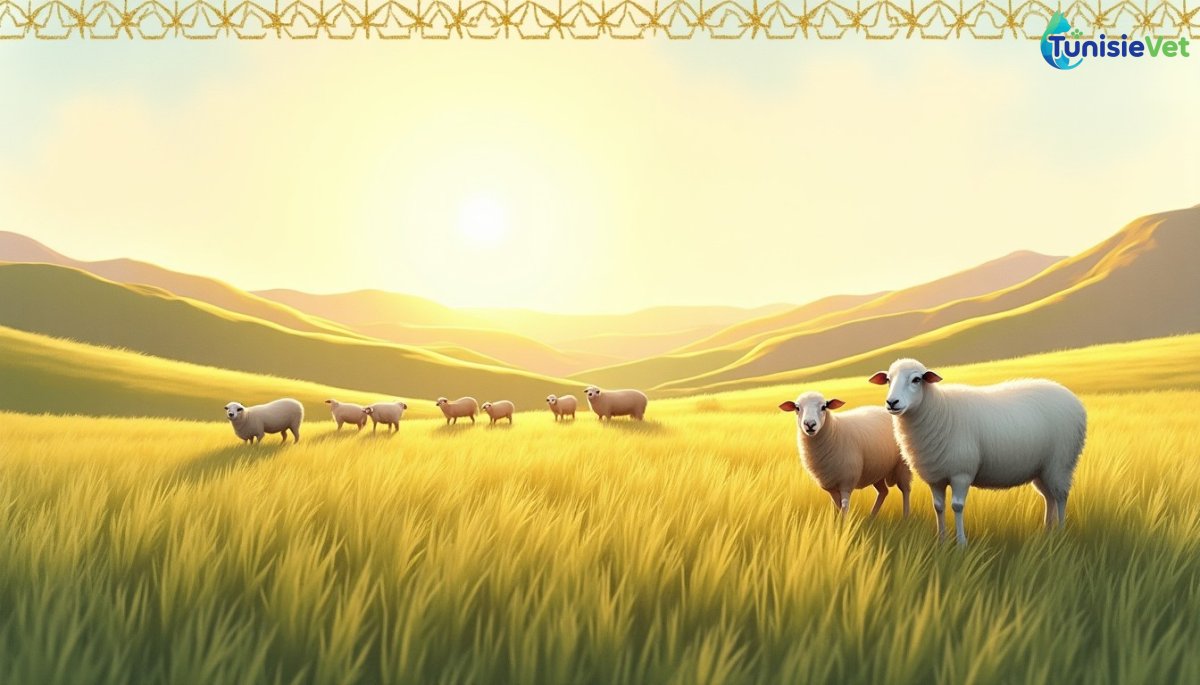
A ravaged wheat field, a flock of sheep that strayed at night, and two men in disagreement: it fell to Dawud and then his son Sulayman to render a fair judgment on this matter reported in the Quran.
One night, a flock of sheep strayed far from its pen and entered a wheat field that did not belong to it. In the morning, the owner of the field discovered his entire crop grazed and trampled, reduced to nothing. Furious and distressed, he came before the prophet Dawud (David), peace be upon him, to seek justice against the owner of the sheep.
The Judgment of Dawud
The Quran relates this episode in Surah Al-Anbiya. When Dawud was informed of the facts, he rendered a first judgment: the flock of sheep was to be handed over as compensation to the owner of the field, since the damage caused was equivalent, by his reckoning, to the value of the livestock. This judgment was rendered with the best intention of securing justice for the victim.
It was then that Sulayman (Solomon), the son of Dawud, still young but already blessed with the great wisdom that God had granted him, proposed another solution, more balanced and fairer to both parties. He suggested that the owner of the field take the flock, not to keep it permanently, but to benefit from its milk, wool, and offspring during the time needed for the field to regrow. During this same period, the owner of the sheep would cultivate and maintain the damaged field until it returned to its original condition. Once the field was restored, each would take back his property: the flock would return to its owner, and the field, fertile once more, to its original owner.
The Quran recounts this event with restraint, without detailing all its exact terms, but emphasizing that God granted Sulayman a particular understanding of this matter:
(Surah Al-Anbiya, verses 78–79 — mention of the judgment rendered by Dawud and Sulayman concerning a field ravaged by sheep belonging to others)
A Wisdom That Restores Balance
What the interpreters of the Quran retain from this narrative is the difference between a judgment that repairs a loss through simple compensation, and a judgment that truly restores a situation to its original state, without permanently depriving one or the other party of his property. Sulayman did not question the just intention of his father, but God inspired him with a path that preserved both the rights of the field owner and those of the flock owner.
It is reported that this judgment pleased Dawud himself, who acknowledged the righteousness of his son's proposal. This narrative thus illustrates the way in which divine wisdom can manifest itself across different generations, each bringing complementary light to the pursuit of justice.
What This Narrative Teaches Us About Animals
In this story, the sheep are not mere objects of dispute: they represent a living wealth, capable of producing milk, wool, and offspring, and therefore of usefully contributing to repairing a wrong without being sacrificed or unjustly dispossessed. Sulayman's wisdom reminds us that animals, entrusted to humankind, must be treated with justice and discernment, never as a mere medium of exchange.
This narrative invites each of us, even today, to regard the animals around us with the same measure: their welfare and their just use are an integral part of complete justice, one that forgets neither humans nor the creatures placed under their responsibility.