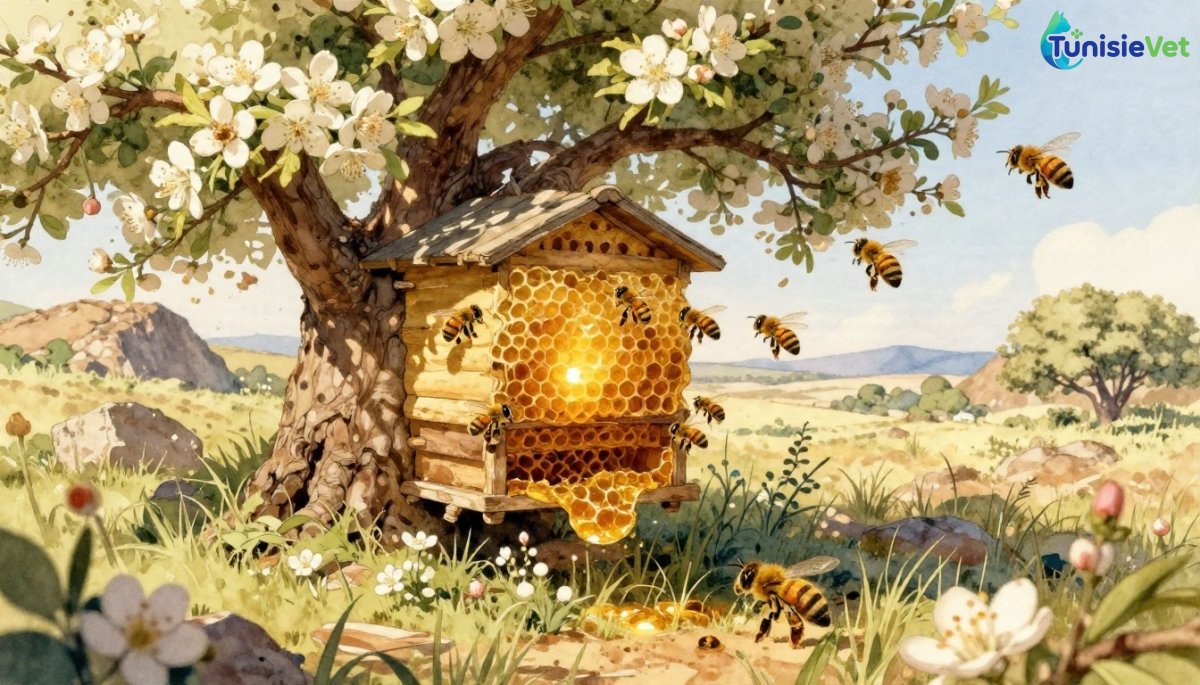
In the hollow of a tree or the crack of a rock, thousands of bees work in perfect harmony. The Quran dedicates an entire surah to them, named An-Nahl, and invites us to reflect on this winged little people.
At daybreak, a hive comes to life. In the warmth of a hollow tree or a rock crevice, thousands of bees go about their work without any spoken command: some head out to the flowers, others return loaded with nectar, and still others watch over the brood. This little world is so orderly that the Quran gave its name to one of its surahs: An-Nahl, "The Bee".
An inspiration from the Creator
In this surah, God reminds us that the bee receives a divine inspiration, which guides the way it builds and feeds itself:
﴿ وَأَوْحَىٰ رَبُّكَ إِلَى النَّحْلِ أَنِ اتَّخِذِي مِنَ الْجِبَالِ بُيُوتًا وَمِنَ الشَّجَرِ وَمِمَّا يَعْرِشُونَ ﴾
Your Lord revealed to the bees: "Take dwellings in the mountains, in the trees, and in what men build."
(Surah An-Nahl, verse 68)
The following verse describes the rest of their day: gathering nectar, then faithfully following the paths laid out for them.
﴿ ثُمَّ كُلِي مِن كُلِّ الثَّمَرَاتِ فَاسْلُكِي سُبُلَ رَبِّكِ ذُلُلًا ۚ يَخْرُجُ مِن بُطُونِهَا شَرَابٌ مُّخْتَلِفٌ أَلْوَانُهُ فِيهِ شِفَاءٌ لِّلنَّاسِ ۚ إِنَّ فِي ذَٰلِكَ لَآيَةً لِّقَوْمٍ يَتَفَكَّرُونَ ﴾
Then eat of all kinds of fruits and follow obediently the ways of your Lord. From their bellies comes a drink of varying colors, in which there is a remedy for people. Indeed, there is truly a sign in this for people who reflect.
(Surah An-Nahl, verse 69)
The verse ends with an invitation: to reflect. This is where our question comes from, for observing bees is a way of meditating.
What the hive teaches us
Beekeepers and naturalists have long described the life of the colony: each bee has a task that changes with its age. The youngest clean the cells and feed the larvae, others build the wax combs and guard the hive entrance, and the oldest finally leave to forage far away. No one works for themselves alone: each bee's work benefits all.
- Cooperation: the hive survives only through shared effort, and no task is looked down upon.
- Patience and consistency: honey is the result of countless short journeys, repeated day after day.
- Gentleness and discretion: the bee takes nectar without harming the flower, which it even helps to reproduce by carrying pollen.
- A sense of community: the colony protects itself, organizes itself and prepares the future together.
These observations belong to a view of nature; the Quran, for its part, mainly asks us to contemplate this sign with gratitude and humility.
A small being to respect
The prophetic tradition also preserves the memory of this attention paid to small creatures. It is reported in the Sunan of Abu Dawud, on the authority of Ibn Abbas, that the Prophet ﷺ forbade killing four animals: the ant, the bee, the hoopoe and the shrike.
Thus, the bee teaches us two lessons: the value of work done together, and the respect owed to the smallest beings. Letting foraging bees work in the garden, planting flowers for them, and not needlessly disturbing their hive: these are simple acts of kindness toward animals, reminding us that every creature, however tiny, has its place in the harmony of the world.