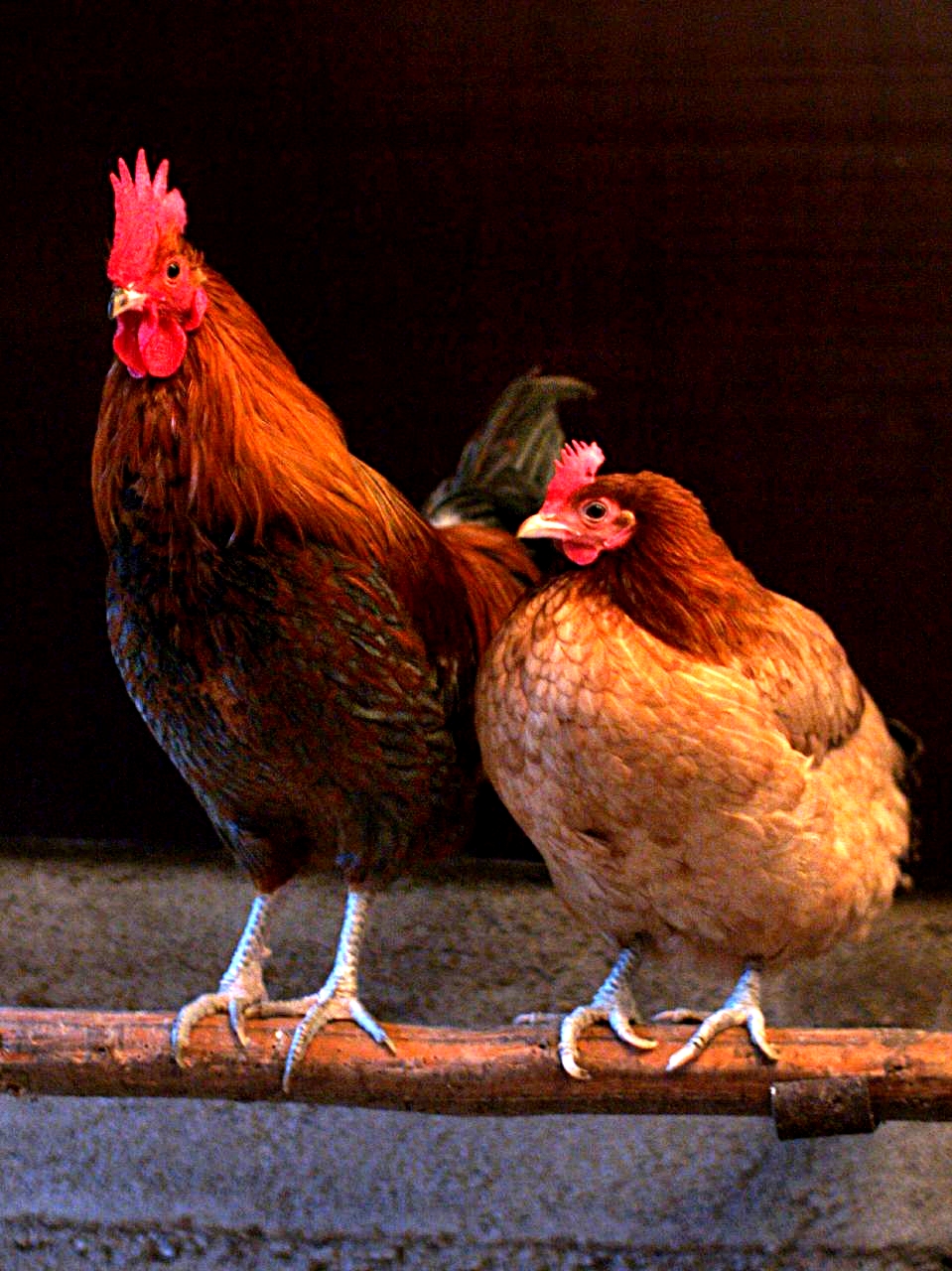
Why does the amount of feed consumed vary with temperature?
15 views · 2 weeks ago
In hot weather, a hen eats considerably less because her body prioritizes heat loss over digestion: above approximately 30 °C, feed intake can drop by 20 to 30%, leading to reduced egg production and thinner shells due to insufficient calcium and energy intake.
A thermostat without sweating
The hen has no functional sweat glands: she cannot cool herself by sweating as mammals do. Her main way of shedding heat is rapid breathing, called thermal panting, which accelerates evaporation from the respiratory tract. This mechanism has a considerable energy and muscular cost, which reduces the energy available for other functions, especially feed intake.
Eating also generates metabolic heat, called the thermic effect of food, linked to digestion and nutrient assimilation. In hot weather, this internal heat production becomes an additional burden: the bird spontaneously reduces her feed intake to limit this heat load, a behavior documented in poultry exposed to heat stress.
Publicité
Publicité
The reduced appetite is accompanied by a shift in blood flow toward the skin and heat-loss areas (comb, wattles, legs) away from the digestive system, which further slows transit and nutrient absorption, particularly the calcium needed for shell formation.
Managing flocks in Tunisia
Facing Tunisian summers, cool water and access to shade remain the absolute priority, even before feed: a hen that does not drink enough risks heat stroke long before suffering from malnutrition. Distributing most of the ration early in the morning and late in the day, during the coolest hours, helps maintain adequate feed intake. Concentrating the feed in energy and nutrients partially compensates for the reduction in volume consumed. If signs of heat stress appear (intense panting, prostration), veterinary advice is recommended.