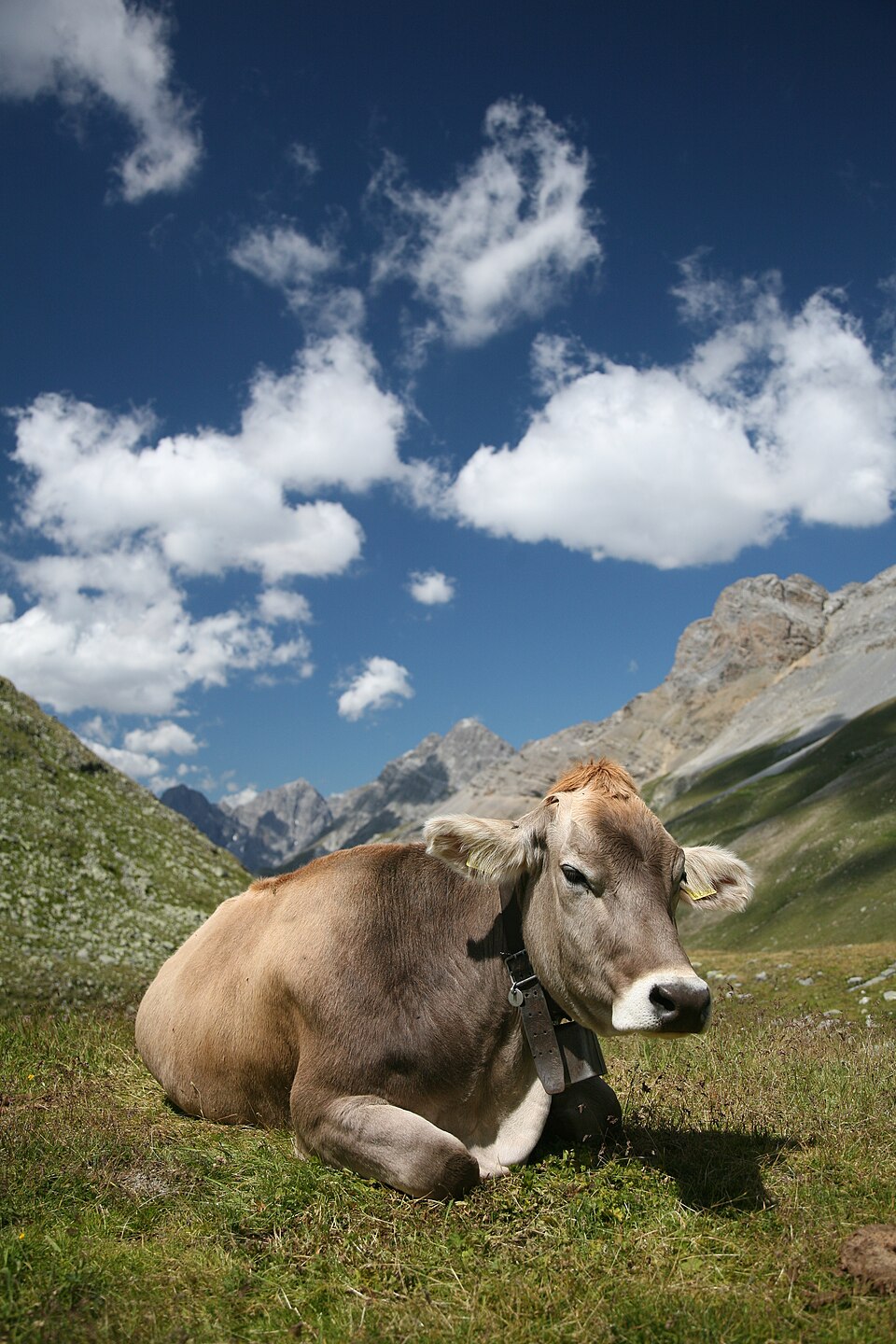
Cows chew the cud to digest cellulose from grass, a carbohydrate that their own enzymes cannot break down. The stomach, actually composed of four compartments (rumen, network, leaflet, abomasum), hosts billions of microorganisms which ferment fibers; the food bolus then goes back into the mouth to be chewed again, which finally crushes it.
A stomach in four compartments, not four stomachs
Contrary to popular belief, the cow does not have four stomachs but a single stomach divided into four successive pockets. The rumen, the largest, can contain around 150 to 200 liters in an adult animal: it is a real fermentation tank where bacteria, protozoa and fungi break down the cellulose that the cow's digestive tract would not otherwise be able to exploit. The network, in close communication with the rumen, sorts the particles and returns those that are still too coarse to the mouth: this is merycism, or rumination.
This return of the food bolus — called bolus — occurs in waves throughout the day. The animal chews it for a long time, which reduces the size of the particles and increases the surface area for microorganisms to attack. Once sufficiently fine, the mixture passes into the leaflet, which absorbs part of the water, then into the abomasum, the only compartment with gastric glands comparable to those of a simple stomach, where classic enzymatic digestion begins.
Publicité
Publicité
In total, a dairy cow spends around six to eight hours per day ruminating, in several sequences distributed between rest phases. This considerable time is explained by the relative nutritional poverty of the herb and the need to grind it finely for microbial fermentation to be effective.
A strategy that promotes a poor resource
This two-stage digestion allows the cow to obtain energy and protein from fodder that humans cannot consume directly. Volatile fatty acids produced by microbial fermentation in the rumen constitute the animal's main source of energy, well ahead of nutrients directly from the grass itself.