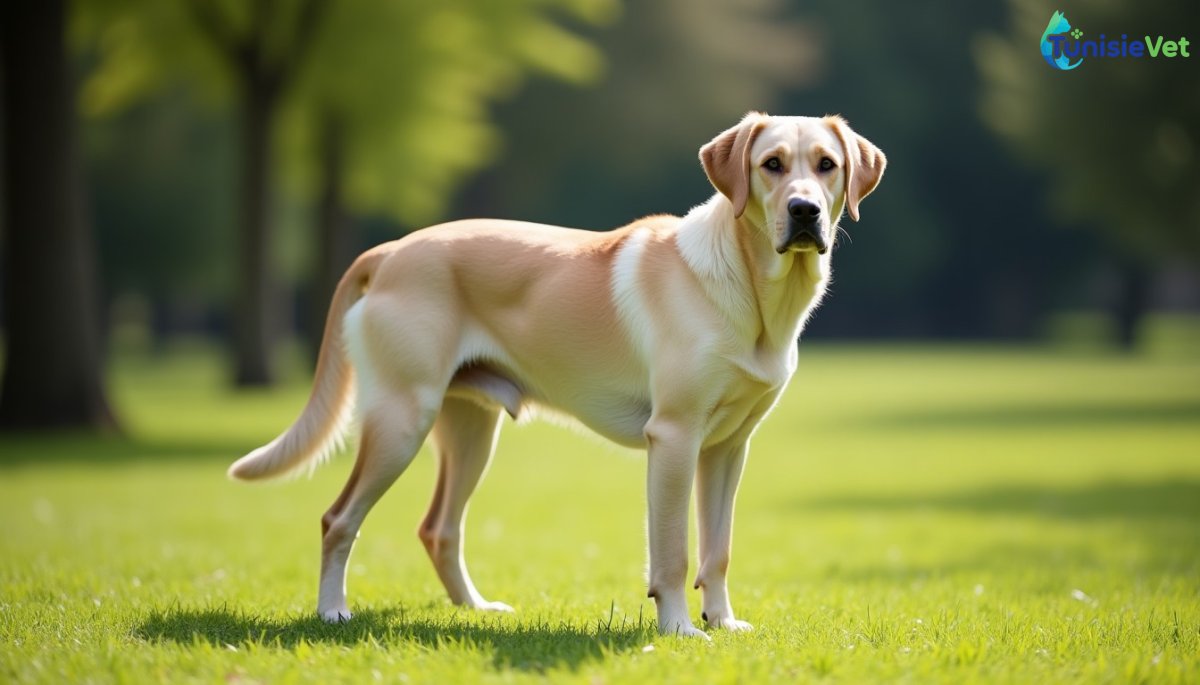
Dogs eat fast because of inherited behavior: in their ancestors and in dogs living in packs or litters, food is a limited shared resource. Swallowing large pieces quickly, barely chewed, allowed them to secure their share before a faster littermate could take it.
Anatomy and behavior suited to rapid eating
Unlike humans, dogs do not chew to digest: their carnassial teeth are mainly for cutting, not grinding. Molars play a limited role, and many foods—kibble and meat pieces alike—are swallowed nearly whole. Mechanical digestion then occurs in the stomach, whose acidity is much stronger than in humans, adapted to handling large mouthfuls.
This behavior has a clear evolutionary basis: in a litter of puppies, those who nurse or eat fastest get a larger share of the resource, which promotes their growth. This competition pressure observed from the first weeks of life leaves a lasting mark on eating speed in adulthood, even in a lone, well-fed dog.
Publicité
Publicité
Eating very quickly brings about the swallowing of large amounts of air, a phenomenon called aerophagia, which can cause digestive discomfort. This behavior is also a known risk factor for two conditions requiring dedicated management: post-meal vomiting and gastric dilatation-torsion, which require specific veterinary care if they occur.
Slowing down feeding at home
Several simple adjustments can limit eating speed without medical intervention: anti-gulping bowls with ridges that force the dog to navigate obstacles to reach food, snuffle mats that turn feeding into an olfactory search activity, or dividing the meal into several smaller portions. In a multi-dog household, separating animals physically during meals reduces perceived competition pressure and slows each dog's eating speed.