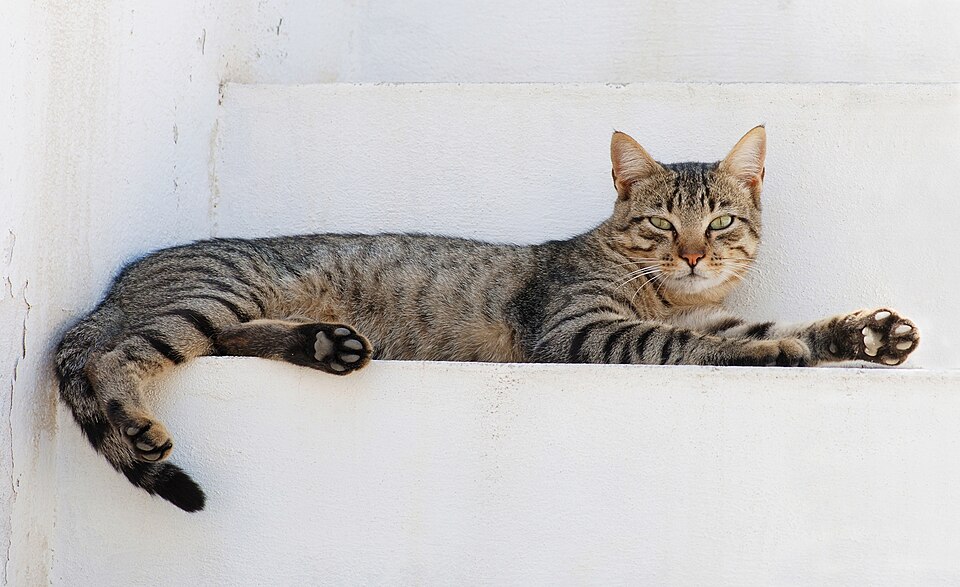
Cats prefer to eat alone because they are solitary hunters. In the wild, they catch small prey and consume it immediately on the spot, without sharing or watchful companionship. Eating has never been a social function for this species, unlike dogs that evolved in packs.
A behaviour inherited from solitary hunting
The wild cat, ancestor of the domestic cat, typically hunts and eats in isolation, with each catch being small in size (often a dozen small prey per day is enough to meet its needs). This strategy requires neither cooperation nor proximity with other cats at mealtime, unlike social species that hunt in groups.
In domestic cats, this heritage shows as heightened alertness while eating. The cat often chooses an open spot, watches its surroundings, and may stop eating at the slightest sound or approach of another animal. Eating is a moment of vulnerability that it manages by limiting interactions.
Publicité
Publicité
In a household with multiple cats, placing bowls side by side creates an artificial closeness that the species does not naturally seek. This results in silent competition: a dominant cat may monopolise access to food, while another waits, eats too quickly from anxiety, or ends up eating less and losing weight without any visible conflict alerting the owner.
Setting up feeding stations
Feline practitioners recommend setting up a number of feeding stations equal to the number of cats in the household, plus one extra. These stations should be spread across different rooms or areas, away from main pathways, and if possible out of sight of each other, so each cat can eat without feeling watched or threatened.
A cat that hesitates before approaching its bowl, that wolfs down its portion in seconds, or that gradually loses weight in a multi-cat household should be a cause for concern. These signs suggest feeding competition rather than a simple digestive problem, and warrant a veterinary check to rule out other causes.
Be among the first to use the TunisieVet app on Android: sign up and get early Google Play access.
You're signed up!
Thanks for joining! We'll activate your access within 24–48 business hours. Once done, the two buttons below will work from your Android phone — keep this email.
You're on Android: as soon as your invitation email arrives, these two links will work.