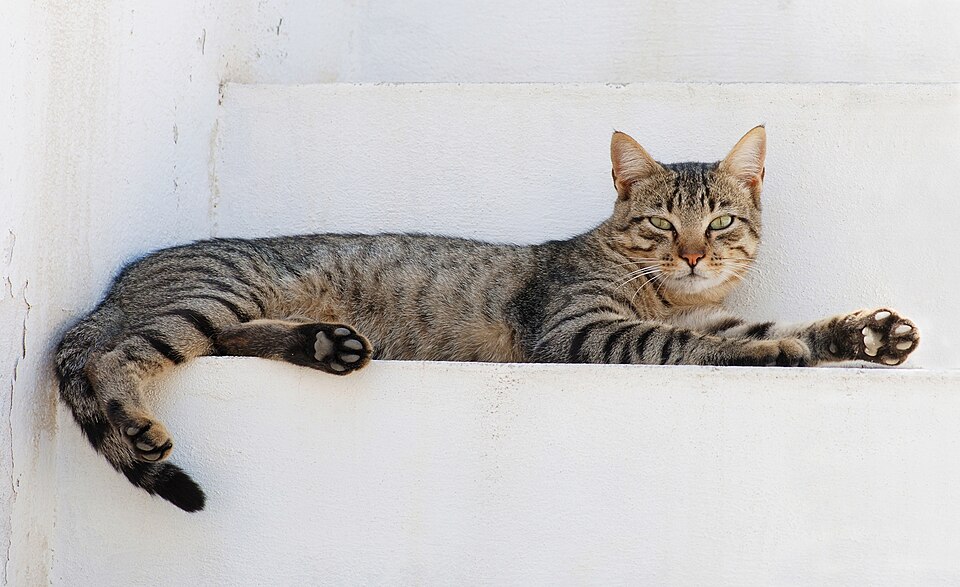
The whiskers, or vibrissae, are very sensitive tactile organs that allow the cat to measure space, detect air movements and precisely locate what is very close to its snout, an area where its vision becomes blurred below about 25 cm.
Sensors implanted right down to the muscle
Unlike the rest of the coat, each vibrissae is planted three times deeper in the skin than a ordinary hair and its follicle is surrounded by a dense network of nerve endings, in direct connection with a small muscle which allows the cat to voluntarily orient them forward. This richness in innervation makes it a sensory organ in its own right, comparable to the tips of human fingers in terms of precision.
Their spacing generally corresponds to the width of the cat's body, which serves as a reference to assess whether a narrow passage can be crossed without getting stuck there. Above the eyes and on the front legs, other vibrissae complete this system by protecting the eyes and helping to manipulate or feel prey held between the claws.
Publicité
Publicité
Faced with prey or an object too close to be seen clearly, the vibrissae take over: they perceive the vibrations of the air caused by the slightest movement, a bit like an early warning system which informs the cat of the exact position of its target before anything else. contact.
An organ that should never be cut
Because they are vital for close orientation and perception of the immediate environment, the vibrissae should never be cut or shortened: this temporarily deprives the cat of essential sensory information and can disorient it, particularly in the dark or in a cluttered environment. If in doubt about their condition (breakage, abnormal fall), it is better to consult a veterinarian.