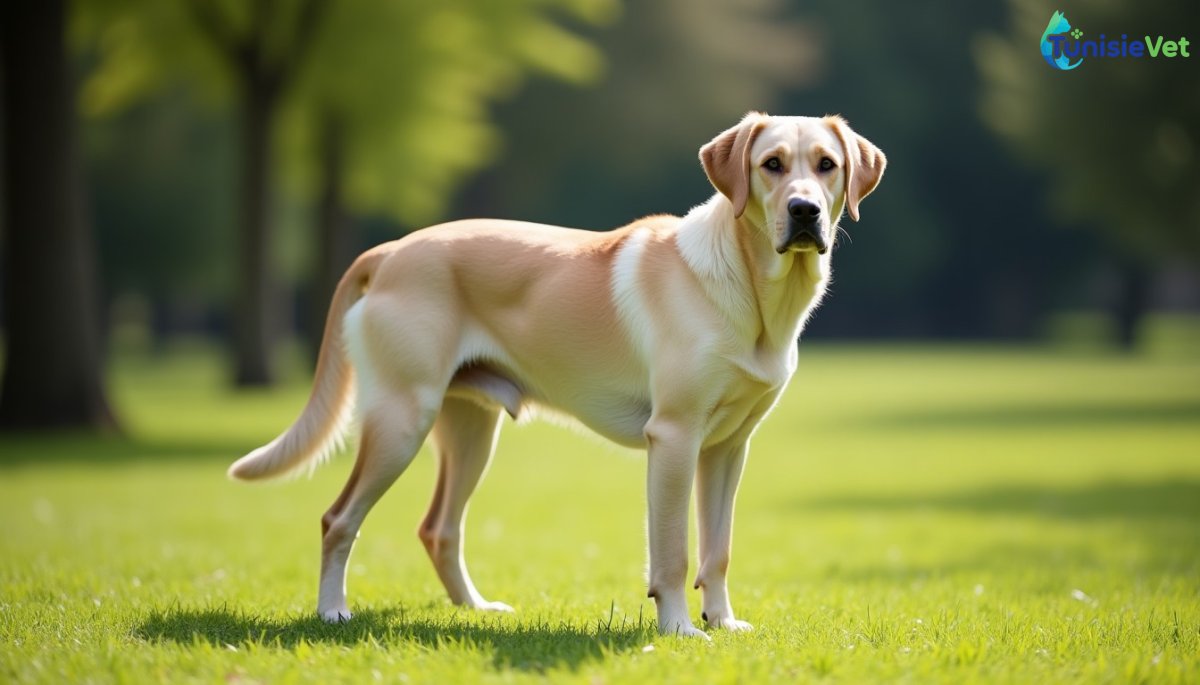
The dog's nose remains moist because specialized glands constantly secrete a fine mucus which captures odorous molecules from the air and dissolves them, facilitating their detection by internal olfactory receptors. This liquid film is also actively renewed by licking.
A trap for odorous molecules
The surface of the nose, riddled with small reliefs and pores, is moistened by lateral nasal glands which produce serous mucus. Volatile odorant molecules dissolve better in this liquid than they do in dry air, which increases their local concentration before they reach the olfactory mucosa, rich in receptors (several tens of millions of times more numerous than in humans according to comparative studies). Humidity therefore acts as an intermediate solvent which amplifies olfactory sensitivity, a major asset for an animal whose sense of smell guides hunting, social communication and territorial identification.
The dog maintains this film itself by regularly licking its nose, which distributes the saliva, eliminates accumulated debris and renews the layer of mucus dried up by the ambient air. This behavior is spontaneous and frequent, particularly after sleep or during an intense sniffing phase.
Publicité
Publicité
Incidentally, the wet nose participates in thermoregulation: the evaporation of the liquid on the surface contributes to dissipating a small quantity of heat, a complementary mechanism to panting, although of limited extent in dogs.
Dry nose: not always a sign of illness
Contrary to popular belief stubborn, a dry or warm nose does not automatically mean that the dog is sick. Its humidity naturally varies during the day depending on humidity, ambient temperature, licking activity and sleep or rest phases, during which it often dries out temporarily. Only dryness associated with other clinical signs (lethargy, loss of appetite, fever) should lead to consulting a veterinarian.