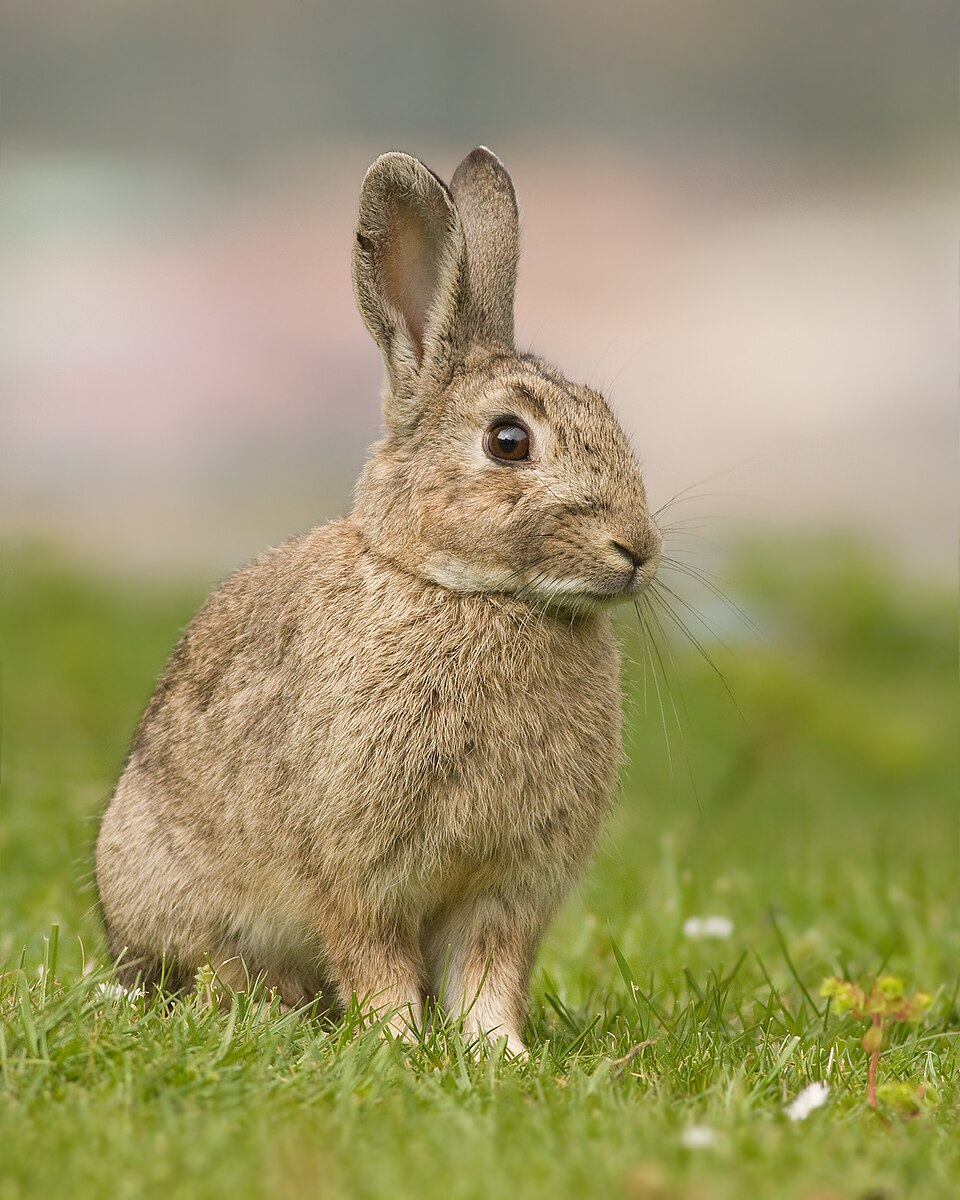
In the domestic rabbit, all teeth grow continuously throughout life, not just the incisors: the 4 incisors, but also the premolars and molars (28 teeth in total) lengthen continuously, by several millimeters per month. Only abrasive chewing, rich in long fibers, wears down this growth at the right pace.
A mechanism linked to abrasion wear
Rabbit teeth are called aradiculate: they do not have a closed root and grow from a permanently active germinal base, at a rate estimated between 2 and 3 mm per week for the incisors. In the wild, this strict herbivorous rodent spends much of its day grazing on fibrous grasses and bark, an action that mechanically wears down the crown at the same rate as it grows back. The balance is therefore natural: the more fibrous and harder the food, the more the lateral movement of the jaw during chewing (made possible by flat cheek teeth) effectively grates the back teeth, often invisible to the naked eye without a complete oral examination.
Hay plays a central role here: its fibrous texture forces the rabbit to chew long and sideways, which uniformly wears down the incisors and molars. Conversely, a diet too rich in pellets or soft foods reduces active chewing time and the range of jaw movement, leaving teeth growing without being sufficiently worn.
When growth becomes a problem
Without sufficient supply of long fibers, teeth lengthen excessively and can become misaligned: this is dental malocclusion, a source of sharp points which injure the tongue or cheeks, pain when chewing and sometimes loss of appetite. This dietary imbalance is one of the most common causes of dental problems in domestic rabbits. Faced with a loss of appetite, excessive salivation or difficulty eating, a rapid veterinary consultation is necessary to examine the mouth and adapt the treatment.