Cats take refuge in boxes because these rigid walls eliminate blind spots around them, retain body heat and provide close contact which has a measurably calming effect: it is not a simple game, but a real stress management tool.
Security, warmth and thermal comfort
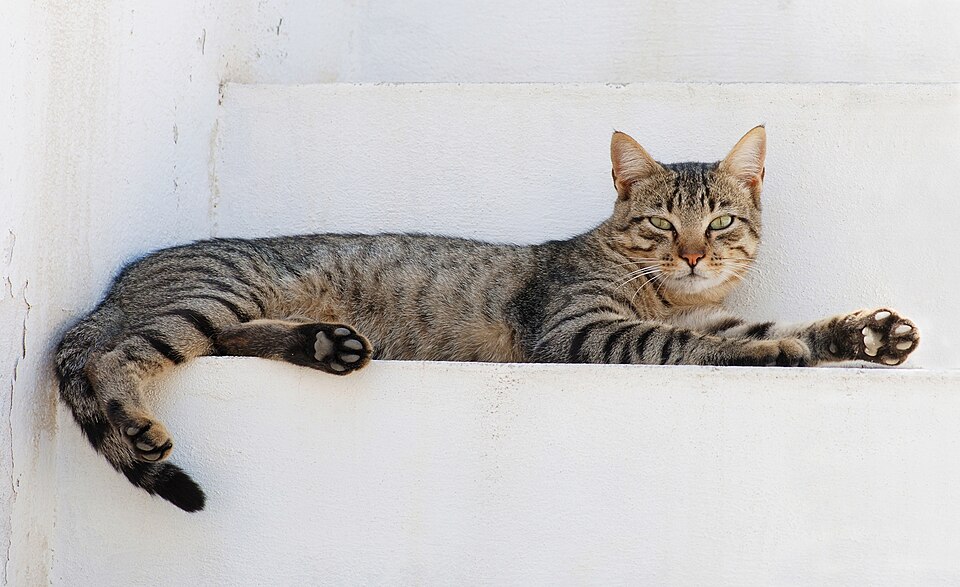
As a predator but also potential prey, the cat instinctively monitors its environment at 360°. A closed or semi-closed box leaves only one opening to control, which greatly reduces the necessary vigilance: the animal can relax because no threat can surprise it from behind. This search for protected observation points also explains why cats like heights: their thermal and behavioral comfort zone is often located above ground level, on a shelf or the top of a piece of furniture, rather than at ground level as in humans.
Cardboard also plays a thermal insulating role: its honeycomb structure retains the body heat of the cat, whose comfort temperature is higher than ours (close to 30-36°C compared to approximately 20-22°C for humans according to veterinary data). Snuggling in a small space limits heat loss and requires less energy expenditure to maintain body temperature.
Publicité
Publicité
A reduction in stress documented in shelters
Studies conducted in shelter environments, notably taken up by North American feline practitioners, have shown that cats with a box or closed shelter show signs of reduced stress compared to those who do not have one: more stable heart rate, fewer vocalizations and faster adaptation to the new environment. Cardboard acts as a visual barrier against unpredictable stimuli (noises, movements, human presence), a particularly important factor during changes in environment, such as arriving at a shelter or moving.
Providing a closed shelter to a domestic cat is therefore not a whim but responds to an identified behavioral need: it constitutes a secure refuge which limits hypervigilance and promotes relaxation, in the same way as a scratching post or a high perch.