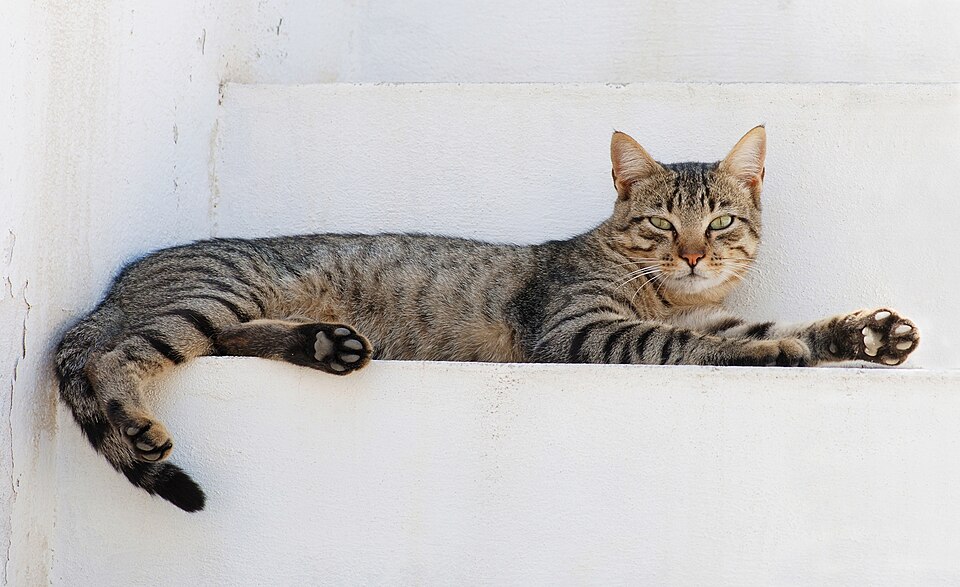
Cats hunt even when satisfied because hunger and hunting depend on two separate brain pathways: appetite is regulated by satiety, while the predatory sequence—spotting prey, stalking, pouncing, and capturing—is triggered by sensory cues like movement, high-pitched sounds, or fleeing prey, regardless of how full their stomach is.
Hardwired behavior, not hunger
In domestic cats, direct descendants of the African wildcat, the drive to hunt remains largely instinctive. Behavioral studies show that well-fed cats continue to stalk and capture prey, often without eating them afterward: they may bring them home, play with them, or leave them behind. This separation exists because the predatory sequence is activated by brain circuits linked to detecting movement and ancient motor reflexes, distinct from the hypothalamic centers that control eating.
For the domestic cat, hunting is therefore a behavioral activity in its own right, much like play or scent marking, rather than simply a means of survival.
Publicité
Publicité
A documented impact on bird populations
This independence between hunting and hunger has real ecological consequences: domestic and stray cats exert significant predation pressure on birds and small vertebrates, even in urban and suburban areas where common bird populations can suffer continuous losses regardless of food provided by humans. BirdLife International and other conservation groups recognize the domestic cat as a notable cause of bird mortality, particularly near wetlands and nesting sites.
To reduce this impact without depriving cats of this essential behavior, several practical approaches exist: offer structured daily play sessions (feather wands, prey-mimicking toys) that channel hunting drive without real victims, equip cats with bells or bird-deterrent collars during outdoor time, and favor supervised outings (harnesses, secure outdoor enclosures called "catios") rather than free and unrestricted outdoor access, especially at dawn and dusk when birds are most active.