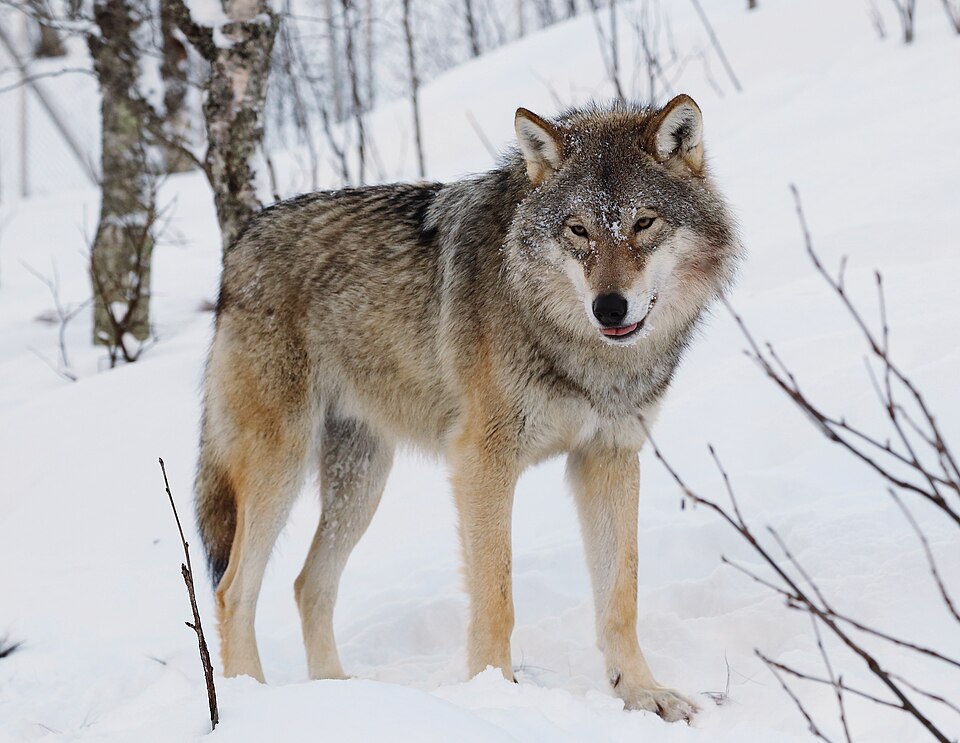
Wolves howl to communicate remotely with their pack: bring together scattered members, signal their position and warn neighboring groups not to encroach on their territory. It is a social vocal tool, not a greeting addressed to the moon.
A signal that carries far, especially at night
The howl is produced with the muzzle raised towards the sky, a posture which directs the sound waves above obstacles on the ground (vegetation, reliefs) and allows them to carry for several kilometers, up to 10 km in open areas according to estimates. Wolves howl especially between dusk and dawn, when cooler, stable air limits sound dispersion and the pack's hunting activity resumes; the moon does not intervene in this behavior, only its nocturnal luminosity was able to create the popular association.
Each individual has a recognizable vocal signature: frequency, modulation and duration of the howl vary depending on the animal, which allows members of a pack to identify who is calling, and neighboring packs to recognize a foreign group without direct confrontation. A collective howl, where several wolves join in chorus with staggered tones, also gives the misleading impression of a larger group than it really is, an effective deterrent signal in the face of rivals.
Social cohesion above all
Beyond the territorial function, the howl strengthens the bonds within the pack: it often precedes or follows collective activities such as rest, going hunting or the return of isolated members. Young Cub Scouts practice howling for a few weeks, refining their own voice over the months, a learning process that contributes to lasting individual recognition within the group.