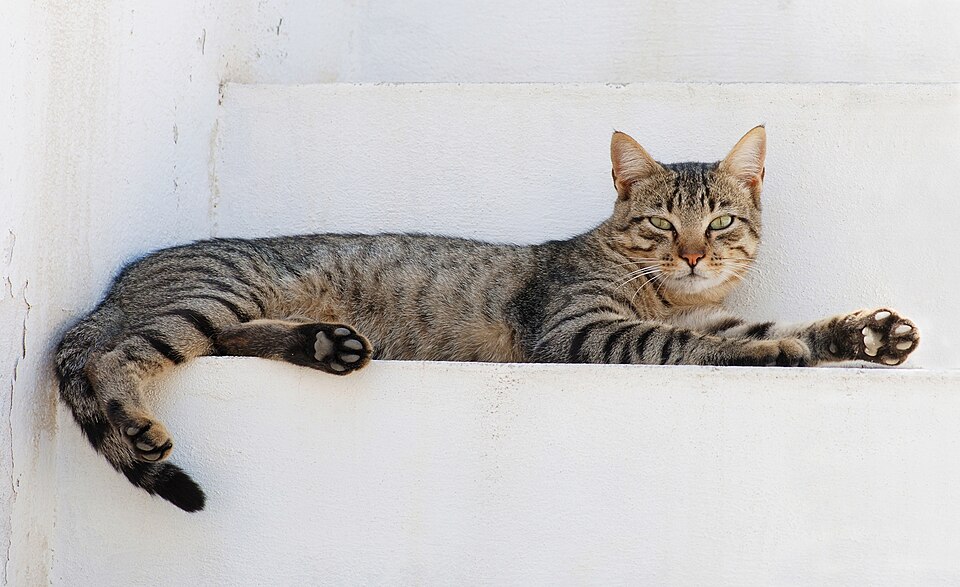
Cats seek height because a high vantage point offers both safety, out of reach from predators and disturbances, and a dominant position that lets them survey their entire territory at a glance. This is a behavior inherited from their nature as solitary, vulnerable hunters.
An instinct for territorial watchfulness
The domestic cat remains a hunter who is also, at its size, a potential prey. By settling up high—on a cupboard, shelf, or cat tree—it gains two advantages: a wider field of vision to spot prey, other cats, or danger, and a refuge where it can sleep in relative safety, since rest takes up much of its day. Retractable claws and powerful hind-leg muscles let it climb and jump easily, making these perches readily accessible.
Unlike other, more social carnivores, cats rarely manage their shared space through direct confrontation. When facing another cat, a cat usually prefers to move away or change levels rather than fight it out. Height then becomes a tool for territory management: it multiplies available surfaces without increasing floor space, allowing several individuals to live together while avoiding close contact and tense postures.
Practical benefits for multi-cat households
In a home where several cats live together, vertical space functions as a resource in its own right, just like food or rest areas. Behavioral studies show that access to varied high points reduces confrontations, because each cat can occupy a different level without feeling threatened or needing to defend floor space already taken. Offering multiple perches, shelves, or cat trees at different heights, spread throughout the home rather than clustered in one spot, thus encourages more peaceful cohabitation among cats in the same household.