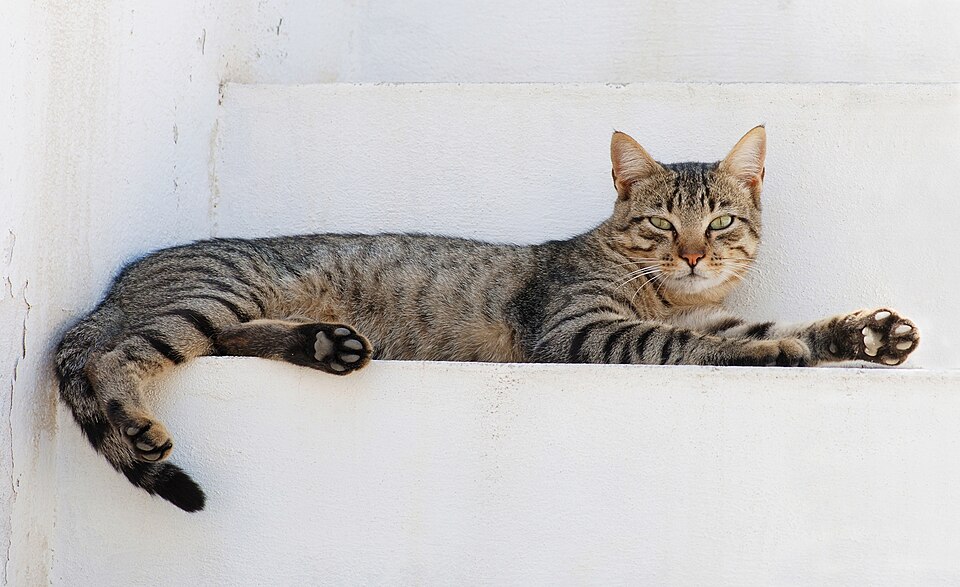
The cat purrs thanks to rapid and repeated contractions of the laryngeal muscles which vibrate the vocal cords with each inhalation and exhalation, producing a continuous sound between 25 and 150 Hz. This behavior is not reserved for contentment: it also appears in cases of pain, stress or agony, as a self-soothing mechanism.
Publicité
Publicité
An involuntary laryngeal mechanism
Contrary to popular belief, purring does not come from a specific vibratory organ but from a neurological signal sent by an oscillator of the central nervous system to the laryngeal muscles, which contract approximately 25 to 150 times per second. This activity modifies the flow of air through the glottis, generating the characteristic sound both during inhalation and exhalation.
The cat purrs in very varied contexts: at rest against its owner, but also alone, injured, at the end of its life, or during a veterinary consultation where it is actually anxious. In the kitten, this behavior appears from the first days and would facilitate localization by the mother during feeding, without the animal expressing a “pleasure” comparable to that of the adult.
A line of research: low frequencies as restorative support
Several studies explore the hypothesis that the frequencies produced by purring, close to those used in vibrational bone therapy in humans, could promote bone consolidation or tissue healing, which would explain why some seriously injured cats purr. This avenue, however, remains debated and is not validated as a therapeutic effect demonstrated in the cat itself.
In clinical practice, a purr should therefore never be interpreted as an automatic sign of well-being: it can mask pain or significant stress. Any sudden change in behavior, appetite or posture warrants veterinary advice.